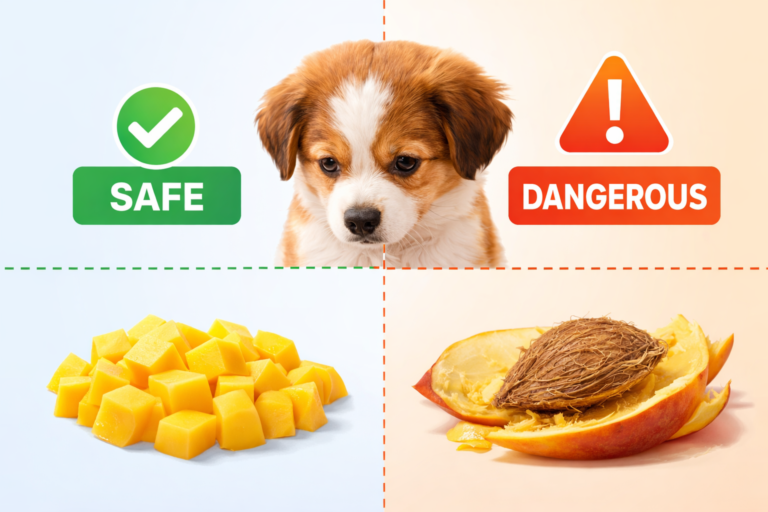
Dogs and Watermelon: The Best Way to Serve This Sweet Treat

Can Dogs Eat Watermelon? You might have wondered whether sharing a juicy, hydrating slice of watermelon with your furry friend is safe. The answer is, yes watermelon can be a refreshing treat for dogs, but there are some important things to keep in mind!
With its high water content and essential vitamins, watermelon helps keep your dog cool during hot summer days. However, not all parts of watermelon are safe, and overfeeding can cause digestive issues. Let’s explore the right way to share watermelon with your dog while keeping them healthy and happy!

Can Dogs Eat Watermelon?
Watermelon is a sweet treat that’s not only a beneficial snack but also helps with hydration during the summer. With 92% water content, it keeps your canine companions cool and refreshed. It provides essential fiber, potassium, and vitamins like vitamin A, vitamin B6, and vitamin C, which can support their health and digestion. The sodium in watermelon helps maintain body functions, and with almost no fat or cholesterol, it’s a healthy fruit choice.
However, be cautious of the sugar content in watermelon, as it can lead to spikes in blood sugar. While it’s a great source of hydration and healthy nutrients, too much sugar can be harmful, especially for dogs with blood sugar issues. In moderation, watermelon remains a tasty and healthy option, promoting good digestion without the worry of excess fat.
Is Watermelon Good for Dogs?
Watermelon is a healthy snack for adult dogs, just like strawberries, which are also packed with vitamins.. It’s low in calories and fat, making it a great choice for regulating energy and weight. The red flesh of watermelon is rich in lycopene, beta-carotene, and vitamins like vitamin A, vitamin B6, and vitamin C, which support immune function, hydration, and general health. The fruit also provides potassium and magnesium, essential for maintaining electrolyte balance and good metabolism.
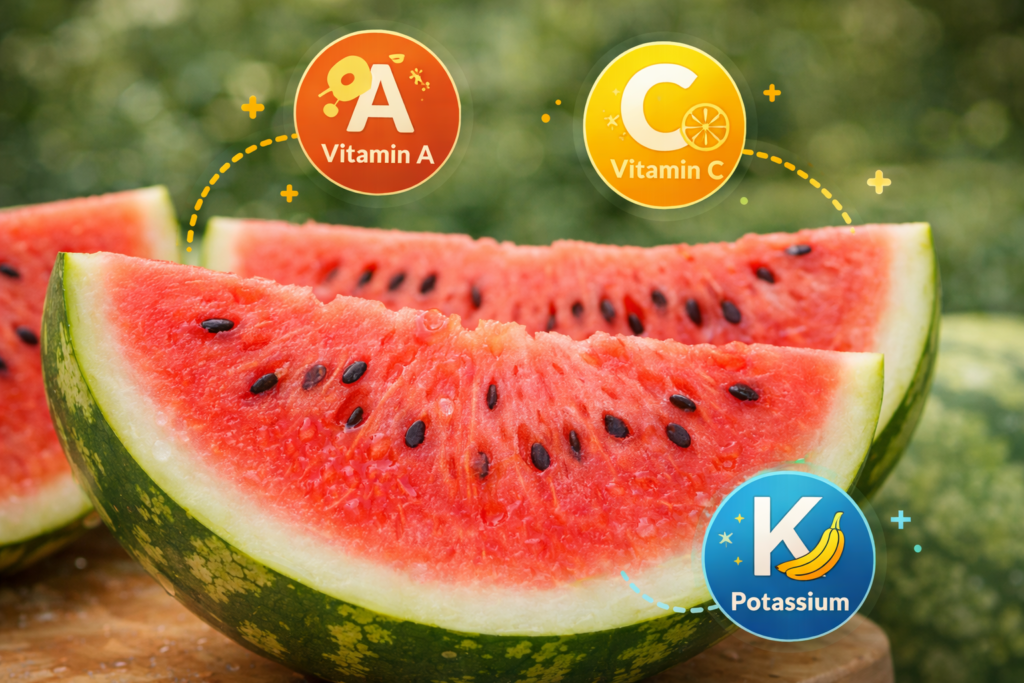
However, when offering watermelon, it’s important to remove the rind and seeds to avoid digestive issues and potential blockages. Watermelon can help with nutrient absorption and support your dog’s immune health, but it should be given as an occasional treat. With proper preparing, watermelon is a safe, refreshing snack that promotes hydration and overall health for your dog, especially during the summer.
How Much Watermelon Can Dogs Eat?
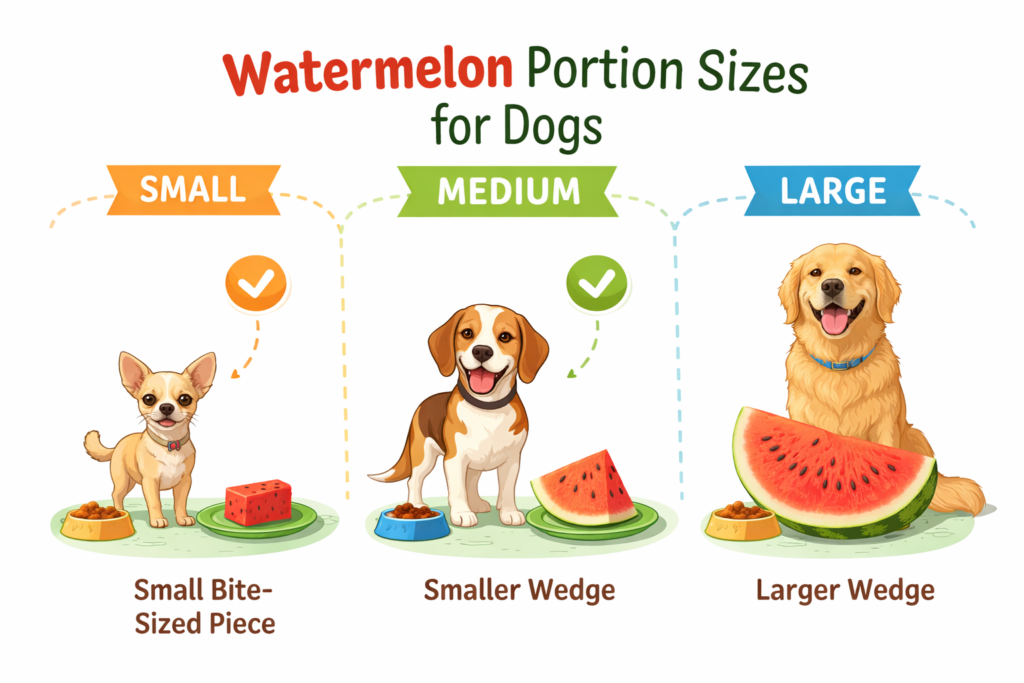
When feeding watermelon to your dog, the portion sizes should be adjusted based on their size and weight. For small dogs (2–10 pounds), a bite-sized chunk or 1-inch long piece is ideal. For medium dogs (21–50 pounds), a ½-inch cube or a slightly larger piece is appropriate, while for large dogs (51–90 pounds), you can give them a bit more, but make sure it doesn’t exceed 10% of their daily calories. Extra-large dogs (91+ pounds) can enjoy a ¼-inch thick slice, but still, make sure it’s in moderation. Always adjust based on your dog’s nutritional needs and weight.
The Importance of Moderation:
- Too much watermelon can cause digestive issues: Overfeeding can lead to an upset stomach, causing discomfort or diarrhea in dogs.
- Watermelon contains sugar: Feeding too much can result in spikes in blood sugar, especially in dogs with existing health issues.
- Moderation helps maintain a balanced diet: Watermelon should complement, not replace, your dog’s regular dog food and meals.
- Observe for reactions: When introducing watermelon for the first time, keep an eye on any reactions and consult a vet if needed.
Can Dogs Eat Watermelon Rind?
It’s best to remove the watermelon rind before giving it to your dog. The hard outer skin is difficult to digest and can cause gastrointestinal distress, including vomiting, abdominal pain, and diarrhea. Eating it could also lead to intestinal blockages, especially if swallowed in large pieces, which might result in lethargy or difficulty pooping.
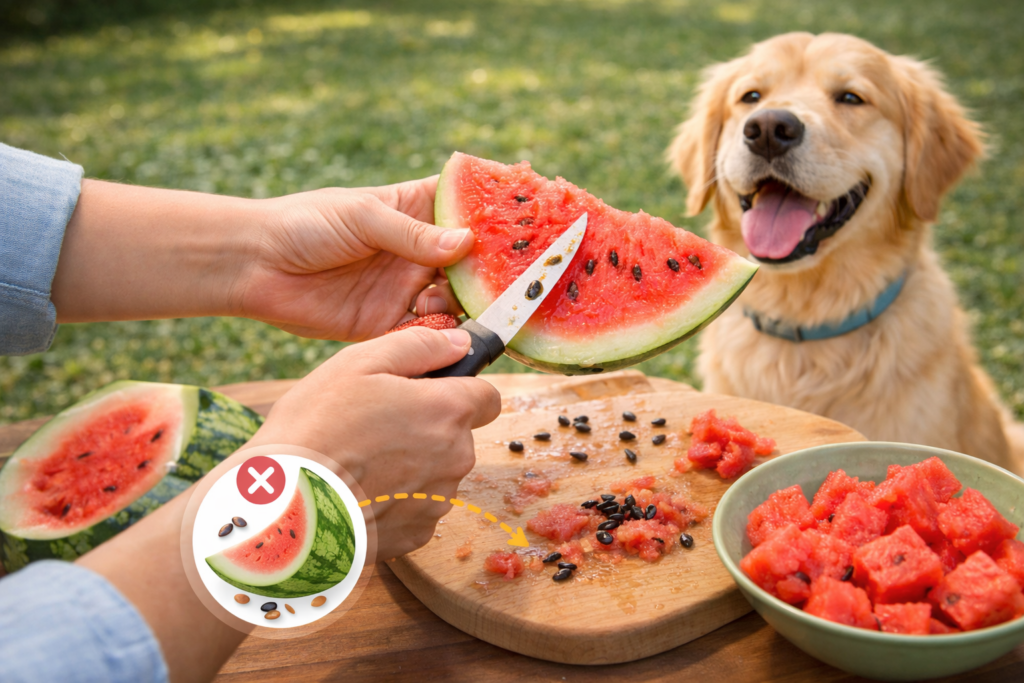
The rind is also a choking hazard, so it’s important to avoid feeding it to your dog. Stick to the watermelon flesh, which is a safe and healthy treat. If your dog accidentally consumes the rind, watch for signs of discomfort and consult a veterinarian if necessary.
Can Dogs Eat Watermelon Seeds?
Watermelon seeds are not ideal for dogs, especially in large amounts. If your dog swallowed seeds, they can cause problems in the intestinal tract, potentially leading to upset stomach, choking hazard, or even more serious issues like intestinal blockages. While tiny amounts of eaten seeds may not cause harm, it’s still best to be cautious. In rare cases, watermelon seeds contain trace amounts of cyanide, which can be toxic if your dog consumes large amounts.
If you notice any signs of discomfort, such as vomiting, lethargy, or difficulty pooping, it may indicate your dog has consumed too many seeds. In such cases, contact your veterinarian immediately. While occasional swallowed seeds might not cause serious harm, it’s always better to remove them to avoid potential choking hazards or the risk of your dog being poisoned.
Can Puppies Eat Watermelon?
Puppies can enjoy watermelon in moderation, but it’s important to consider their sensitive digestive system. Since puppies are still developing, their canine digestion might not handle fruits the same way as adult dogs. Offering small, bite-sized pieces of watermelon ensures that their stomachs don’t get upset, especially since the fiber content in watermelon can sometimes cause puppy tummy upset if overfed.

For healthy puppy nutrition, hydration for puppies, and to promote their growth stages, watermelon can be a great treat, but always be mindful of serving sizes. Make sure to consult a veterinarian before introducing watermelon to your puppy diet, especially if they have any puppy food allergies or digestive health challenges. Fruits like watermelon can support puppy hydration and provide a sweet snack, but they should not replace regular dog foods or interfere with puppy training.
How to Safely Feed Watermelon to Your Dog
Feeding watermelon to your dog can be a fun and hydrating treat, but it’s important to follow the right steps to ensure it’s safe. Always remove the rind and seeds, as they can pose a choking hazard or lead to intestinal blockage. Serve watermelon in bite-sized pieces or fruit cubes to make it easy for your dog to enjoy.
Steps:
- Wash the watermelon thoroughly to remove any surface residue or harmful additives.
- Cut the watermelon into small chunks, and ensure no seeds or rind are included.
- Portion the pieces based on your dog’s size and feeding guidelines—keep the treat within 10% of their daily calorie intake.
- You can freeze watermelon chunks for a cool, refreshing treat, or use a KONG toy or lick mat for extra enrichment.
- If you want to mix it up, blend watermelon with dog-safe fruits and unsweetened yogurt for a fruit smoothie or dog-safe watermelon sorbet.
Always be mindful of the portion size and remember that watermelon should be an occasional treat, not a replacement for your dog’s regular balanced diet. If you’re unsure about serving sizes or your dog’s hydration needs, it’s always a good idea to consult a veterinarian.
When to Avoid Giving Your Dog Watermelon
While watermelon is generally safe for dogs, there are certain situations when it’s best to avoid giving it to them. Dogs with specific health conditions, such as diabetes, weight concerns, or sensitive stomachs, may face risks when consuming watermelon. To ensure pet safety, follow these steps to avoid potential issues.
Steps to Avoid Feeding Watermelon to Your Dog:
- Dogs with diabetes: Avoid watermelon due to its sugar content, which can cause blood sugar spikes.
- Dogs with weight concerns: Limit fruit intake as it may interfere with weight management and can lead to unwanted weight gain.
- Sensitive stomachs: If your dog has digestive issues, refrain from feeding them watermelon as it may cause stomach upset or diarrhea.
- Dog allergies: Watch for allergic reactions such as itching or swelling. If your dog shows signs of a fruit allergy, avoid feeding them watermelon.
- Puppies: Puppy feeding guidelines suggest limiting fruits like watermelon due to developing canine digestion.
Always consult a veterinarian before introducing watermelon to dogs with any health concerns, especially if they have medical conditions or digestive sensitivities. Proper portion control and careful monitoring of fruit servings will help keep your dog healthy and safe.
Can Dogs Be Allergic to Watermelon?
Yes, dogs can have allergic reactions to watermelon. Like with other foods, some dogs may experience allergic responses when introduced to watermelon. Symptoms of watermelon allergies in dogs can include itching, swelling, vomiting, and even diarrhea. In more severe cases, dogs may experience breathing problems or develop hives after eating watermelon due to the presence of certain watermelon allergens. These reactions are part of a dog’s immune system response to unfamiliar food proteins.
If your dog shows any symptoms of watermelon allergies, such as itching and hives or vomiting and diarrhea, it’s important to stop feeding them watermelon and consult a veterinarian. Managing dog food allergies and canine sensitivities is essential for pet safety. Allergy testing for dogs can help identify specific food allergens and assist in managing watermelon allergies in dogs. Be cautious when introducing new treats and always observe your dog’s reaction to prevent potential allergic reactions to watermelon.
Signs That Your Dog Ate Too Much Watermelon
If your dog eats too much watermelon, it may experience some digestive issues. Common symptoms include vomiting, bloating, or loose stool.
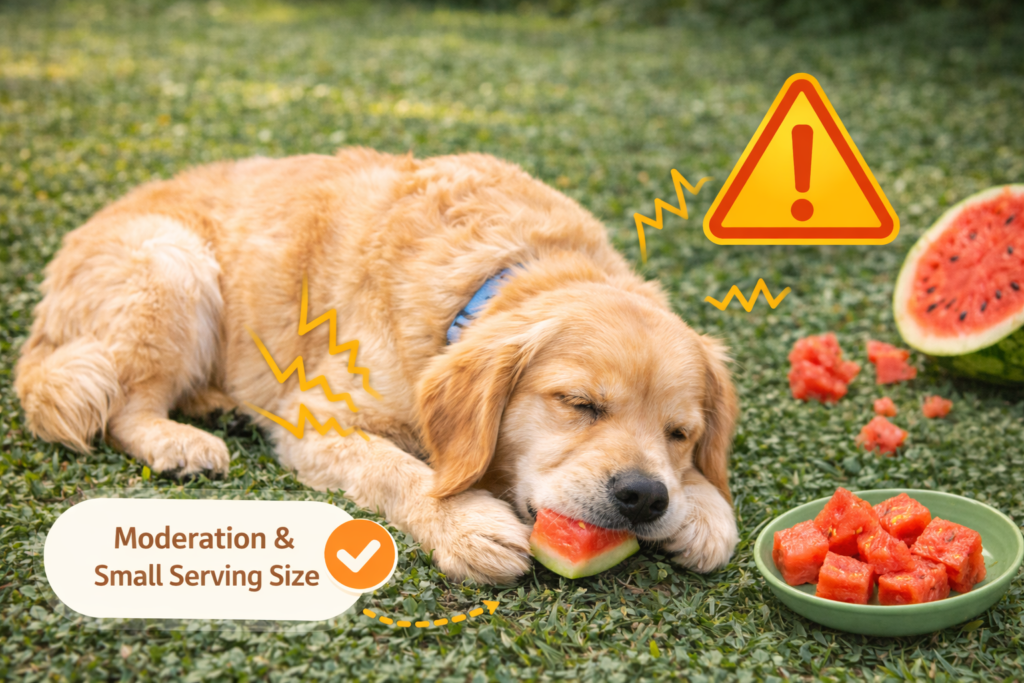
Steps to Identify If Your Dog Ate Too Much Watermelon:
- Watch for signs like gas, stomach upset, or soft stool.
- If your dog shows restlessness or decreased appetite, it may have eaten excess watermelon.
- Monitor for lethargy or persistent symptoms like vomiting or bloating.
- Ensure access to plain water to help with hydration.
- Call your vet if symptoms do not improve.
If the symptoms continue, contact a vet for further guidance on managing your dog’s diet and fruit intake. Always start slowly when introducing new fruits to your dog’s regular diet.
Fun and Safe Ways to Share Watermelon with Your Dog
Sharing watermelon with your dog can be a fun and healthy treat, but it’s important to do it the right way. Make sure to prepare it properly by removing the rind and seeds to avoid any choking hazard or intestinal blockage. Cut it into small cubes or thin slices to fit your dog’s size, and always feed it in moderation to prevent stomach upset or intestinal discomfort.

Ways to Safely Share Watermelon with Your Dog:
- Slice the watermelon into small cubes or thin slices for easy chewing.
- Remove the rind and seeds to avoid choking hazards or intestinal blockages.
- Serve in moderation, especially for dogs with sensitive digestive systems.
- Freeze small bites or chunks of watermelon for a cool, hydrating snack.
- Use silicone molds to make pupsicles or frozen fruit cubes.
- Combine watermelon with Greek yogurt (no sweeteners) for added flavor.
- Wash the watermelon thoroughly to remove any surface residue before serving.
- Avoid pre-cut varieties, canned watermelon, or anything with artificial ingredients and added sugar.
- Offer watermelon-infused water in their water bowl for a refreshing hydration boost.
Watermelon and Dog Sensitivities: What to Know
Watermelon can be a great treat for dogs, but it’s important to be mindful of their canine sensitivities. Some dogs may have trouble digesting watermelon and could experience digestive issues in dogs like bloating, vomiting, or diarrhea. If your dog has a sensitive stomach or food sensitivities, it’s best to introduce watermelon carefully.
Steps to Safely Introduce Watermelon:
- Start with small portions: Begin by offering small portions of watermelon to see how your dog reacts.
- Remove seeds and rind: Always remove the seeds and rind to avoid any choking hazards or digestive discomfort.
- Watch for allergic reactions: Keep an eye out for signs like itching, swelling, or excessive scratching in dogs after eating watermelon.
- Monitor digestion: Observe your dog for any digestive upset, like vomiting or diarrhea.
- Consult a veterinarian: If you notice symptoms of dog food intolerance or gastrointestinal problems in dogs, consult your vet for advice on their dog diet.
If you notice any symptoms after your dog eats watermelon, stop feeding it and contact your veterinarian. Pay attention to their immune system and digestive health to ensure pet safety. Always introduce new foods with caution to protect your dog from food sensitivities.
Myths About Dogs and Watermelon
When it comes to feeding watermelon to your dog, there are some common myths that might lead to confusion. Many people believe that dogs can eat all parts of the watermelon, including the rind and seeds. However, this is false, as these parts can cause digestive issues or even blockages.
Common Myths:
- Dogs can eat all parts of the watermelon false, only the seedless, fleshy portion is safe.
- Watermelon can replace regular meals false, it should only be an occasional treat, not a dietary staple.
- Watermelon is a complete snack replacement false, it lacks essential nutrients like protein and fat needed for balanced health.
Remember, watermelon is a nutritious, low-calorie treat when given in moderation, but overfeeding it can lead to weight gain and upset your dog’s calorie intake. Always make sure to feed your dog the proper portion size and provide a balanced diet.
Final Words
Watermelon can be a fun and healthy treat for your dog when given in moderation and prepared properly. Always remember to remove the rind and seeds to avoid choking hazards or digestive issues. By following the right serving guidelines, you can safely share this refreshing snack with your dog, making their summer days even more enjoyable! Keep an eye on your dog’s health, and if you’re ever uncertain, consult your vet for the best advice. Stay safe and treat your dog with care!
Frequently Asked Questions:
Do dogs fully digest watermelon?
No, dogs might not fully digest watermelon, especially if they consume too much or eat the rind or seeds. It’s best to feed them only the fleshy, seedless part in moderation.
Is it okay if my dog ate watermelon?
Yes, it’s okay as long as you removed the rind and seeds and gave it in moderation. Too much can cause stomach upset.
How much watermelon can a 10 lb dog eat?
A 10 lb dog can have about 1-2 small, bite-sized pieces, ensuring it doesn’t exceed 10% of their daily calorie intake.
Can you give dogs watermelon every day?
Watermelon should be an occasional treat, not a daily snack, to prevent any digestive issues or weight gain.
Why do dogs love watermelon?
Dogs love watermelon because it’s sweet, hydrating, and offers a refreshing taste, especially during warm weather!