Can Dogs Eat Bread?
Can dogs eat bread? Yes, most healthy dogs can eat plain, fully baked bread in small amounts. Plain white...
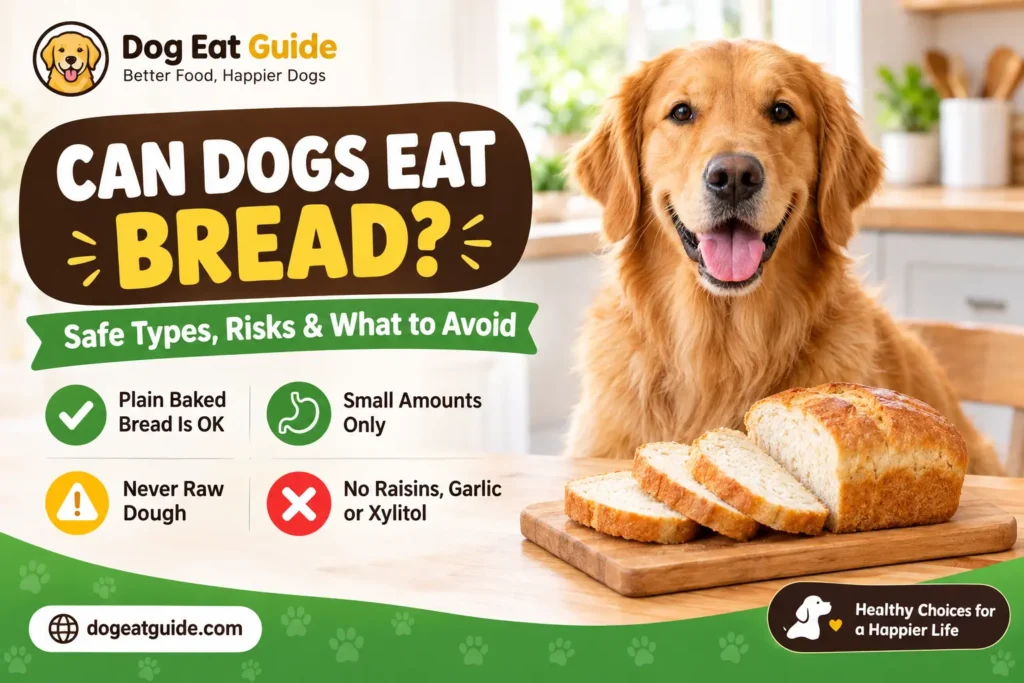
Can dogs eat bread? Yes, most healthy dogs can eat plain, fully baked bread in small amounts. Plain white or wheat bread isn’t toxic, but it offers little nutrition and shouldn’t replace a balanced diet. The real dangers are raw yeast dough, which is a veterinary emergency, and breads made with ingredients like garlic, raisins, nuts, or xylitol.
Is Bread Safe for Dogs?
Plain baked bread is made mostly from flour, water, yeast, and a little salt or sugar. None of those is toxic to dogs once the bread is baked. A small piece dropped on the floor is rarely a problem for a healthy dog.
Safe doesn’t mean useful, though. Bread is mostly refined carbohydrate, which adds calories without much nutritional benefit. Dogs that are overweight, or that have a health condition affecting diet, are better off skipping it. Your veterinarian can help determine whether bread is appropriate for your dog.
Can Dogs Eat Raw Bread Dough?
No. Raw yeast dough is dangerous, and it’s the most important thing to know about dogs and bread. The warm, moist environment of a dog’s stomach lets yeast keep working, so the dough expands and produces ethanol, which is absorbed into the bloodstream. The Merck Veterinary Manual describes two problems: a stretched stomach (with a risk of bloat) and alcohol poisoning.
Early signs can include unproductive retching, a swollen or tight belly, restlessness, and lethargy. As ethanol builds up, dogs can become wobbly and disoriented, and severe cases can progress to weakness, low body temperature, seizures, or coma. Signs may take hours to appear, so don’t wait to see whether your dog seems fine.
If your dog ate any amount of raw dough, call your veterinarian or an emergency clinic right away. Don’t try to make your dog vomit at home unless a veterinarian tells you to. Sourdough starters and any other uncooked dough containing baker’s yeast carry the same risk.
Which Breads and Ingredients Are Unsafe for Dogs?
| Bread or ingredient | Safe for dogs? | Why |
|---|---|---|
| Plain white or wheat bread (baked) | Yes, in small amounts | Not toxic, but low in nutrition |
| Raw yeast dough or sourdough starter | No, emergency | Expands in the stomach and produces ethanol |
| Garlic bread or onion bread | No | Garlic and onion can damage red blood cells |
| Raisin bread | No | Raisins and grapes can cause kidney injury in dogs |
| Bread with nuts | Best avoided | Macadamia nuts are toxic; other nuts are high in fat |
| Sugar-free or specialty breads and spreads | Check the label | Xylitol is highly toxic to dogs |
| Sweet or buttery breads | Best avoided | Added sugar and fat, more digestive upset risk |
Garlic Bread and Onion
Garlic and onion, in fresh, powdered, or cooked form, can damage a dog’s red blood cells, and signs may not show up right away. A crumb of garlic bread is unlikely to cause trouble, but a slice or more deserves a call to your veterinarian.
Raisin Bread
Grapes and raisins are toxic to dogs and can cause kidney injury, even though the exact toxic substance isn’t fully understood. Any amount of raisin bread is worth treating seriously, especially in small dogs. Contact your veterinarian if your dog ate some.
Xylitol
Some sugar-free or “low-sugar” baked goods, and spreads such as certain peanut butters, contain xylitol. Xylitol can cause a rapid drop in blood sugar in dogs and, in larger amounts, liver injury. If you think your dog has eaten something containing xylitol, contact your veterinarian or an animal poison helpline immediately.
Can Dogs Eat Bread Crust?
Yes, plain baked crust is generally fine. Very hard, crusty loaves can be tough to chew, so tear the bread into small pieces for small dogs and fast eaters to lower the choking risk.
How Much Bread Can a Dog Eat?
There’s no single amount that’s right for every dog. A widely used guideline is that treats and extras should stay within about 10% of daily calories, with a complete and balanced dog food providing the rest. For most dogs, that means a small piece now and then, not a slice a day. The right amount depends on your dog’s size, age, activity level, body condition, current diet, and health.
Can Puppies Eat Bread?
A tiny piece of plain baked bread is unlikely to harm a healthy puppy, but puppies have small stomachs and growing nutritional needs, so bread takes up room that food made for puppies should fill. If you want a treat, choose one made for puppies.
Can Dogs With Health Conditions Eat Bread?
Dogs with diabetes, obesity, pancreatitis, food allergies, or gastrointestinal disease may need tailored diets. Wheat allergies are uncommon in dogs, but if your dog gets itchy skin or an upset stomach after eating bread, mention it to your veterinarian.
What Happens If a Dog Eats Too Much Bread?
A large amount of plain baked bread can cause gas, loose stools, vomiting, or an upset stomach. These usually settle, but call your veterinarian if the signs are severe or last more than a day.
Bread also isn’t a reliable fix if your dog swallowed something dangerous, such as a bone or another object. In that case, call your veterinarian rather than relying on food.
When Should I Call a Veterinarian?
Contact your veterinarian or an emergency clinic if your dog:
- Ate raw dough or sourdough starter, in any amount
- Ate bread containing raisins, garlic, onion, nuts, or a possible sweetener like xylitol
- Has a swollen belly, unproductive retching, weakness, or seems drunk or disoriented
- Vomits repeatedly or has diarrhea that doesn’t clear up
- Has a health condition and ate a large amount
Safer Alternatives to Bread
If you want a low-risk snack, plain cooked carrot pieces, green beans, or a treat made for dogs are better choices than bread. Introduce any new food gradually.
QUICK ANSWER
Yes, most healthy dogs can eat plain, fully baked bread in small amounts, but it offers little nutrition and should only be an occasional extra. Never let a dog eat raw bread dough, which can expand in the stomach and cause alcohol poisoning. Avoid bread containing garlic, onion, raisins, nuts, or xylitol.
FAQS
Is bread toxic to dogs?
Plain baked bread isn’t toxic. Raw yeast dough is dangerous, and breads with garlic, onion, raisins, macadamia nuts, or xylitol can be harmful.
Can dogs eat white bread?
Yes, plain baked white bread is generally fine in small amounts, though it adds calories without much nutrition.
Can dogs eat whole wheat bread?
Plain whole wheat bread is generally fine in small amounts for dogs without a wheat allergy. Check the label for raisins, seeds, nuts, or sweeteners.
Can dogs eat sourdough bread?
Fully baked sourdough is fine in small amounts. Raw sourdough dough and starter are dangerous because they contain active yeast.
What happens if a dog eats bread dough?
The dough can expand in the stomach and produce ethanol, which can cause bloat and alcohol poisoning. Call your veterinarian or an emergency clinic immediately, even if your dog seems fine.
Can dogs eat garlic bread?
No. Garlic can damage red blood cells, and garlic bread is also high in butter and salt. A crumb is unlikely to cause trouble, but larger amounts warrant a call to your veterinarian.
Can dogs eat raisin bread?
No. Raisins are toxic to dogs and can cause kidney injury, so contact your veterinarian if your dog ate some.
How much bread can a dog eat?
There’s no universal amount. Keep bread within the 10% treat guideline, as a small occasional piece rather than a daily habit.
Can puppies eat bread?
A tiny piece of plain baked bread is unlikely to harm a healthy puppy, but it isn’t a useful food for them. Ask your veterinarian about suitable treats.
SOURCES
- Source: Merck Veterinary Manual: Bread Dough Toxicosis in Animals
What it supports: How raw yeast dough expands in the stomach and produces ethanol, its signs, and why dough ingestion is an emergency.
URL: https://www.merckvetmanual.com/toxicology/food-hazards/bread-dough-toxicosis-in-animals - Source: Pet Poison Helpline: Bread Dough Poisoning in Pets
What it supports: Dough risks including sourdough starters and other uncooked yeast dough, plus signs such as retching and abdominal distension.
URL: https://www.petpoisonhelpline.com/veterinarian-blog/bread-dough-poisoning-in-pets/ - Source: AKC: Can Dogs Eat Bread?
What it supports: Plain white or wheat bread generally being harmless for dogs without a wheat allergy, and some breads containing toxic ingredients.
URL: https://www.akc.org/expert-advice/nutrition/can-dogs-eat-bread/ - Source: Merck Veterinary Manual: Xylitol Toxicosis in Dogs
What it supports: Xylitol’s danger to dogs (blood sugar drop, liver injury).
URL: https://www.merckvetmanual.com/toxicology/food-hazards/xylitol-toxicosis-in-dogs - Source: AKC: Can Dogs Eat Onions?
What it supports: Onion toxicity to dogs, including onion powder.
URL: https://www.akc.org/expert-advice/health/can-dogs-eat-onions/ - Source: dvm360: Raisins and Grapes: Potentially Lethal Treats for Dogs
What it supports: Grapes and raisins being toxic to dogs and linked to acute kidney injury, with the ASPCA Animal Poison Control Center advising against giving them in any amount.
URL: https://dvm360.com/view/raisins-and-grapes-potentially-lethal-treats-dogs