What Fruits Can Dogs Eat? A Complete Guide to Safe Fruits

what fruits can dogs eat
Table of contents

Introduction

Many dog owners love sharing healthy snacks with their pets, but not every human food is safe for dogs. Fruits can be a nutritious and refreshing treat when chosen carefully, offering important nutrients like fiber, vitamins, minerals, and antioxidants. However, some fruits contain harmful compounds, excessive sugar, seeds, or pits that may create health risks for dogs.

So, what fruits can dogs eat safely?

Dogs can enjoy several fruits, including apples, bananas, blueberries, strawberries, watermelon, mango, pineapple, and pears when they are prepared correctly and served in moderation. These fruits can provide additional nutrition and variety alongside a balanced canine diet.

However, fruit should never replace complete dog food. Dogs have specific nutritional requirements, and treats—including fruits—should only make up a small portion of their daily calorie intake. Factors such as your dog’s size, age, activity level, weight, and health condition all influence how much fruit is appropriate.

For example, a small Chihuahua may only need a few tiny pieces of apple as an occasional snack, while a larger Labrador Retriever may safely enjoy a slightly larger portion. A senior dog or a dog with diabetes may require additional caution because of sugar levels and calorie intake.

This complete guide explains which fruits are safe for dogs, which ones to avoid, how to prepare fruit properly, serving recommendations, and expert-backed tips to help you make better decisions for your dog’s health.


Can Dogs Eat Fruit? Understanding the Role of Fruit in a Dog’s Diet

Dog eating healthy fruit treats safely

Yes, dogs can eat many types of fruit, but fruit should be considered an occasional treat rather than a primary food source. Unlike humans, dogs have different dietary needs and rely mainly on balanced dog food to receive the correct amounts of protein, fats, carbohydrates, vitamins, and minerals.

When offered correctly, fruit can provide several benefits:

  • Fiber: Supports healthy digestion and regular bowel movements.
  • Vitamins: Fruits can provide nutrients such as vitamin C, vitamin A, and vitamin K.
  • Antioxidants: Compounds found in fruits like blueberries may help support overall cellular health.
  • Hydration: Fruits with high water content, such as watermelon, can provide extra moisture.

According to veterinary nutrition principles, treats should be offered in moderation because even healthy foods can contribute unnecessary calories when fed excessively.

For example, a dog that receives too many banana slices every day may consume more sugar and calories than needed, potentially contributing to weight gain. On the other hand, small portions of low-calorie fruits like blueberries or strawberries can be useful alternatives to some commercial treats.


Are Fruits Healthy for Dogs?

Fruits can be healthy for dogs when they are safe, properly prepared, and given in appropriate amounts.

Some potential benefits include:

Fiber Support

Fiber helps maintain normal digestion by supporting healthy movement through the digestive system. Fruits such as apples and pears contain dietary fiber that may support digestive regularity.

Antioxidant Benefits

Many colorful fruits contain antioxidants. Blueberries, strawberries, and raspberries contain plant compounds that are commonly associated with supporting overall health.

Natural Nutrient Source

Fruits contain naturally occurring nutrients:

  • Apples provide fiber and vitamin C.
  • Bananas provide potassium and vitamin B6.
  • Watermelon provides hydration.
  • Blueberries provide antioxidants.

However, fruit is not a substitute for veterinary-approved nutrition. A dog’s main diet should still come from complete and balanced dog food formulated for its life stage.


How Much Fruit Can Dogs Eat?

Dog fruit serving sizes based on breed size

The right amount of fruit depends on your dog’s individual needs. A small amount may be beneficial, but too much can lead to digestive upset, excess calories, or increased sugar intake.

General guidelines:

  • Introduce new fruits slowly.
  • Start with small portions.
  • Monitor your dog for changes in digestion.
  • Avoid feeding large amounts at one time.

For example:

  • A small dog may only need one or two small blueberry pieces.
  • A medium-sized dog may enjoy a few slices of apple.
  • A large dog may handle a larger portion, but moderation is still important.

If your dog has health conditions such as diabetes, obesity, or digestive problems, consult your veterinarian before introducing new treats.


Factors That Affect How Much Fruit a Dog Can Have

Not every dog reacts to fruit in the same way. Several factors influence safe serving sizes.

Different dog breeds have different fruit needs

Dog Size

A large dog generally requires more calories than a small dog, meaning portion sizes may differ.

A Great Dane and a Yorkshire Terrier should not receive the same amount of fruit.

Age

Puppies have developing digestive systems and may need smaller portions. Older dogs may also require dietary adjustments depending on their health.

Activity Level

An active working dog may burn more calories than a less active household pet.

Weight and Body Condition

Overweight dogs may benefit from lower-calorie fruits but should avoid excessive treats.

Existing Health Conditions

Dogs with certain conditions may need special consideration:

  • Diabetes
  • Food allergies
  • Sensitive stomachs
  • Kidney problems

A veterinarian can provide recommendations based on your dog’s specific health profile.


What Fruits Can Dogs Eat Safely?

Many fruits are safe for dogs when prepared properly. The key is removing unsafe parts, controlling portions, and avoiding added ingredients such as sugar or artificial sweeteners.

Below are some dog-friendly fruits and their benefits.


Apples

Apples are one of the most popular fruits that dogs can eat safely. They are crunchy, low in protein and fat, and provide fiber along with important nutrients.

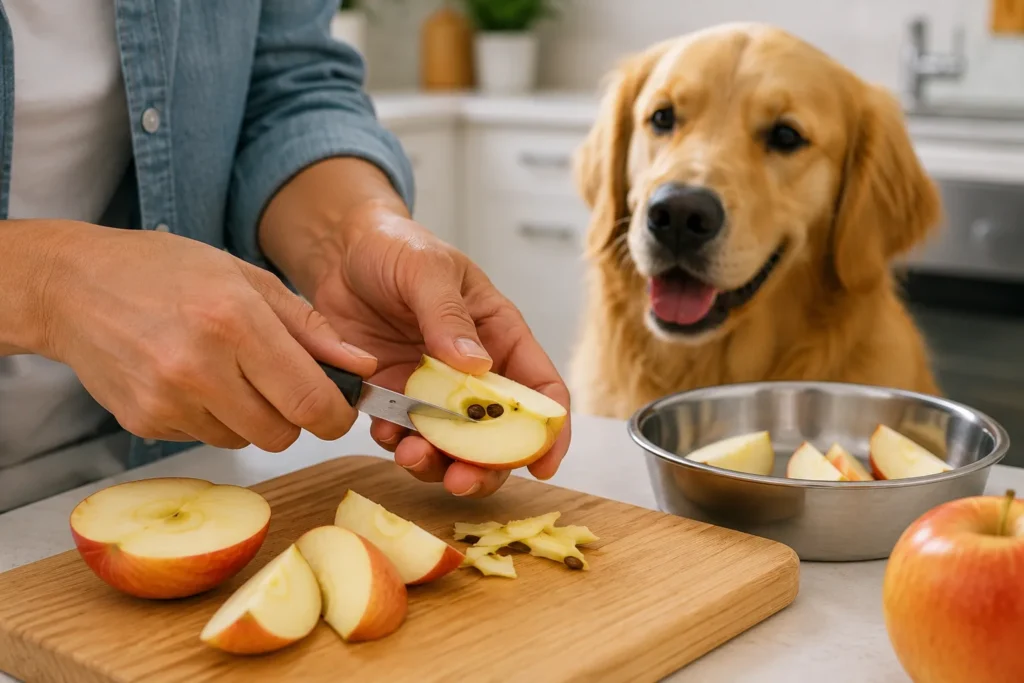
Preparing apple slices safely for dogs

Benefits of Apples for Dogs

Apples contain:

  • Dietary fiber
  • Vitamin C
  • Antioxidants
  • Natural carbohydrates

They can be a refreshing snack, especially when cut into small pieces.

How to Prepare Apples for Dogs

Before feeding apples:

  • Remove the seeds.
  • Remove the core.
  • Cut the apple into bite-sized pieces.

Apple seeds contain compounds that can be harmful when consumed in large amounts, so they should always be removed.

Example Serving

A small dog may enjoy a few small apple cubes, while a larger dog may have several slices as an occasional treat.


Bananas

Bananas are another fruit dogs can eat in moderation. They are soft, easy to cut, and contain important nutrients.

Benefits of Bananas for Dogs

Bananas provide:

  • Potassium
  • Vitamin B6
  • Fiber
  • Natural carbohydrates

They can be useful as a high-value training reward when given in small amounts.

Things to Consider

Bananas contain more natural sugar than some other fruits, so they should not be offered excessively.

A few small banana pieces may be appropriate for many dogs, but an entire banana every day is usually unnecessary.


Blueberries

Blueberries are often considered one of the best fruit options for dogs because they are small, nutrient-rich, and relatively low in calories.

Golden Retriever receiving blueberries as a healthy training reward

Benefits of Blueberries for Dogs

Blueberries contain:

  • Antioxidants
  • Fiber
  • Vitamins
  • Plant compounds that support overall wellness

They are also easy to serve without preparation.

Practical Example

Many dog owners use frozen blueberries as a summer treat or training reward. They can be offered individually or mixed into appropriate homemade dog treats.


Strawberries

Strawberries can be a healthy occasional snack for dogs when washed and served correctly.

Benefits of Strawberries

They provide:

  • Fiber
  • Vitamin C
  • Antioxidants
  • Water content

How to Serve Strawberries

Before feeding:

  • Wash thoroughly.
  • Remove the stem.
  • Cut into smaller pieces for smaller dogs.

Because strawberries contain natural sugar, portion control is still important.


Watermelon

Watermelon is a popular summer fruit for dogs because it contains a high amount of water.

Dog enjoying frozen watermelon summer treat

Benefits of Watermelon for Dogs

Watermelon provides:

  • Hydration
  • Vitamins A and C
  • Low-fat nutrition

Safety Preparation

Dogs should only eat watermelon flesh.

Remove:

  • Seeds
  • Rind

Seeds may create digestive issues, while the tough rind can be difficult to digest.

Practical Example

Small frozen watermelon cubes can make a refreshing summer snack for many dogs.


Mango

Mango can be given to dogs in small portions after proper preparation.

Benefits of Mango

Mango contains:

  • Vitamin A
  • Vitamin C
  • Fiber

Important Safety Note

Always remove the mango pit because it can be a choking hazard and should not be consumed.

Because mango is naturally high in sugar, it should be an occasional treat rather than a daily snack.


Pineapple

Fresh pineapple can be safe for dogs when served in small amounts.

Benefits of Pineapple

Pineapple contains:

  • Vitamin C
  • Minerals
  • Fiber
  • Natural enzymes

Serving Advice

Remove the tough outer skin and hard core before offering pineapple pieces to your dog.


Pears

Pears can be another safe fruit option when prepared correctly.

Benefits of Pears

Pears provide:

  • Fiber
  • Vitamins
  • Hydration

Preparation Tips

Always remove:

  • Seeds
  • Core

Cut pears into small pieces to reduce choking risk.


Other Safe Fruits Dogs Can Eat

Additional fruits that many dogs can enjoy include:

  • Raspberries
  • Blackberries
  • Cranberries
  • Cantaloupe
  • Kiwi
  • Oranges (in small amounts)
  • Peaches without the pit

Each fruit should be introduced gradually because individual dogs may respond differently.

Unsafe fruits that dogs should avoid

Fruits Dogs Should Avoid or Never Eat

While many fruits can provide healthy nutrients for dogs, some fruits can be dangerous and should never be offered. Certain fruits contain toxic compounds, harmful seeds, pits, or parts that may cause digestive problems, choking, or serious health complications.

Understanding which fruits to avoid is just as important as knowing which fruits are safe.


Grapes and Raisins

Grapes and raisins are among the most important fruits to keep away from dogs.

Even a small amount may cause serious health issues in some dogs, including potential kidney problems. The exact reason grapes can be toxic is still being studied, but veterinarians recommend avoiding them completely.

Signs of Possible Grape Toxicity

If a dog eats grapes or raisins, watch for symptoms such as:

  • Vomiting
  • Loss of appetite
  • Lethargy
  • Abdominal discomfort
  • Increased thirst
  • Changes in urination

What Should You Do If Your Dog Eats Grapes?

Do not wait for symptoms to appear. Contact a veterinarian as soon as possible and provide details about:

  • The type of fruit consumed
  • The amount eaten
  • The time of consumption
  • Your dog’s weight and health history

Quick action can be important when dealing with potentially toxic foods.


Cherries

Cherries themselves contain nutrients, but they are not considered a good choice for dogs because of safety concerns.

The main risks come from:

  • Cherry pits
  • Stems
  • Leaves

Cherry pits can create choking risks and contain compounds that may be harmful if broken down and consumed.

Safer Alternative

Instead of cherries, consider dog-friendly fruits such as:

  • Blueberries
  • Strawberries
  • Seedless watermelon

These options provide similar fruit-based benefits with fewer safety concerns.


Avocado

Avocado is controversial in pet nutrition because different parts of the plant contain different levels of risk.

The fruit contains high amounts of fat, which may contribute to digestive upset in some dogs. The pit is also a serious choking hazard.

Potential concerns include:

  • High fat content
  • Stomach upset
  • Choking risk from the pit

For most dogs, there are safer fruit alternatives available.


Fruit Seeds, Pits, and Cores

Many dog owners focus only on the fruit itself and forget about dangerous parts.

Common parts to remove include:

  • Apple seeds
  • Peach pits
  • Plum pits
  • Cherry pits
  • Apricot pits

These parts can create problems because they may:

  • Become choking hazards
  • Cause intestinal blockage
  • Contain harmful compounds

A simple rule:

If a fruit contains a hard pit or large seed, remove it before offering the fruit to your dog.


Complete List of Dog-Safe and Unsafe Fruits

A simple comparison chart can help dog owners quickly understand which fruits are better choices.

FruitSafe for Dogs?BenefitsImportant Notes
AppleYesFiber, vitaminsRemove seeds and core
BananaYesPotassium, fiberHigh natural sugar
BlueberriesYesAntioxidantsGreat low-calorie treat
StrawberriesYesVitamin C, fiberServe in small portions
WatermelonYesHydrationRemove seeds and rind
MangoYesVitamins A and CRemove pit
PineappleYesFiber, nutrientsRemove skin and core
PearsYesFiber, hydrationRemove seeds
GrapesNoNonePotential toxicity risk
RaisinsNoNoneAvoid completely
CherriesNot recommendedNonePits create risks
AvocadoAvoidNoneHigh fat and pit risk

Best Fruits for Dogs Based on Health Needs

Different fruits may provide different benefits depending on a dog’s lifestyle and health goals. However, fruit should always complement—not replace—a complete and balanced diet.


Best Fruits for Dogs That Need Weight Management

Dogs that are overweight may benefit from lower-calorie treats.

Good options include:

Blueberries

Benefits:

  • Small portion size
  • Low calorie
  • Rich in antioxidants

Strawberries

Benefits:

  • Naturally sweet
  • Provides fiber
  • Lower calorie than many commercial treats

Watermelon

Benefits:

  • High water content
  • Refreshing
  • Lower calorie option

Practical Example

Instead of giving several high-calorie biscuits during training, an owner might use a few blueberries or small strawberry pieces as rewards.


Best Fruits for Dogs With Digestive Issues

Some fruits contain fiber that may support healthy digestion.

Potential options:

Apples

The fiber content may help support normal bowel movements.

Pears

Pears provide fiber and moisture.

Blueberries

Blueberries contain fiber while being easy to portion.

Important Tip

Introduce only one new fruit at a time. If your dog experiences:

  • Loose stool
  • Gas
  • Vomiting
  • Appetite changes

Stop offering that fruit and speak with your veterinarian if symptoms continue.


Best Fruits for Hydration

Hydration-focused fruits can be especially useful during warmer months.

Watermelon

Watermelon contains a high percentage of water and can be a refreshing snack.

Cantaloupe

Cantaloupe can provide moisture and nutrients when served properly.

Strawberries

Strawberries also contain water along with vitamins and antioxidants.

Summer Treat Example

Frozen pieces of dog-safe fruit can create a cooling snack during hot weather.


Best Fruits for Senior Dogs

Older dogs may benefit from carefully selected fruits that are easy to chew and provide nutritional value.

Potential options:

  • Soft blueberries
  • Small strawberry pieces
  • Seedless watermelon

Senior dogs may have different nutritional requirements due to:

  • Lower activity levels
  • Dental issues
  • Medical conditions

Always consider your senior dog’s overall diet before adding new treats.


How to Prepare Fruits Safely for Dogs

Proper preparation is essential before sharing fruit with your dog. Even safe fruits can become risky if they contain seeds, pits, or large pieces.

Preparing fruits safely before feeding dogs

Step-by-Step Fruit Preparation Guide

Follow these steps:

1. Wash the Fruit

Remove:

  • Dirt
  • Pesticide residue
  • Surface contaminants

2. Remove Unsafe Parts

Always remove:

  • Seeds
  • Pits
  • Hard cores
  • Tough skins when necessary

3. Cut Into Appropriate Sizes

Large pieces can become choking hazards, especially for:

  • Puppies
  • Small breeds
  • Older dogs

4. Introduce Slowly

When offering a new fruit:

  • Start with a small amount.
  • Observe your dog.
  • Increase gradually if tolerated.

Can Dogs Eat Fruit Skin?

The answer depends on the specific fruit.

Some fruit skins may be safe, but others can be difficult to digest.

Examples:

  • Apple skin is generally acceptable when washed properly.
  • Watermelon rind should be removed.
  • Mango skin is usually avoided because it may be difficult to digest.

When unsure, removing the skin is often the safer option.


Can Dogs Eat Frozen Fruit?

Yes, many dogs enjoy frozen fruit treats.

Good options include:

  • Frozen blueberries
  • Frozen watermelon cubes
  • Frozen strawberry pieces

Frozen fruit can be useful during warm weather, but pieces should still be small enough to prevent choking.


Can Dogs Eat Dried Fruit?

Dried fruit requires extra caution.

Many commercial dried fruits contain:

  • Added sugar
  • Preservatives
  • Artificial ingredients

Most importantly:

Never give dogs dried grapes (raisins), as they can be dangerous.

Fresh fruit is usually a safer choice.


Fruit Serving Sizes for Dogs by Weight

Serving size depends on your dog’s calorie needs, activity level, and overall health.


Small Dogs

Examples:

  • Chihuahua
  • Yorkshire Terrier
  • Pomeranian

Recommended approach:

  • Tiny fruit pieces
  • Few bites at a time
  • Avoid high-sugar fruits in large amounts

Example:

A few blueberries or small apple pieces may be enough.


Medium Dogs

Examples:

  • Beagle
  • Cocker Spaniel
  • Border Collie

Medium dogs can generally handle slightly larger portions.

Examples:

  • Several blueberries
  • A few strawberry slices
  • Small watermelon cubes

Large Dogs

Examples:

  • Labrador Retriever
  • German Shepherd
  • Golden Retriever

Large dogs may tolerate larger portions, but moderation remains important.

Example:

A handful of blueberries or several small fruit pieces may work as an occasional reward.


Real-Life Case Studies: Dogs Eating Fruit Safely

Case Study 1: Replacing High-Calorie Treats With Fruit

Situation

A dog owner noticed their Labrador Retriever was gaining weight because of frequent training treats.

Approach

The owner replaced some commercial treats with:

  • Blueberries
  • Small strawberry pieces
  • Watermelon cubes

Result

The dog continued receiving rewards while reducing overall calorie intake.

Lesson

Healthy treats can support weight management when portion sizes are controlled.


Case Study 2: Introducing Fruit to a Sensitive-Stomach Dog

Situation

A dog experienced digestive upset after trying multiple new foods.

Approach

The owner introduced one fruit at a time:

  1. Small apple piece
  2. Monitoring digestion
  3. Gradually increasing if tolerated

Result

The owner identified which fruits worked well for the dog.

Lesson

Slow introduction helps identify individual food sensitivities.


Case Study 3: Dog Accidentally Eats Toxic Fruit

Situation

A dog grabbed grapes from a kitchen counter.

Action Taken

The owner contacted a veterinarian immediately rather than waiting for symptoms.

Lesson

Fast action is important when dogs consume potentially toxic foods.


Expert Tips for Feeding Fruits to Dogs Safely

Veterinary Nutrition Tips

Experts commonly recommend:

Treat Fruits as Extras

Fruit should support a dog’s diet, not replace balanced meals.

Consider Your Dog’s Individual Needs

A healthy young dog and a senior dog with health conditions may require different approaches.

Monitor Portions

Even healthy foods can contribute to weight gain when overfed.

Veterinarian explaining healthy food choices for dogs

Signs Your Dog May Not Tolerate a Fruit

Stop offering a fruit if your dog shows:

  • Vomiting
  • Diarrhea
  • Excessive gas
  • Itching
  • Swelling
  • Changes in appetite

If symptoms are severe or persistent, contact your veterinarian.


Common Mistakes Dog Owners Make

Avoid these mistakes:

Feeding Too Much Fruit

Healthy does not mean unlimited.

Ignoring Seeds and Pits

Always remove unsafe parts.

Offering Sweetened Fruit Products

Avoid:

  • Fruit syrups
  • Sweetened snacks
  • Artificially flavored products

Introducing Multiple Fruits at Once

If several new foods are introduced together, it becomes difficult to identify the cause of digestive problems.


Frequently Asked Questions About Fruits Dogs Can Eat

What fruits can dogs eat safely?

Dogs can safely eat fruits such as apples, bananas, blueberries, strawberries, watermelon, mango, pineapple, and pears when prepared correctly.

What fruits are toxic to dogs?

Grapes and raisins should always be avoided because they may cause serious health problems.

Can dogs eat apples?

Yes. Remove seeds and the core before serving.

Can dogs eat bananas every day?

Small amounts may be acceptable, but bananas should not be fed excessively because they contain natural sugar.

Can dogs eat watermelon?

Yes. Remove seeds and rind before serving.

Can dogs eat strawberries?

Yes. Strawberries can be a healthy occasional treat when washed and cut properly.

Can dogs eat grapes?

No. Grapes should never be intentionally fed to dogs.

How much fruit can a dog eat daily?

The amount depends on the dog’s size, health, and calorie needs. Fruit should remain an occasional treat.

Can puppies eat fruit?

Some fruits are safe for puppies, but portions should be smaller and introduced carefully.

What is the healthiest fruit for dogs?

There is no single healthiest fruit for every dog. Blueberries, strawberries, apples, and watermelon are popular choices because they provide nutrients while being easy to portion.

Veterinarian providing expert dog nutrition advice

Conclusion: Choosing the Best Fruits for Your Dog

Fruits can be a healthy addition to your dog’s treat options when selected carefully and served correctly. Safe choices like apples, blueberries, strawberries, bananas, and watermelon can provide nutrients, fiber, and variety without replacing a balanced canine diet.

The most important rules are simple:

  • Choose dog-safe fruits.
  • Remove seeds, pits, and unsafe parts.
  • Serve appropriate portions.
  • Introduce new foods gradually.
  • Consider your dog’s individual health needs.

Every dog is different, so what works for one pet may not work for another. By understanding fruit safety and following responsible feeding practices, you can offer your dog enjoyable treats while supporting their overall health and well-being.

Leave a Reply

Your email address will not be published. Required fields are marked *