Can Dogs Eat Asparagus? Vet-Backed Safety Guide
If a spear of asparagus rolled off your cutting board and your dog snatched it up before you could...

If a spear of asparagus rolled off your cutting board and your dog snatched it up before you could react, you’re probably here for one reason: to find out if you need to worry. The short answer is that asparagus isn’t toxic to dogs, but that doesn’t automatically make it a good idea. Whether it’s actually safe depends on how it’s prepared, how much your dog eats, and a few health factors worth knowing before you make it a regular treat.
This guide covers everything from the nutritional upside of asparagus to the risks nobody mentions — including a much more dangerous plant that shares its name. By the end, you’ll know exactly how to prepare it, how much to feed, and when to skip it altogether.
Can Dogs Eat Asparagus? The Short Answer
Yes — dogs can eat asparagus, and it’s not classified as toxic by veterinary or poison control organizations. In small, plain, cooked portions, it’s generally considered a low-risk vegetable to share with your dog.

That said, “not toxic” and “ideal treat” aren’t the same thing. Asparagus offers limited nutritional value for dogs compared to other vegetables, and its tough, fibrous texture can cause problems if it’s not prepared properly. Most veterinarians place it in the “occasional, well-prepared treat” category rather than a food dogs need or should eat often.
Is Asparagus Safe or Toxic for Dogs?
Asparagus (Asparagus officinalis) itself contains no compounds that are dangerous to canine health in typical amounts. The main risks come from how it’s served — raw and whole spears are hard to chew and swallow safely, and seasoned or buttered preparations can introduce ingredients that genuinely are harmful, like garlic or excess salt and fat.
What Makes Asparagus Different from Asparagus Fern
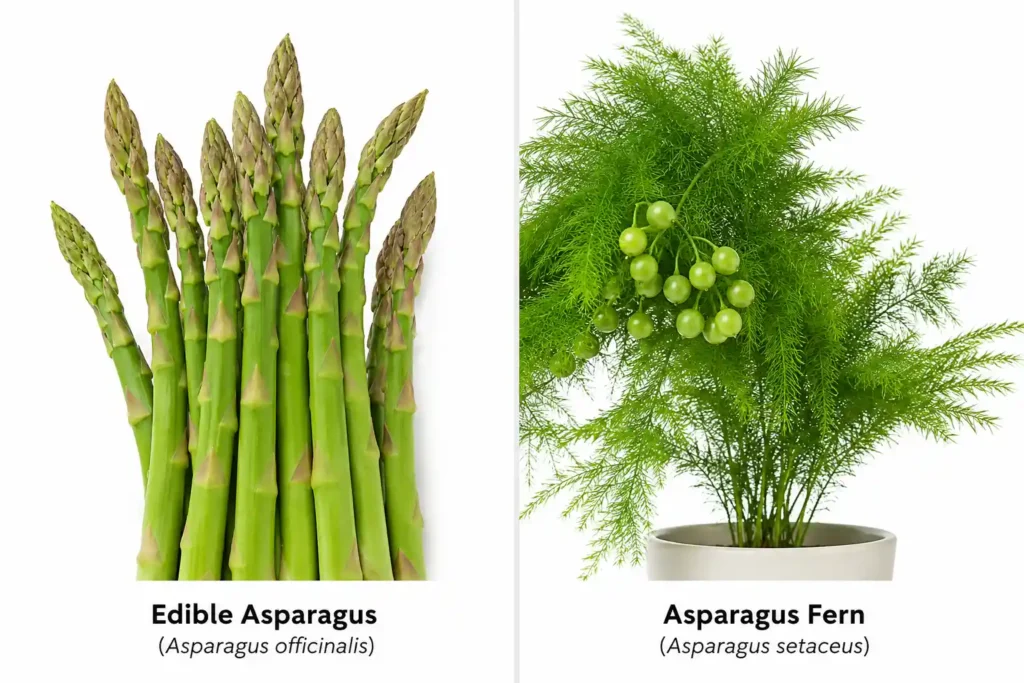
Here’s where a lot of confusion — and real danger — comes in. The asparagus vegetable in your grocery cart is a completely different plant from asparagus fern (Asparagus densiflorus or Asparagus setaceus), a popular ornamental houseplant. Asparagus fern is considered toxic to dogs and can cause skin irritation, vomiting, and abdominal pain, especially from its berries. If you have this plant at home, treat it as off-limits, not as a snack source. We’ll cover this in more detail later, including what to do if your dog gets into one.
Asparagus Nutrition Facts for Dogs
Asparagus is often praised as a “superfood” for humans, and some of that reputation carries over — with caveats — for dogs.

Vitamins and Minerals in Asparagus
A single spear contains a mix of vitamin K, vitamin A, vitamin C, vitamin E, folate, and potassium. Vitamin K in particular plays a role in blood clotting, while vitamin A supports vision and immune function. These nutrients aren’t unique to asparagus — many are more concentrated in vegetables like carrots or sweet potatoes — but asparagus does contribute a reasonable micronutrient profile for its low calorie count.
Fiber and Antioxidant Content
Asparagus is a decent source of dietary fiber, which can support digestive regularity in moderate amounts. It also contains antioxidant compounds that help combat oxidative stress, similar to the role antioxidants play in human diets. For dogs, this can translate to modest support for cellular health, though it’s not a substitute for a nutritionally complete diet.
How Dogs’ Bodies Process Asparagus vs. Humans
Dogs are not simply small humans nutritionally. Their digestive systems are shorter and more geared toward processing animal protein efficiently, which means plant-based nutrients, such as those in asparagus, aren’t always absorbed at the same rate as in humans. Practically, this means the vitamin content of asparagus, while present, may offer less measurable benefit to a dog than it does to a person eating the same amount.
Health Benefits of Asparagus for Dogs
Fed correctly, asparagus can be a reasonable addition to a dog’s treat rotation — not a superfood, but not empty calories either.

Digestive and Fiber Benefits
In small amounts, the fiber in asparagus can support healthy digestion and regular bowel movements. This is one of the more consistently cited benefits among veterinary nutrition sources, though the same fiber content is also responsible for the gas and bloating some dogs experience — more on that shortly.
Antioxidant Support for Joint and Immune Health
The antioxidant compounds in asparagus may offer mild support for joint and immune health, particularly in senior dogs where inflammation and immune resilience become bigger concerns. This isn’t a replacement for joint supplements or a vet-formulated senior diet, but as an occasional addition, it’s not without merit.
Low-Calorie Treat Alternative for Weight Management
One of the more practical benefits: asparagus is very low in calories. For dogs on a weight management plan, or those who simply get too many treats throughout the day, a few small pieces of plain steamed asparagus can serve as a lower-calorie alternative to commercial dog treats — many of which are calorie-dense and heavy in fillers.
Risks and Side Effects of Feeding Asparagus to Dogs
This is the section most competing articles gloss over, and it’s arguably the most important one for pet owners actually deciding whether to feed asparagus tonight.

Choking Hazard (Raw Stalks and Whole Spears)
Raw asparagus is fibrous and stringy, and whole spears — especially the thicker, woody stalks — can pose a real choking risk, particularly for small breeds or dogs that tend to gulp their food. This is one of the most preventable risks on this list, and it comes down entirely to preparation, which we’ll walk through in detail later in this guide.
Digestive Upset — Gas, Bloating, Diarrhea
Even when properly prepared, asparagus can cause digestive upset in some dogs, especially with a first-time serving or a larger portion than their system is used to. The same fiber that supports healthy digestion in small amounts can trigger gas, bloating, or loose stool when a dog eats too much, too fast. Dogs with sensitive stomachs may react even to modest servings.
Allergic Reactions and Symptoms to Watch For
Food allergies in dogs are less common with vegetables than with proteins, but they do happen. Watch for symptoms like excessive itching, hives, facial swelling, vomiting, or diarrhea within the first few hours of a new food introduction. If you notice any of these signs after your dog’s first taste of asparagus, discontinue it and contact your veterinarian.
Why Asparagus Isn’t Toxic but Isn’t Always “Safe”
It’s worth separating these two ideas clearly: “non-toxic” means asparagus won’t poison your dog. “Safe” is a more situational judgment that depends on preparation, portion, and your individual dog’s tolerance. A dog with a sensitive GI tract, a small dog prone to choking, or a dog on a restricted diet for kidney or urinary health may have a very different risk profile than a large, healthy adult dog with no dietary restrictions.
Asparagus Fern: A Different and Dangerous Plant
This section deserves its own space because it’s the single most common point of confusion — and the one with real safety stakes.
Asparagus Officinalis vs. Asparagus Fern (Scientific Naming)
The vegetable you eat is Asparagus officinalis. The popular houseplant with feathery, fern-like foliage often sold under names like “emerald feather” or “lace fern” is a different species entirely — Asparagus densiflorus or Asparagus setaceus, depending on the variety. They share a genus and a name, but that’s essentially where the similarity ends. One is dinner. The other belongs on a “keep away from pets” list.
Symptoms of Asparagus Fern Poisoning
According to veterinary toxicology resources, ingestion of asparagus fern — particularly its berries — can cause vomiting, diarrhea, and abdominal pain in dogs. Repeated skin contact with the plant’s sap has also been linked to allergic dermatitis in some animals. It’s classified as toxic by the ASPCA Animal Poison Control Center, which is a useful resource to bookmark if you keep this plant in your home.
What to Do If Your Dog Eats Asparagus Fern (Emergency Steps)
If you suspect your dog has ingested asparagus fern — berries, leaves, or stems — don’t wait for symptoms to escalate. Remove any remaining plant material from your dog’s reach, note how much you think they consumed, and contact your veterinarian or the ASPCA Animal Poison Control Center at (888) 426-4435. Keep an eye out for vomiting, diarrhea, drooling, or skin irritation in the hours that follow, and be ready to seek in-person veterinary care if symptoms are more than mild.
How to Prepare Asparagus for Dogs Safely
Preparation is where most of the actual risk in this whole topic lives — and where most competing guides stop short of giving real, usable detail.

Raw vs. Cooked vs. Steamed — Which Is Best?
Steamed asparagus, served plain, is generally the safest preparation for dogs. Steaming softens the tough fibers that make raw asparagus difficult to chew and digest, reducing both the choking risk and the likelihood of digestive upset. Raw asparagus isn’t off-limits entirely, but it should be finely chopped if offered at all — never given as a whole raw spear. Avoid frying, roasting in oil, or any preparation that adds significant fat.
Cutting Size Guide by Dog Breed/Weight
Size matters more than most owners realize. A good rule of thumb:
- Small breeds (under 20 lbs): cut into pea-sized pieces after steaming
- Medium breeds (20–50 lbs): cut into half-inch pieces
- Large breeds (50+ lbs): smaller chunks or bite-sized spear pieces, still avoiding whole spears
This isn’t just a comfort measure — it’s a direct choking-prevention step, especially important for dogs that tend to swallow food without much chewing.
Ingredients and Seasonings to Avoid
Plain means plain. Skip butter, oil, salt, and any seasoning blends — many contain garlic or onion powder, both of which are toxic to dogs even in small amounts. Cream-based asparagus dishes, like asparagus soup, are also a poor choice due to dairy sensitivity in many dogs and the added fat content. If you’re preparing asparagus specifically for your dog, treat it separately from what’s on your own plate.
Freezing and Storing Asparagus Treats
Steamed asparagus, cut into dog-appropriate pieces, can be frozen in small portions for later use — a practical way to always have a low-calorie treat on hand without needing to prep fresh every time. Store portioned amounts in an airtight container or freezer bag, and thaw only what you plan to use within a day or two to keep it fresh.
How Much Asparagus Can Dogs Eat? (Portion Guide)
Even a dog-safe vegetable can cause problems if the portion doesn’t match the dog. This is one of the most searched-for details on this topic, and one of the least specifically answered.

Serving Size by Dog Weight
As a general starting point:
- Small dogs (under 20 lbs): 1–2 small pieces (roughly one steamed tip), once or twice a week
- Medium dogs (20–50 lbs): 3–5 small pieces, up to a few times a week
- Large dogs (50+ lbs): 4–6 pieces, or roughly half a spear chopped, a few times a week
These are starting guidelines, not fixed rules — a dog’s activity level, current diet, and individual tolerance all play a role. If your dog has never had asparagus before, start smaller than you think you need to.
The 10% Treat Rule Explained
Veterinary nutritionists commonly recommend that treats — including vegetables like asparagus — make up no more than about 10% of a dog’s daily caloric intake. The remaining 90% should come from a complete and balanced dog food. Asparagus is low-calorie, so it’s easier to stay within this limit than with richer treats, but it’s still worth keeping in mind, especially for smaller dogs with lower daily calorie needs overall.
How Often Dogs Can Eat Asparagus
There’s no harm in offering asparagus a few times a week as an occasional treat, but it isn’t something that needs to appear in your dog’s bowl daily. Rotating it with other dog-safe vegetables — carrots, green beans, cucumber — gives your dog nutritional variety without over-relying on any single food, and it reduces the odds of digestive upset from repeated exposure to the same fiber source.
Special Considerations: Puppies, Seniors, and Dogs with Health Conditions
Not every dog should approach asparagus the same way. A few groups warrant extra caution.

Can Puppies Eat Asparagus?
Puppies have more sensitive digestive systems than adult dogs, and their nutritional needs are more tightly tied to growth-formulated puppy food. A tiny taste of well-cooked, plain asparagus is unlikely to cause harm, but it’s best introduced later — after 6 months of age — and in very small amounts, if at all. Puppies are also more prone to choking on fibrous foods, so cutting size matters even more here.
Asparagus for Dogs with Kidney Disease
This is a genuinely important consideration that many articles skip entirely. Asparagus contains potassium and moderate amounts of other minerals that can matter for dogs on a kidney-support diet, which is often restricted in specific nutrients. If your dog has diagnosed kidney disease, don’t add asparagus — or any new food — without checking with your veterinarian first. What’s a harmless treat for a healthy dog can complicate a carefully managed renal diet.
Asparagus for Diabetic or Pancreatitis-Prone Dogs
For diabetic dogs, plain asparagus is generally a reasonable low-glycemic option, but any dietary change should be run past your vet to keep insulin management consistent. For dogs prone to pancreatitis (Schnauzers and Yorkshire Terriers are commonly cited as higher-risk breeds), the concern isn’t the asparagus itself — it’s any butter, oil, or fatty seasoning added to it. Keep it strictly plain and steamed for these dogs, or skip it if your vet advises against new treats altogether.
Introducing Asparagus to Your Dog’s Diet Safely
How you introduce a new food often matters more than the food itself.
The 3-Day Introduction Rule
A practical approach many vets recommend for any new food: offer a small amount, then wait 24 hours before giving more. Watch your dog’s stool, energy level, and appetite over that period. If everything looks normal, you can gradually offer slightly larger portions over the next couple of days. This slow approach makes it much easier to identify whether asparagus — rather than something else in their day — is the cause of any digestive change.
Signs to Stop Feeding Immediately
Stop offering asparagus and contact your vet if you notice vomiting, diarrhea, unusual lethargy, excessive gas paired with visible discomfort, or any skin reaction like hives or facial swelling. Most reactions, if they happen, tend to show up within a few hours of eating.
What to Pair Asparagus With for a Balanced Topper
If you’re using asparagus as a food topper rather than a standalone treat, pair it with something protein-based, like plain shredded chicken or a spoonful of plain pumpkin, rather than combining it with other new vegetables at the same time. This keeps the introduction process clean and makes it easier to isolate the cause if any reaction occurs.
Asparagus vs. Other Dog-Safe Vegetables
Asparagus isn’t the only option, and it’s not necessarily the best one for every dog.

Nutrient Comparison Table
| Vegetable | Calories (per 100g) | Fiber | Standout Nutrient | Choking Risk |
| Asparagus | ~20 | Moderate | Vitamin K | Moderate (raw/whole) |
| Carrots | ~41 | Moderate-High | Beta-carotene (Vitamin A) | Low (if sliced) |
| Green Beans | ~31 | High | Vitamin C, Fiber | Low |
| Broccoli | ~34 | High | Vitamin C, Vitamin K | Low (if chopped) |
Best Alternatives If Your Dog Reacts Poorly to Asparagus
If your dog shows sensitivity to asparagus — persistent gas, loose stool, or disinterest — green beans and carrots are widely considered easier on the digestive system and carry a lower choking risk when sliced appropriately. Both are also more universally recommended by veterinarians as everyday dog-safe vegetables, making them a solid substitute if asparagus doesn’t agree with your dog.
Real-Life Case Studies
Real examples make the risks and benefits easier to picture than guidelines alone.

Case Study 1 — Choking Incident from Whole Raw Spear (Small Breed)
A 12-pound terrier mix was given a whole raw asparagus spear as a well-meaning treat during dinner prep. The dog attempted to swallow it in large bites rather than chewing it down, and began gagging within seconds. The owner performed a visual check, was able to remove the lodged piece, and the dog recovered without further incident. This is a commonly reported scenario among veterinary emergency clinics and underscores why whole raw spears — especially for small breeds — are considered one of the more preventable risks tied to feeding asparagus.
Case Study 2 — Asparagus Fern Ingestion and Emergency Vet Visit
A dog owner with an indoor asparagus fern noticed their dog had chewed on the plant’s foliage and ingested several berries while unsupervised. Within a few hours, the dog developed vomiting and mild abdominal discomfort. A call to the ASPCA Animal Poison Control Center led to a same-day veterinary visit, where the dog was monitored and treated supportively. The dog recovered fully within 24 hours, but the case is a clear reminder that asparagus fern — despite its harmless-sounding name — belongs on the same “keep away from pets” list as other toxic houseplants.
Case Study 3 — Successful Introduction as a Joint-Health Supplement Treat
A senior Labrador with mild joint stiffness was introduced to small portions of steamed, plain asparagus twice a week as part of a broader plan that included vet-recommended joint supplements. Over several weeks, the owner reported no digestive issues and noted the dog readily accepted it as a low-calorie treat alternative to higher-fat commercial options. While asparagus wasn’t treated as a therapeutic food on its own, it fit well into a balanced approach to the dog’s diet and weight management.
Expert Vet Tips for Feeding Asparagus to Dogs
A few consistent recommendations show up across veterinary and canine nutrition guidance.
Tip 1 — Always Steam, Never Season.
Plain, steamed asparagus is the safest form. Skip butter, oil, salt, and any seasoning blend, no matter how mild it seems.
Tip 2 — Watch Urine and Stool Changes in the First 24 Hours.
Asparagus is known to change the smell of urine in humans, and while less documented in dogs, digestive changes — loose stool, gas, or reduced appetite — are the more relevant signs to monitor after a first feeding.
Tip 3 — Keep Asparagus Fern Out of Reach as a Houseplant.
If you keep this plant indoors or in a garden your dog has access to, treat it as a toxic plant, not a curiosity. Placement matters as much as awareness.
Tip 4 — Consult Your Vet Before Adding to Dogs with Pre-Existing Conditions.
Kidney disease, pancreatitis history, and diabetes all change the risk calculation. A quick check-in with your veterinarian before introducing any new food is a low-effort way to avoid complications.
Tip 5 — Moderation Is Key Even for “Safe” Vegetables.
Asparagus is not a dietary staple for dogs. Treated as an occasional, well-prepared addition alongside a complete and balanced diet, it’s a reasonable choice — not a food dogs need, but not one to fear either.
Frequently Asked Questions
Can dogs eat raw asparagus?
In small, finely chopped amounts, yes — but raw asparagus is tougher to chew and digest than cooked, and whole raw spears pose a choking risk. Steamed and plain is the safer default.
Can dogs eat asparagus stalks or just the tips?
Both are technically safe, but the woody lower stalks are more fibrous and harder to chew. Trimming tougher ends and cutting the rest into appropriately sized pieces reduces choking risk.
Is asparagus fern toxic to dogs?
Yes. Asparagus fern (Asparagus densiflorus or setaceus) is a different plant from the asparagus vegetable and is classified as toxic to dogs, particularly its berries, which can cause vomiting, diarrhea, and abdominal pain.
Can dogs eat asparagus every day?
It’s not recommended as a daily food. A few times a week, in small portions, keeps it within safe treat limits and reduces the risk of digestive upset from repeated fiber intake.
Does asparagus make dogs gassy?
It can. The fiber content that supports digestion in small amounts can lead to gas or bloating if a dog eats too much, especially the first time it’s introduced.
Can dogs eat canned or pickled asparagus?
It’s best avoided. Canned asparagus is typically high in sodium, and pickled varieties often contain vinegar, salt, and seasonings that aren’t suitable for dogs. Fresh, plain, steamed asparagus is the better choice.
Why does my dog’s urine smell different after eating asparagus?
This effect is well documented in humans due to sulfur-containing compounds in asparagus, though it’s less consistently reported in dogs. If you notice a change, it’s generally not a cause for concern on its own.
Can dogs eat asparagus soup or cream-based dishes?
No — cream, butter, and seasoning commonly used in asparagus soup make it a poor choice for dogs, both due to dairy sensitivity and added fat content.
Can puppies eat asparagus?
Puppies can have a small taste after around 6 months of age, but their more sensitive digestive systems and growth-specific nutritional needs mean it’s best offered sparingly, if at all, and always well-cooked.
What vegetables are toxic to dogs?
Onions, garlic, chives, and wild mushrooms are among the vegetables and plants genuinely toxic to dogs — a different category from asparagus, which is non-toxic when prepared properly.

Conclusion
Asparagus lands in a fairly reassuring spot for dog owners: it’s not toxic, it offers a modest nutritional boost, and it can be a reasonable low-calorie treat when prepared plain, cooked, and cut to an appropriate size. The real risks come down to preparation and portion — a whole raw spear, a buttery seasoning, or an oversized serving turn a harmless vegetable into an avoidable problem.
The one detail worth remembering above all else is the distinction between asparagus the vegetable and asparagus fern the houseplant. They share a name and little else, and only one of them belongs anywhere near your dog’s bowl.
If your dog has a pre-existing health condition — kidney disease, pancreatitis history, or diabetes — check with your veterinarian before adding asparagus or any new food to their routine. For everyone else, a few small, steamed, unseasoned pieces a couple of times a week is a safe, sensible way to share this vegetable with your dog.
Curious about other vegetables your dog can or can’t eat? Explore our full guide to dog-safe fruits and vegetables for more vet-backed feeding advice.