Can Dogs Eat Potatoes? Safe and Unsafe Types Explained
Yes, most healthy dogs can eat a small amount of plain, fully cooked potato occasionally. However, dogs should not...
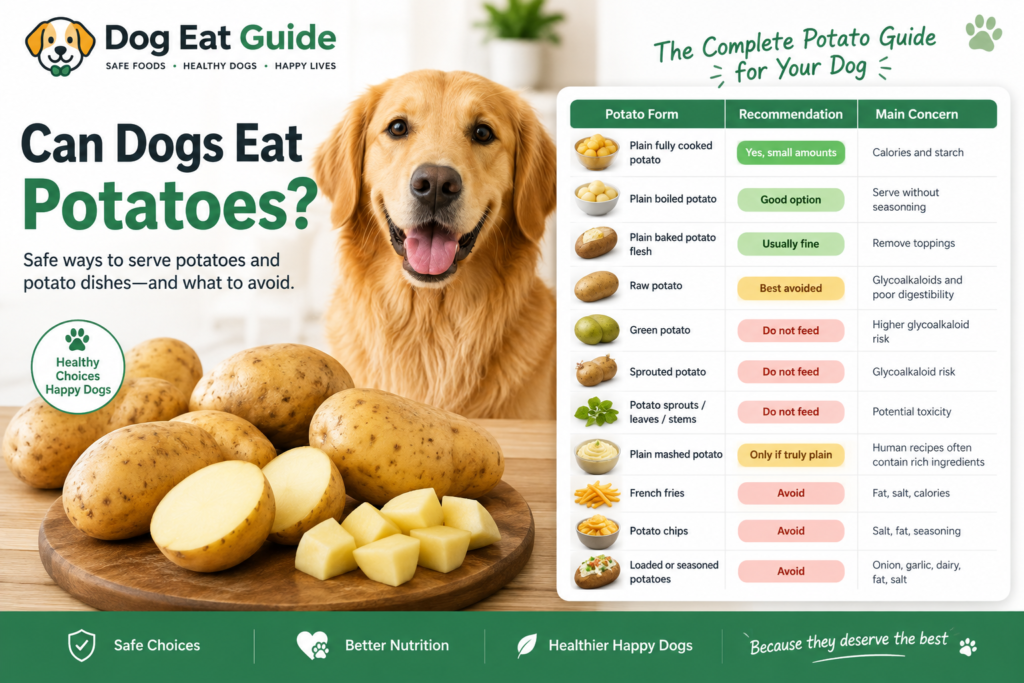
Yes, most healthy dogs can eat a small amount of plain, fully cooked potato occasionally.
However, dogs should not be intentionally fed raw, green, or sprouted potatoes, and they should be kept away from potato leaves and stems. Green or sprouted potatoes may contain higher levels of glycoalkaloids such as solanine, which can cause poisoning.
French fries, chips, loaded baked potatoes, and rich mashed potatoes are also poor choices because they often contain excessive fat, salt, dairy, garlic, onion, or other ingredients dogs do not need.
Quick Answer: Are Potatoes Safe for Dogs?
The safety of potatoes depends heavily on how they are prepared.
| Potato Form | Recommendation | Main Concern |
|---|---|---|
| Plain fully cooked potato | Yes, small amounts | Calories and starch |
| Plain boiled potato | Good option | Serve without seasoning |
| Plain baked potato flesh | Usually fine | Remove toppings |
| Raw potato | Best avoided | Glycoalkaloids and poor digestibility |
| Green potato | Do not feed | Higher glycoalkaloid risk |
| Sprouted potato | Do not feed | Glycoalkaloid risk |
| Potato sprouts / leaves / stems | Do not feed | Potential toxicity |
| Plain mashed potato | Only if truly plain | Human recipes often contain rich ingredients |
| French fries | Avoid | Fat, salt, calories |
| Potato chips | Avoid | Salt, fat, seasoning |
| Loaded or seasoned potatoes | Avoid | Onion, garlic, dairy, fat, salt |
ASPCA notes that cooked potatoes can be offered in moderation, while raw potatoes may be problematic. Pet Poison Helpline specifically warns against green potatoes and potato plant material because they can contain solanine.
Are Potatoes Toxic to Dogs?
Normal, fully cooked potato flesh is not generally considered toxic to dogs.
The more important concern is the raw, green, sprouted, or plant form of the potato.
White potatoes belong to the Solanum or nightshade family. Members of this plant family can contain glycoalkaloids, including solanine.
Green potatoes, sprouts, and potato plant material can contain higher concentrations of these compounds and should not be fed to dogs.
The green color itself comes from chlorophyll and is not the toxin. However, visible greening can occur alongside increased glycoalkaloid concentrations, which is why a green potato is a useful warning sign.
Do not try to make a green or heavily sprouted potato suitable for your dog by cooking it. Discard it instead.
Can Dogs Eat Cooked Potatoes?
Yes. Many healthy dogs can eat a small amount of thoroughly cooked, plain potato.
Suitable preparation methods include:
- boiling
- steaming
- baking
The potato should be fully soft and served without seasoning.
Avoid adding:
- butter
- salt
- garlic
- onion
- cheese
- cream
- gravy
- cooking oil
- spice blends
Cooked potato should be treated as an occasional extra rather than a necessary component of your dog’s diet.
Can Dogs Eat Raw Potatoes?
It is best not to intentionally feed raw potatoes to dogs.
Raw potato is harder to digest than cooked potato and naturally contains glycoalkaloids. The concern increases if the potato is green, damaged, or sprouted.
ASPCA specifically distinguishes raw potatoes from cooked potatoes and lists cooked potatoes as suitable only in moderation.
If your dog accidentally eats a tiny piece of an ordinary raw potato, that does not automatically mean serious poisoning will occur.
The risk depends on:
- how much was eaten
- whether the potato was green
- whether sprouts were present
- your dog’s body size
- whether symptoms develop
A significant quantity, green potato, or uncertain exposure deserves veterinary advice.
Can Dogs Eat Green Potatoes?
No. Green potatoes should not be fed to dogs.
Pet Poison Helpline warns that green potatoes contain solanine and should be avoided.
If your dog eats a green potato, the level of concern depends on the amount consumed and your dog’s size.
Possible signs after a concerning nightshade exposure may include:
- vomiting
- diarrhea
- excessive salivation
- weakness
- lethargy
- unusual behavior
- tremors
- loss of coordination
ASPCA describes gastrointestinal and neurological signs associated with toxic Solanum plants.
Contact a veterinarian or animal poison-control service after a substantial or uncertain green-potato exposure rather than waiting for severe symptoms.
Can Dogs Eat Potato Sprouts?
No.
Potato sprouts and other plant material are among the parts you should keep away from dogs.
If a potato has clearly sprouted, become green, or deteriorated, it is simpler and safer to discard the entire potato rather than preparing it as a dog treat.
Dogs should also be prevented from chewing:
- potato leaves
- potato stems
- garden potato plants
Can Dogs Eat Potato Skin?
A small amount of fully cooked, non-green potato skin is different from green potato skin, but peeling the potato is the simplest choice when preparing it specifically for a dog.
Skin may be more difficult for some dogs to chew or digest, and it can make green areas easier to overlook.
If you serve potato:
- inspect it carefully
- reject anything green or sprouted
- remove eyes and damaged portions
- consider peeling it
- cook thoroughly
Never serve visibly green skin.
Can Dogs Eat Boiled Potatoes?
Yes. Plain boiled potato is one of the simpler preparations.
Boil until completely soft, allow it to cool, and offer only a small amount.
Do not add:
- salt
- butter
- milk
- cheese
- garlic
- onion
A plain boiled potato is very different from the seasoned potatoes prepared for a human meal.
Can Dogs Eat Baked Potatoes?
A small amount of plain baked potato flesh can generally be offered to a healthy dog.
Remove toppings first.
Do not share a loaded baked potato containing ingredients such as:
- butter
- sour cream
- cheese
- bacon
- onion
- garlic
- salty sauces
These additions can make the dish much less appropriate than the potato itself.
Can Dogs Eat Mashed Potatoes?
Only when the mashed potato is completely plain.
Most human mashed-potato recipes contain butter, milk, cream, cheese, salt, garlic, or other seasonings.
For that reason, do not assume mashed potatoes are dog-safe simply because the main ingredient is potato.
If you specifically prepare a small amount of plain cooked potato and mash it without additions, it can be offered occasionally.
Can Dogs Eat French Fries?
French fries should not be used as a regular dog treat.
They are typically:
- high in fat
- high in calories
- salted
- fried in oil
- sometimes heavily seasoned
A single dropped fry is different from intentionally giving your dog a serving of fries, but plain cooked potato is a much better option.
High-fat foods may also be inappropriate for dogs whose diet is being managed because of pancreatitis or another medical condition.
Can Dogs Eat Potato Chips?
Potato chips are also best avoided.
They provide little practical benefit for dogs and can contain substantial amounts of:
- sodium
- fat
- calories
- flavoring powders
Some flavored chips also contain garlic or onion ingredients.
WSAVA lists onion, garlic, and related Allium foods among ingredients that can be toxic to dogs.
Are Potatoes Good for Dogs?
Potatoes contain carbohydrates and micronutrients, but that does not mean dogs need potatoes for good health.
A dog eating a nutritionally complete and balanced diet should already receive the nutrients required for its life stage.
The FDA explains that foods labeled “complete and balanced” are intended to provide the nutrients required as the animal’s primary diet. Treats and table foods typically are not nutritionally complete.
Therefore, potato is better viewed as:
an optional occasional food, not a nutritional supplement.
It should not be promoted as a food that:
- boosts immunity
- treats diarrhea
- improves digestion
- prevents disease
- provides essential nutrition missing from normal dog food
How Much Potato Can a Dog Eat?
There is no universal evidence-based potato-serving chart for every dog.
Instead, count potato as part of your dog’s total daily treat allowance.
WSAVA and UC Davis recommend keeping treats and additional foods to no more than about 10% of daily calorie intake, with at least roughly 90% of calories coming from a complete and balanced diet.
That 10% includes all treats combined, not just potatoes.
For the first serving, start with a very small piece of plain cooked potato.
There is no need to give your dog the maximum amount allowed by the 10% rule.
How to Prepare Potatoes Safely for Dogs
Use a simple preparation method:
- Choose a fresh potato with no green areas or sprouts.
- Wash it thoroughly.
- Remove sprouts, eyes, damaged portions, and preferably the skin.
- Boil, steam, or bake until completely soft.
- Allow it to cool.
- Cut into small pieces appropriate for your dog’s size.
- Serve completely plain.
- Offer only a small amount.
Do not add butter, salt, oils, sauces, or seasoning.
If the potato is green or substantially sprouted, discard it rather than preparing it for your dog.
Can Puppies Eat Potatoes?
A puppy already eating solid food may be able to tolerate a tiny amount of plain cooked potato.
However, puppies have important nutritional requirements for growth.
Their complete puppy food should remain the main diet, and unnecessary extras should not replace meaningful amounts of it.
If you offer potato:
- use only fully cooked plain potato
- serve a tiny piece
- avoid green or raw potato
- watch for digestive upset
Can Dogs Eat Potatoes Every Day?
There is usually no reason to give potatoes to a dog every day.
Potatoes add carbohydrates and calories, and frequent extras make it easier to reduce the proportion of nutritionally complete food in the diet.
An occasional small treat is simpler.
If potatoes are part of a veterinary-formulated complete diet, that is different from independently adding table potatoes every day.
Which Dogs Need Extra Caution With Potatoes?
Generic feeding advice may not apply to dogs with medical conditions.
Ask your veterinary team before regularly adding potatoes if your dog has:
- diabetes
- obesity
- pancreatitis
- chronic gastrointestinal disease
- kidney disease requiring dietary management
- food sensitivities
- a prescription diet
- an elimination diet
WSAVA notes that normal treats may not be appropriate for dogs with medical conditions, dietary sensitivities, or veterinary-prescribed diets.
What If My Dog Ate a Small Amount of Cooked Potato?
If your healthy dog ate a small amount of plain, fully cooked, non-green potato, serious toxicity is unlikely.
Monitor for digestive upset such as:
- gas
- loose stool
- vomiting
- diarrhea
Check whether any additional ingredients were present.
The situation changes if the food contained onion, garlic, excessive fat, or another unsafe ingredient.
What If My Dog Ate a Raw Potato?
First determine:
- how much was eaten
- whether it was green
- whether sprouts were present
- when the ingestion occurred
- your dog’s approximate body weight
A tiny amount of ordinary raw potato does not carry the same risk as a large amount of green or sprouted potato.
Contact your veterinarian if:
- the amount was significant
- the potato was green or sprouted
- your dog is very small
- symptoms develop
- you cannot determine how much was eaten
What If My Dog Ate a Green or Sprouted Potato?
Treat this more seriously than an ordinary cooked-potato exposure.
Remove access to the remaining potato and contact your veterinarian or an animal poison-control service for advice.
Do not induce vomiting unless a veterinary professional or poison-control specialist specifically instructs you to do so.
ASPCA advises contacting a veterinarian or poison-control service promptly after suspected ingestion of potentially toxic plant material.
What If the Potatoes Contained Onion or Garlic?
Prepared potato dishes can sometimes be more concerning because of their ingredients than because of the potato.
WSAVA lists onion and garlic among toxic food ingredients for dogs.
Check the recipe or packaging carefully.
Contact your veterinarian or poison-control service if your dog consumed a meaningful amount of potato containing onion, garlic, or another known unsafe ingredient.
When Should I Seek Veterinary Help?
Seek urgent veterinary care if your dog develops:
- difficulty breathing
- choking
- collapse
- severe weakness
- significant tremors
- seizures
- inability to stand normally
- repeated vomiting
- severe abdominal pain or swelling
- marked neurological changes
Also seek veterinary guidance after a substantial ingestion of:
- green potatoes
- heavily sprouted potatoes
- potato sprouts
- potato leaves or stems
For U.S. pet owners, ASPCA Animal Poison Control provides a 24-hour poison hotline.
Potatoes vs Sweet Potatoes: Are They the Same?
No.
White potatoes and sweet potatoes are botanically different.
Sweet potatoes do not have the same nightshade glycoalkaloid issue associated with green white potatoes.
If you are comparing the two, see our Can Dogs Eat Sweet Potatoes? guide.
Neither food is required as a dog treat, and both should be prepared plainly and offered in modest portions.
Frequently Asked Questions
Can dogs eat raw potatoes?
It is best not to intentionally feed raw potato. Raw potato is harder to digest, and the concern is greater if it is green or sprouted.
Can dogs eat cooked potatoes?
Yes. Most healthy dogs can have a small amount of plain, thoroughly cooked potato.
Can dogs eat boiled potatoes?
Yes. Plain boiled potatoes without salt, butter, garlic, or onion are one of the simpler options.
Can dogs eat baked potatoes?
A small amount of plain baked potato flesh can generally be offered. Avoid toppings.
Can dogs eat potato skins?
Cooked, non-green skin is not the same as green potato skin, but peeling the potato is the simplest and more cautious preparation.
Can dogs eat green potatoes?
No. Green potatoes should not be intentionally fed because they may contain increased glycoalkaloid concentrations.
Can dogs eat sprouted potatoes?
No. Do not feed heavily sprouted potatoes or potato sprouts.
Can dogs eat mashed potatoes?
Only if completely plain. Typical human mashed potatoes often contain butter, cream, salt, garlic, or other additions.
Can dogs eat French fries?
They are best avoided because of their fat, salt, calories, and possible seasoning.
Can dogs eat potato chips?
No need. Chips are typically high in salt, fat, and calories and may contain additional seasonings.
Can puppies eat potatoes?
A puppy may be able to tolerate a tiny amount of plain cooked potato, but a complete growth diet should remain the priority.
Can dogs eat potatoes every day?
There is generally no nutritional reason to. Keep potatoes as an occasional extra within the overall treat allowance.
Final Answer: Can Dogs Eat Potatoes?
Yes, most healthy dogs can eat small amounts of plain, fully cooked potato occasionally.
Choose a fresh potato with no green coloring or sprouts, cook it thoroughly, serve it plain, and keep the portion modest.
Do not intentionally feed dogs:
- raw potatoes
- green potatoes
- sprouted potatoes
- potato sprouts
- potato leaves or stems
Avoid fries, chips, rich mashed potatoes, and heavily seasoned potato dishes.
If your dog eats a significant amount of green or sprouted potato or develops vomiting, weakness, tremors, coordination problems, or another concerning symptom, contact a veterinarian or animal poison-control service promptly.
Sources
- World Small Animal Veterinary Association (WSAVA) — Feeding Treats to Your Dog. Used for the 10% treat-calorie guideline and guidance about dogs with medical conditions. WSAVA — Feeding Treats to Your Dog
- UC Davis School of Veterinary Medicine — Treat Guidelines for Dogs. Supports keeping treats and additional foods below about 10% of daily calories. UC Davis — Treat Guidelines for Dogs
- Pet Poison Helpline — Green Potato. Used for green-potato and solanine safety information. Pet Poison Helpline — Green Potato Safety
- ASPCA Animal Poison Control — Vegetable Garden Safety. Supports the distinction between problematic raw potatoes and cooked potatoes offered in moderation. ASPCA — Vegetable Garden Safety
- FDA — Complete and Balanced Pet Food. Used for the distinction between complete diets and optional treats or table foods. FDA — Complete and Balanced Pet Food