Can Dogs Eat Sweet Potatoes? Safety, Portions and Preparation
Can dogs eat sweet potatoes? Yes, most healthy dogs can eat small amounts of plain, fully cooked sweet potato...

Can dogs eat sweet potatoes? Yes, most healthy dogs can eat small amounts of plain, fully cooked sweet potato as an occasional treat.
Sweet potato can be served boiled, baked, steamed, or microwaved until soft. Keep it plain and avoid butter, salt, sugar, syrup, garlic, onion, rich sauces, and other seasonings.
Preparation and portion size matter. Sweet potato is a carbohydrate-rich food, so it should complement a complete and balanced diet rather than replace your dog’s normal food.
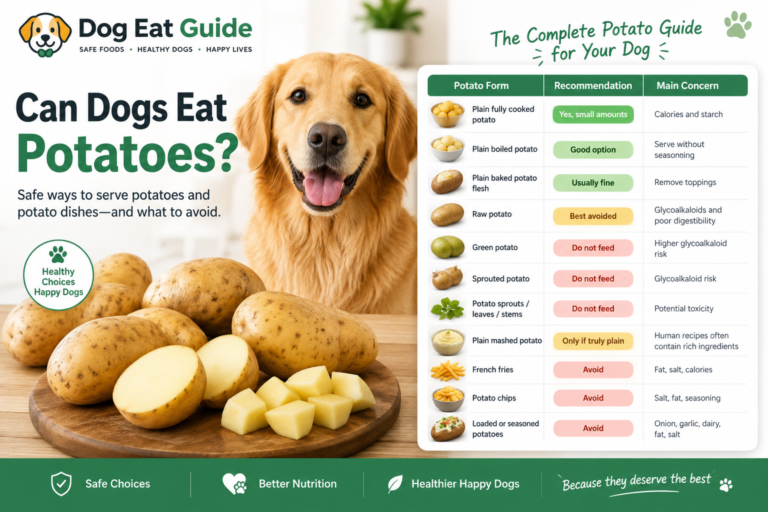
If you are comparing similar foods, see our guide to can dogs eat potatoes.
Quick Answer: Is Sweet Potato Safe for Dogs?
For most healthy dogs, plain cooked sweet potato is generally suitable in small amounts.
Veterinary sources including Texas A&M and VCA include sweet potato among foods that can be used as an occasional dog treat when appropriately prepared.
| Sweet Potato Form | Recommendation | Main Concern |
|---|---|---|
| Plain cooked sweet potato | Yes, small amounts | Calories and digestive tolerance |
| Boiled or steamed | Good option | Serve plain |
| Baked sweet potato | Usually fine | No butter or seasoning |
| Cooked skin | Use caution | Fibrous and harder for some dogs to digest |
| Raw chunks | Best avoided | Hard texture and reduced digestibility |
| Mashed sweet potato | Yes, if plain | Avoid added dairy, butter, sugar, or salt |
| Sweet potato fries | Avoid as a routine treat | Fat, salt, and seasoning |
| Sweet potato chips | Avoid | Fat, sodium, calories |
| Candied sweet potatoes | Avoid | Sugar and other ingredients |
| Sweet potato casserole | Avoid | Often rich, sweetened, or seasoned |
Is Sweet Potato Good for Dogs?
Sweet potato can be a useful occasional vegetable treat, but it should not be treated as a nutritional supplement or medicine.
Sweet potatoes naturally contain carbohydrates, fiber, potassium, vitamin C, and carotenoids such as beta-carotene. USDA nutrition data also shows that sweet potatoes contain very little fat.
That does not mean a dog needs sweet potato to obtain those nutrients.
A dog eating a complete and balanced food should already receive the nutrients required for normal health.
The practical benefit is simpler: plain sweet potato can provide variety as a relatively low-fat treat.
What Nutrients Are in Sweet Potatoes?
Sweet potatoes provide:
- dietary fiber
- carbohydrates
- beta-carotene
- potassium
- vitamin C
- several B vitamins
- small amounts of protein
Orange-fleshed sweet potatoes are especially rich in beta-carotene.
However, avoid claims that sweet potato automatically:
- boosts immunity
- cures digestive problems
- prevents disease
- improves eyesight
- treats diarrhea
- prevents inflammation
Those benefits cannot be assumed simply because the food contains vitamins or fiber.
Can Dogs Eat Cooked Sweet Potatoes?
Yes. Plain, fully cooked sweet potato is the simplest form to offer most dogs.
Cooking softens the vegetable and makes its starch easier to digest. VCA notes that dogs can digest complex carbohydrates more efficiently after cooking.
Suitable cooking methods include:
- boiling
- steaming
- baking
- microwaving
Let the sweet potato cool before serving.
Do not add butter, oil, salt, sugar, syrup, or seasoning.
Can Dogs Eat Raw Sweet Potatoes?
Raw sweet potato is not the preferred form.
It is firm, starchy, and harder to chew and digest than cooked sweet potato. Larger raw chunks can also create a physical swallowing or foreign-body concern, especially for dogs that gulp their food.
Cooking makes complex carbohydrates easier for dogs to digest.
If you want to give sweet potato as a treat, cook it until soft first.
Can Dogs Eat Sweet Potato Skin?
Cooked sweet potato skin is not automatically poisonous, and veterinary diets may sometimes include cooked sweet potato with the skin. Cornell, for example, includes baked sweet potato with or without skin in one veterinary-formulated home-prepared diet.
However, skin is more fibrous than the soft flesh.
For small dogs, dogs that swallow food quickly, or dogs with sensitive digestion, peeling the sweet potato can make it easier to serve.
If you leave a little skin on, make sure it is:
- washed
- thoroughly cooked
- soft
- cut into small pieces
Can Dogs Eat Mashed Sweet Potatoes?
Yes, plain mashed sweet potato can be suitable.
The important word is plain.
Do not add:
- butter
- cream
- milk
- salt
- brown sugar
- maple syrup
- marshmallows
- garlic
- onion
- artificial sweeteners
A few spoonfuls of a heavily prepared human side dish are very different from plain mashed sweet potato.
Can Dogs Eat Sweet Potato Fries?
Sweet potato fries are not a good routine dog treat.
Restaurant or packaged fries commonly contain:
- cooking oil
- salt
- seasoning
- sauces
These ingredients add unnecessary fat, sodium, and calories.
Plain cooked sweet potato is a much simpler option.
Can Dogs Eat Sweet Potato Chips?
It is better to avoid regular human sweet potato chips.
They are usually calorie-dense and may contain oil, salt, flavorings, garlic, onion powder, or other seasonings.
If you want to offer sweet potato, use soft plain cooked pieces instead.
Can Dogs Eat Sweet Potato Casserole?
Human sweet potato casserole is best kept away from dogs.
Recipes can contain butter, cream, sugar, marshmallows, salt, spices, and other ingredients your dog does not need.
More importantly, some prepared foods may contain ingredients that are genuinely unsafe for dogs.
WSAVA and ASPCA identify foods such as onion, garlic, and xylitol as hazards for dogs.
Serve plain sweet potato instead.
Can Dogs Eat Canned Sweet Potatoes?
Potentially, but check the ingredient list carefully.
A product containing only:
sweet potato + water
is very different from canned sweet potatoes packed in syrup.
Avoid canned products containing:
- added sugar
- syrup
- salt
- artificial sweeteners
- seasoning
Fresh plain cooked sweet potato is usually easier to evaluate.
Can Dogs Eat Dehydrated Sweet Potato?
Plain single-ingredient dehydrated sweet potato can sometimes be used as a treat, but portion size and texture matter.
Drying removes water, which makes food more calorie-dense by weight.
Large, hard pieces may also be difficult for some dogs to chew safely.
UC Davis specifically notes dried sweet potato products within its broader dog-treat guidance and emphasizes keeping all treats within the dog’s calorie allowance.
Supervise your dog while chewing dehydrated treats.
How Much Sweet Potato Can a Dog Eat?
There is no universal veterinary rule saying every small dog should receive a fixed tablespoon amount while every large dog should receive a particular number of tablespoons.
A better approach is to include sweet potato within your dog’s total daily treat allowance.
WSAVA recommends that treats make up no more than about 10% of a dog’s daily calorie intake.
UC Davis gives the same general guideline: at least 90% of calories should come from a complete and balanced diet.
That 10% includes:
- sweet potato
- training treats
- chews
- table scraps
- fruit
- other snacks
It is not a target amount of sweet potato.
For a dog trying sweet potato for the first time, begin with a very small piece and monitor digestive tolerance.
How to Prepare Sweet Potato for Your Dog
Use this simple method:
- Wash the sweet potato thoroughly.
- Peel it if you want a softer, easier-to-digest serving.
- Boil, steam, bake, or microwave until completely soft.
- Let it cool.
- Mash it or cut it into small pieces.
- Serve it plain.
- Start with a small amount.
Do not add seasoning or turn it into a human-style side dish.
VCA specifically lists cooked sweet potato among foods that can be used as dog treats.
Can Puppies Eat Sweet Potatoes?
A puppy that is already eating solid food can generally try a small amount of plain cooked sweet potato.
However, puppy nutrition deserves extra care.
Growing dogs need a complete and balanced food designed for growth. Treats and extra foods should not displace meaningful amounts of that diet.
Offer a tiny soft piece first and stop if the puppy develops vomiting or diarrhea.
Can Dogs Eat Sweet Potato Every Day?
Sweet potato does not need to be fed every day.
An occasional small portion is usually a simpler approach.
Daily additions can gradually increase calorie intake or replace nutritionally complete food if portions become too large.
If you frequently use sweet potato as a training treat or topper, count those calories along with every other treat.
Can Diabetic Dogs Eat Sweet Potatoes?
Dogs with diabetes need individualized dietary management.
Sweet potato contains carbohydrates and calories, which means adding it can affect an established feeding plan.
Do not assume a food is automatically appropriate simply because it is considered healthy.
If your dog has diabetes, ask the veterinarian managing the dog’s diet and medication whether sweet potato fits the feeding plan.
What About Dogs With Pancreatitis?
Plain sweet potato itself is naturally low in fat.
The bigger concern is often how it is prepared.
Avoid:
- fried sweet potato
- butter
- cream
- rich sauces
- oily dishes
Dogs with pancreatitis or another condition requiring dietary fat restriction should follow the diet recommended by their veterinary team.
What About Dogs on Prescription Diets?
Do not routinely add sweet potato to a therapeutic diet without checking first.
WSAVA notes that conventional treats may not be appropriate for dogs with medical conditions, dietary sensitivities, or veterinary-prescribed diets.
This applies particularly to dogs whose diets are being managed for:
- kidney disease
- urinary conditions
- diabetes
- gastrointestinal disease
- food allergy testing
- weight management
Can Dogs Be Allergic to Sweet Potatoes?
A food reaction is possible, but sweet potato should not be presented as a common canine allergen without evidence.
When introducing any new food, offer only one new ingredient at a time.
Possible signs that deserve attention include:
- repeated vomiting
- diarrhea
- persistent itching
- recurring ear problems
- facial swelling
- hives
Severe swelling or difficulty breathing requires urgent veterinary care.
What Happens If a Dog Eats Too Much Sweet Potato?
Eating too much plain cooked sweet potato is more likely to cause digestive upset or excess calorie intake than poisoning.
Possible signs include:
- gas
- soft stool
- diarrhea
- vomiting
- bloating
- reduced appetite
Remove the additional food and monitor your dog.
Contact a veterinarian if symptoms are:
- severe
- persistent
- worsening
- accompanied by significant pain
- associated with unusual lethargy
What If My Dog Swallowed a Large Raw Sweet Potato Piece?
Large, firm pieces may be difficult to chew and can potentially act as foreign material if swallowed whole.
Monitor for:
- repeated vomiting
- loss of appetite
- abdominal pain
- abdominal swelling
- unusual lethargy
- difficulty passing food or stool
Merck Veterinary Manual explains that gastrointestinal foreign bodies can create partial or complete obstruction, and common signs include vomiting, appetite loss, lethargy, diarrhea, and abdominal pain.
If you believe your dog swallowed a large piece or symptoms develop, contact a veterinarian.
Do not induce vomiting unless a veterinary professional specifically instructs you to do so.
What If My Dog Ate Sweet Potato With Garlic or Onion?
Check the complete ingredient list.
Onions, garlic, chives, and related Allium plants can damage red blood cells and cause gastrointestinal irritation in dogs.
If your dog ate a meaningful amount of food containing onion or garlic, contact your veterinarian or an appropriate animal poison-control service for advice.
Risk depends on factors including:
- ingredient
- quantity
- dog’s body weight
- concentration
- health status
What If the Food Contained Xylitol?
Xylitol exposure requires prompt attention.
Xylitol can cause dangerously low blood sugar in dogs and can also cause liver injury.
If a sweetened product contains xylitol and your dog ate it, contact a veterinarian or animal poison-control service promptly rather than waiting for symptoms.
Do Sweet Potatoes Cause DCM in Dogs?
An occasional plain sweet potato treat has not been established as a cause of dilated cardiomyopathy (DCM).
The FDA investigation into non-hereditary DCM has examined complex relationships involving complete diets, formulation, ingredient proportions, genetics, and other factors.
FDA reports included both grain-free and grain-containing foods, and although potatoes—including sweet potatoes—appeared in some reported diets, the agency has not identified a single confirmed ingredient as the cause.
This is very different from saying that feeding a small piece of cooked sweet potato causes DCM.
If you are concerned about the formulation of your dog’s main diet, discuss the complete diet—not one occasional treat—with your veterinarian.
Sweet Potato vs White Potato: Are They the Same?
No.
Sweet potatoes and white potatoes are different plants.
Their preparation and safety considerations should therefore not be assumed to be identical.
If you also feed regular potatoes, see our Can Dogs Eat Potatoes? guide.
Sweet Potato vs Pumpkin: Which Is Better?
Neither food is universally better.
Both may be used as occasional plain foods for some dogs, but the right choice depends on:
- calorie requirements
- digestive tolerance
- medical history
- regular diet
- veterinary recommendations
Neither should automatically be used as a treatment for diarrhea or constipation without understanding why the symptom is occurring.
Frequently Asked Questions
Is sweet potato toxic to dogs?
Plain cooked sweet potato is generally considered suitable for many healthy dogs when offered in moderation. Veterinary sources include sweet potato among possible dog treats.
Can dogs eat boiled sweet potatoes?
Yes. Plain boiled sweet potato can be served once it is completely soft and cool.
Can dogs eat baked sweet potatoes?
Yes. Plain baked sweet potato is generally suitable in small amounts.
Can dogs eat sweet potato skin?
A small amount of soft cooked skin may be tolerated, but the skin is more fibrous than the flesh. Peeling it is often easier for small dogs or dogs with sensitive digestion.
Can dogs eat sweet potato fries?
It is better not to use fries as a routine treat because they commonly contain oil, salt, and seasoning.
Can puppies eat sweet potatoes?
Yes, many puppies can have a tiny amount of plain cooked sweet potato once they are eating solid food. Their complete growth diet should remain the priority.
Can sweet potato help dog diarrhea?
Sweet potato contains fiber, but it should not automatically be used as a treatment for diarrhea. Diarrhea can have many causes, some of which require veterinary care.
Can dogs eat sweet potatoes every day?
They do not need to. Keep sweet potato within the dog’s total treat allowance and make sure complete food remains the main diet.
Are sweet potatoes better than white potatoes?
Not necessarily. Neither is nutritionally required as a treat, and preparation, quantity, and the dog’s health matter more than declaring one universally better.
Do sweet potatoes cause DCM?
There is no evidence that an occasional plain sweet potato treat directly causes DCM. FDA’s investigation concerns complex complete-diet patterns and has not established a single ingredient as the confirmed cause.
Final Answer: Can Dogs Eat Sweet Potatoes?
Yes. Most healthy dogs can eat small amounts of plain, fully cooked sweet potato as an occasional treat.
Cook it until soft, serve it without butter, salt, sugar, oil, or seasoning, and keep the portion within your dog’s overall treat allowance.
Raw large chunks are harder to chew and digest, while fried, sweetened, or seasoned sweet potato dishes add unnecessary ingredients and may contain foods that are unsafe for dogs.
Sweet potato can provide variety, but it is not required for a balanced canine diet and should not be used as a treatment for medical problems without veterinary guidance.
Sources
- World Small Animal Veterinary Association (WSAVA) — Feeding Treats to Your Dog. Treats should make up no more than about 10% of daily calories, and dogs with medical conditions or prescribed diets may need individualized treat choices. View WSAVA guidance
- UC Davis School of Veterinary Medicine — Treat Guidelines for Dogs. Supports keeping additional foods and treats below about 10% of daily calories. View UC Davis guidance
- Texas A&M School of Veterinary Medicine & Biomedical Sciences — Healthy Dog Treat Guidance. Includes sweet potatoes among treat options while emphasizing moderation and individual dietary needs. View Texas A&M guidance
- Merck Veterinary Manual — Gastrointestinal Obstruction in Small Animals. Used for foreign-body obstruction risks and warning signs. View Merck Veterinary Manual
- FDA — Questions & Answers on Non-Hereditary DCM in Dogs. Used to accurately explain the current evidence regarding diet-associated DCM. View FDA DCM guidance
- ASPCA Animal Poison Control — People Foods to Avoid Feeding Your Pets. Used for onion, garlic, and xylitol safety information. View ASPCA food-safety guidance