Can Dogs Eat Marshmallows? Safety Risks, Xylitol, What to Do
Can dogs eat marshmallows? You are enjoying a sweet snack when a marshmallow falls to the floor—and your dog...

Can dogs eat marshmallows? You are enjoying a sweet snack when a marshmallow falls to the floor—and your dog gets to it first. Should you be worried?
Dogs should not be deliberately fed marshmallows. A small amount of a plain marshmallow that contains no xylitol is unlikely to cause serious poisoning in most healthy dogs, but it still provides no nutritional benefit. Marshmallows are high in sugar and may cause digestive upset, contribute to unhealthy weight gain, or become a choking hazard.
Sugar-free marshmallows are a much more serious concern. Some contain xylitol, a sweetener that is highly toxic to dogs. Suspected xylitol ingestion should be treated as a veterinary emergency, even if the dog appears normal.
The exact risk depends on:
- The marshmallow’s complete ingredient list
- Whether it contains xylitol, chocolate, or another dangerous ingredient
- How much the dog consumed
- The dog’s weight, age, and health
- Whether any plastic packaging was swallowed
- Whether the dog is displaying symptoms
If your dog has eaten marshmallows, keep the packaging, check the ingredients, and contact your veterinarian when xylitol, chocolate, concerning symptoms, swallowed packaging, or an unknown product is involved. Do not induce vomiting unless a veterinary professional specifically directs you to do so.
Can Dogs Eat Marshmallows?
The safest answer is no. Marshmallows are designed for people, not dogs, and there is no health-related reason to include them in a canine diet.
However, “not recommended” does not always mean “immediately poisonous.” A plain marshmallow made with sugar, corn syrup, gelatin, and cornstarch is different from a sugar-free marshmallow containing xylitol. Understanding that distinction helps owners respond appropriately after accidental ingestion.
The short answer
Most plain marshmallows are not inherently toxic to dogs, but they are not safe or healthy treats. Their high sugar content, sticky texture, and lack of nutritional value make them an unnecessary risk.
The answer changes when additional ingredients are involved. A marshmallow may require urgent veterinary attention if it contains:
- Xylitol or birch sugar
- Chocolate, cocoa, or cacao
- Coffee or caffeine
- Raisins
- Macadamia nuts
- Other potentially harmful fillings or coatings
Packaging matters too. A dog that eats a bag of ordinary marshmallows may face not only a large sugar intake but also a possible intestinal obstruction if part of the plastic bag was swallowed.
Are plain marshmallows poisonous to dogs?
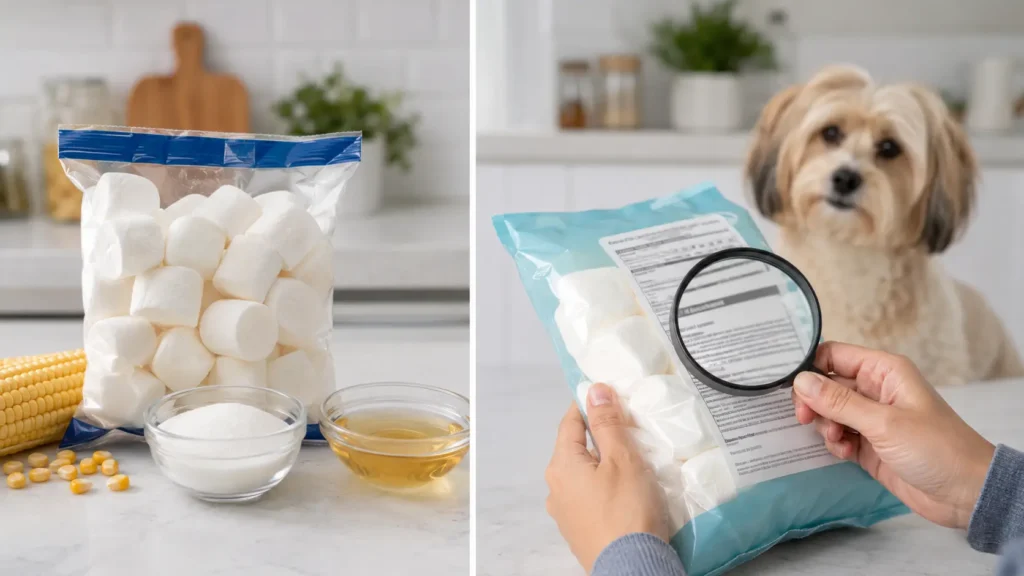
A standard plain marshmallow usually contains sugar, corn syrup, water, gelatin, flavoring, and a coating of cornstarch or confectioners’ sugar. These ingredients are not generally considered acutely poisonous to dogs in the way xylitol or chocolate can be.
That does not make plain marshmallows harmless.
One small, xylitol-free marshmallow is unlikely to produce serious effects in many healthy adult dogs. Some dogs, however, may experience vomiting, diarrhea, gas, or abdominal discomfort. The risk can be greater for puppies, small dogs, diabetic dogs, overweight dogs, and dogs with sensitive digestive systems.
There is no universal number of marshmallows that can be described as safe. Product size and recipes vary, while every dog’s weight and health history are different.
Why marshmallows have no nutritional benefit for dogs
Marshmallows consist mainly of refined sugar and corn syrup. They offer little or no useful fiber, high-quality protein, vitamins, or minerals for a dog.
Regularly giving calorie-dense human food can also displace nutritionally balanced food from the dog’s diet. Over time, excessive treats may contribute to:
- Weight gain
- Poor blood-sugar control
- Dental problems
- Unbalanced nutrition
- Increased risk of diet-related disease
A marshmallow may seem small, but its calories are more significant for a small dog than for an adult human. A dog-formulated training treat or a small piece of a suitable fruit or vegetable is a better reward.
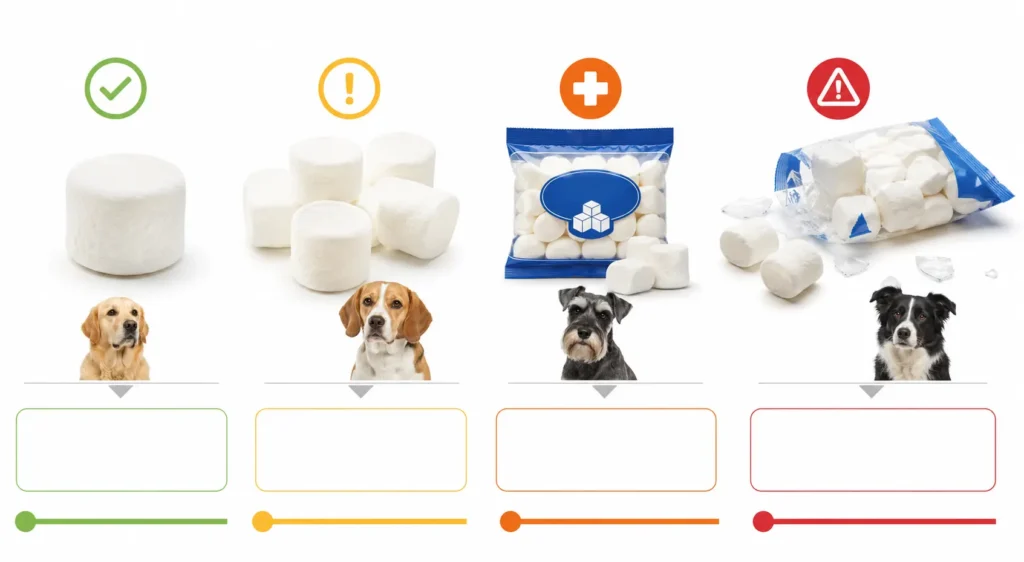
Marshmallow risk at a glance
| Marshmallow product | Main concern | Recommended response |
| One plain, xylitol-free marshmallow | Sugar, digestive upset, choking | Check the label and monitor the dog |
| Several plain marshmallows | High sugar intake and stomach upset | Contact a veterinarian if the amount is large or symptoms appear |
| Sugar-free marshmallow with xylitol | Acute poisoning | Contact a veterinarian immediately |
| Product with an unknown sweetener | Xylitol cannot be ruled out | Call a veterinarian for guidance |
| Jumbo marshmallow | Choking and larger sugar intake | Seek urgent help if breathing is affected |
| Chocolate-covered marshmallow | Chocolate toxicity | Contact a veterinarian promptly |
| Marshmallow fluff | Concentrated sugar and possible sweeteners | Check ingredients and estimate the amount |
| S’mores | Chocolate and multiple ingredients | Assess every ingredient and contact a veterinarian |
| Marshmallows plus plastic packaging | Gastrointestinal obstruction | Seek veterinary advice |
Why Are Marshmallows Bad for Dogs?
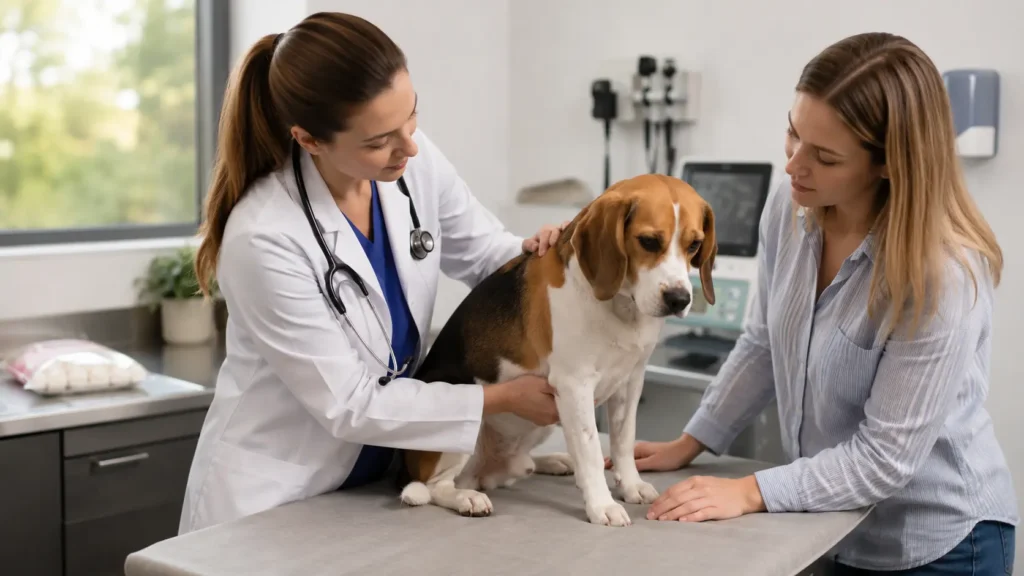
The main problems with ordinary marshmallows are their sugar content, sticky texture, and lack of nutritional value. Product variations introduce further concerns, including toxic sweeteners and chocolate.
Excessive sugar and empty calories
Dogs do not need refined sugar added to their diets. A properly balanced dog food already supplies the energy and nutrients they require.
Eating a small amount of sugar once may cause no obvious problem, but larger quantities can upset the gastrointestinal tract. Repeated consumption adds unnecessary calories without improving the quality of the diet.
This is particularly relevant when owners use human sweets as frequent training rewards. Several small treats given throughout the day can collectively represent a substantial amount of a small dog’s daily energy intake.
Obesity and diabetes concerns
Marshmallows do not directly cause diabetes after a single accidental exposure. The more realistic concern is the long-term pattern created by frequently feeding high-calorie treats.
Regular excess calorie consumption can contribute to obesity. Obesity, in turn, is associated with several health problems and can complicate the management of conditions such as diabetes and joint disease.
Dogs that are already overweight or diabetic should not be given marshmallows. If a diabetic dog eats several, contact its veterinarian for individualized advice rather than trying to adjust medication or food at home.
Dental health risks
Marshmallows are soft, sticky, and sugary. Residue may remain around the teeth and gums, providing no benefit to oral health.
Repeated exposure to sugary foods can contribute to plaque accumulation and existing dental problems. It is especially unsuitable for dogs with periodontal disease or poor oral hygiene.
Marshmallows should never be presented as a dental chew simply because they are soft. Dog-formulated dental products, regular brushing with canine toothpaste, and professional dental examinations are more appropriate.
Digestive upset
Some dogs tolerate a small accidental amount without visible symptoms. Others may develop:
- Vomiting
- Diarrhea
- Gas
- Abdominal discomfort
- Reduced appetite
- Restlessness
Digestive effects can depend on the quantity, added flavorings, sweeteners, and the individual dog’s sensitivity. Products containing large amounts of certain non-xylitol sugar alcohols may also produce gastrointestinal upset.
Persistent vomiting, severe diarrhea, marked abdominal pain, extreme lethargy, or an inability to keep water down requires veterinary attention.
Choking and aspiration risks
Marshmallows are soft but can still become lodged in a dog’s throat. Their sticky, compressible texture may be particularly problematic for puppies, small breeds, and dogs that gulp food without chewing.
Jumbo marshmallows create a greater physical hazard than miniature pieces. A marshmallow can also be inhaled into the airway rather than swallowed normally, creating a risk of aspiration.
Gagging is not always the same as complete airway obstruction. If a dog is struggling to breathe, has blue or pale gums, collapses, or cannot make normal sounds, seek emergency veterinary assistance immediately.
Packaging and intestinal obstruction
Sometimes the missing marshmallows are only part of the problem. Dogs may swallow the plastic wrapper, bag, twist tie, or pieces of a food container while stealing the product.
Plastic is not digested normally and may create a gastrointestinal foreign-body obstruction. Signs can develop later and may include:
- Repeated vomiting
- Loss of appetite
- Abdominal pain
- Lethargy
- Straining to pass stool
- Reduced or absent bowel movements
Tell the veterinarian if any packaging is missing. Do not assume that the absence of toxic ingredients rules out an emergency.
Xylitol in Marshmallows: The Most Serious Risk
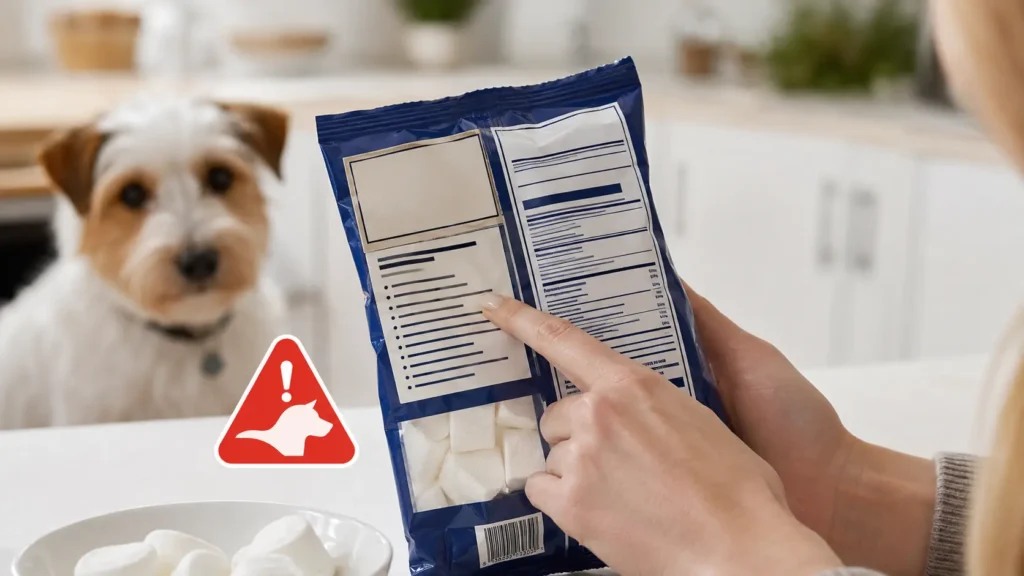
Xylitol is the most important ingredient to check for after a dog eats sugar-free marshmallows. It is used as a sugar substitute in some low-sugar, keto, and sugar-free foods.
Not every sugar-free marshmallow contains xylitol, but the phrase “sugar-free” should prompt an immediate ingredient check.
What is xylitol?
Xylitol is a sugar alcohol used to sweeten products such as gum, candy, baked goods, oral-care products, and some nut butters. On certain labels, it may be described as birch sugar.
It is tolerated differently by humans and dogs. In dogs, xylitol can trigger a dangerous physiological response, even though it may be marketed as a suitable sugar alternative for people.
Product formulations can change, so do not rely on memory or assume that one flavor has the same ingredients as another. Check the exact package involved.
Why xylitol is dangerous to dogs
Xylitol can cause a rapid release of insulin in dogs. That insulin response may drive blood glucose to dangerously low levels, producing hypoglycemia.
Severe exposure can also be associated with liver injury or liver failure. The outcome depends on factors such as:
- The amount of xylitol consumed
- Its concentration in the product
- The dog’s body weight
- How much time has passed
- How quickly veterinary care begins
This is why an apparently small piece cannot automatically be declared safe. Manufacturers do not always publish the exact xylitol concentration, and one marshmallow brand may differ substantially from another.
Signs of xylitol poisoning
Possible signs include:
- Vomiting
- Weakness
- Unusual sleepiness
- Loss of coordination
- Difficulty standing or walking
- Tremors
- Seizures
- Collapse
Signs associated with liver injury may not necessarily occur at the same time as the initial blood-sugar effects.
Do not use the absence of symptoms as proof that the dog is safe. If the product contains xylitol—or if xylitol cannot reasonably be ruled out—contact a veterinarian or animal poison-control service immediately.
How quickly can symptoms begin?
Xylitol-related blood-sugar changes may develop rapidly, but the exact timeline varies with the product and exposure. Some effects can also be delayed.
There is therefore no reliable home observation period after confirmed or suspected xylitol ingestion. Waiting for weakness, tremors, or seizures can allow the situation to become more serious.
Keep the package and call promptly. A veterinary professional can evaluate the product, quantity, time of ingestion, and dog’s weight.
Do all artificial sweeteners pose the same risk?
No. “Artificial sweetener” and “sugar alcohol” are broad categories, and their effects are not identical.
Products may contain:
- Xylitol
- Erythritol
- Sorbitol
- Maltitol
- Stevia
- Aspartame
Xylitol is the critical canine poisoning concern in this context. Other sweeteners may produce gastrointestinal effects or create different concerns, but they should not automatically be described as equally toxic.
If the label is unclear, the product is imported, or the exact sweetener cannot be identified, contact a veterinarian rather than guessing.
My Dog Ate Marshmallows—What Should I Do?
Stay calm and work through the product details quickly. The right response depends more on the ingredients and exposure than on the word “marshmallow” alone.
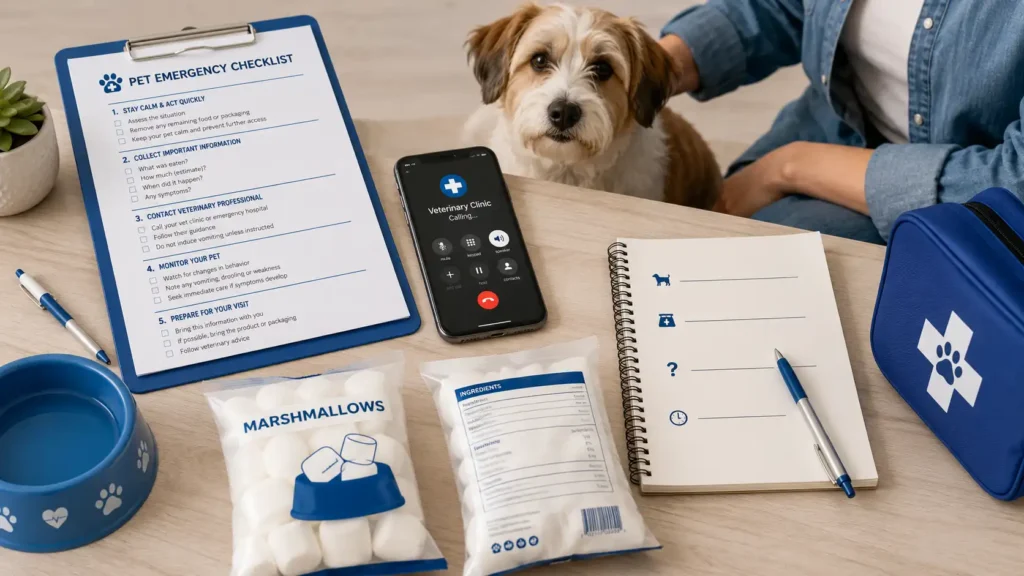
Step 1: Remove the remaining product
Move the marshmallows and packaging out of the dog’s reach. If other pets are present, keep them away from the area.
Do not throw away the packet. The veterinarian may need the:
- Product name
- Ingredient list
- Package size
- Nutrition information
- Manufacturer’s contact details
If possible, take clear photographs of the front and back of the package.
Step 2: Check the complete ingredient list
Look specifically for:
- Xylitol or birch sugar
- Chocolate
- Cocoa or cacao
- Coffee or caffeine
- Raisins
- Macadamia nuts
- Potentially harmful fillings
- Unknown sugar substitutes
Check the entire product. For example, a s’more involves more than a marshmallow, while a filled marshmallow may contain chocolate or coffee flavoring.
If the package says “sugar-free” but does not clearly identify the sweetener, call a veterinarian or animal poison-control service.
Step 3: Estimate the exposure
Gather as much information as possible without delaying an urgent call. Record:
- The dog’s approximate weight
- The dog’s age and breed
- The product and flavor
- Marshmallow size
- Approximate number eaten
- Time of ingestion
- Current symptoms
- Existing health conditions
- Whether packaging is missing
An estimate is still useful when the exact number is unknown. Tell the veterinarian that the amount is uncertain rather than choosing an unsupported figure.
Step 4: Contact a veterinary professional when necessary
Contact a veterinarian promptly if:
- Xylitol is listed or cannot be ruled out.
- Chocolate or another toxic ingredient is present.
- The dog ate a large or unknown amount.
- Part of the packaging was swallowed.
- The dog is very small, young, diabetic, or medically vulnerable.
- The dog is vomiting repeatedly or behaving abnormally.
- You cannot identify the product.
For suspected poisoning, your regular veterinarian, an emergency veterinary hospital, or a recognized animal poison-control service can provide case-specific direction.
Should you induce vomiting?
Do not induce vomiting unless a veterinarian or poison-control professional explicitly tells you to do so.
Whether vomiting is appropriate depends on the substance, timing, symptoms, and risk of aspiration. Trying home remedies without professional direction may delay effective care or cause additional harm.
Do not give salt, oil, milk, or another supposed antidote. There is no universal home treatment for marshmallow ingestion.
When is it an immediate emergency?
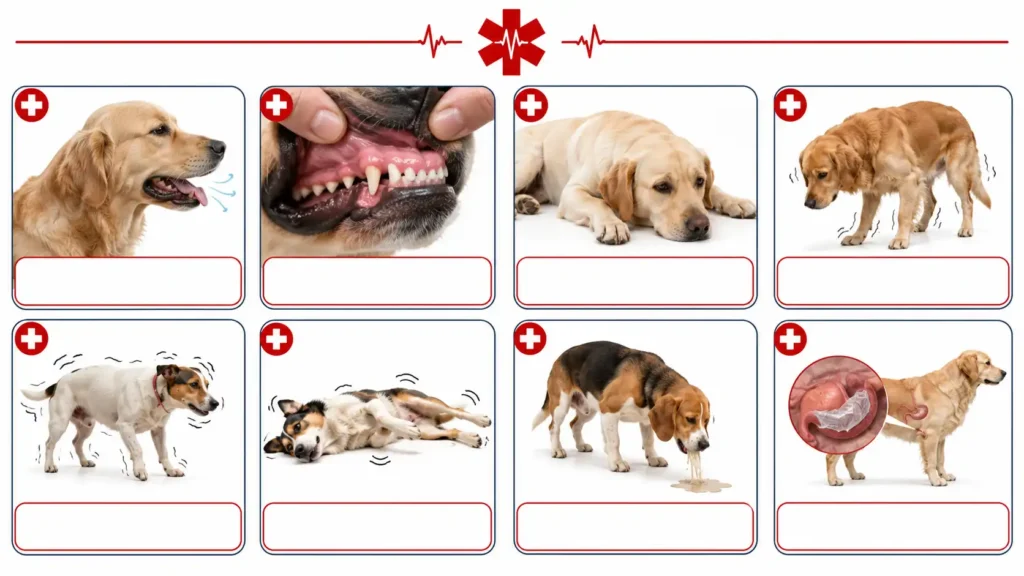
Seek emergency veterinary assistance if the dog:
- Ate a product containing xylitol
- Is struggling to breathe
- Has pale or bluish gums
- Collapses
- Develops tremors or seizures
- Cannot stand or walk normally
- Becomes profoundly weak
- Vomits repeatedly
- Swallowed a substantial amount of packaging
When calling, state the suspected ingredient and ingestion time first. This helps the veterinary team triage the case efficiently.
What Information Will the Veterinarian Need?
Providing accurate information can make the initial risk assessment faster. You do not need perfect details, but avoid minimizing the amount or waiting while trying to calculate an exact dose yourself.
Product and ingredient information
Have the following available:
- Brand and product name
- Flavor or variety
- Photograph of the package
- Complete ingredient list
- Package and serving size
- Approximate amount remaining
- Any manufacturer information
- Details of missing wrappers or containers
If the product was homemade, provide the recipe and the approximate amounts of sweeteners, chocolate, or other relevant ingredients.
Information about your dog
The veterinarian may ask for:
- Body weight
- Age
- Breed
- Existing medical conditions
- Current medications
- Time of ingestion
- Estimated amount eaten
- Current symptoms
- Any first aid already attempted
Body weight is especially important because toxicology assessments commonly consider the amount consumed relative to the dog’s weight.
What veterinary assessment may involve
Depending on the exposure, veterinary professionals may evaluate the dog’s physical condition and determine whether monitoring or testing is appropriate. This can include assessment of:
- Blood-glucose levels
- Hydration
- Neurological signs
- Liver values
- Gastrointestinal symptoms
- Possible foreign-body obstruction
Treatment is individualized. Online guidance cannot replace a product-specific veterinary assessment, particularly when xylitol, chocolate, severe symptoms, or swallowed packaging is involved.
Are Different Types of Marshmallows Safe for Dogs?
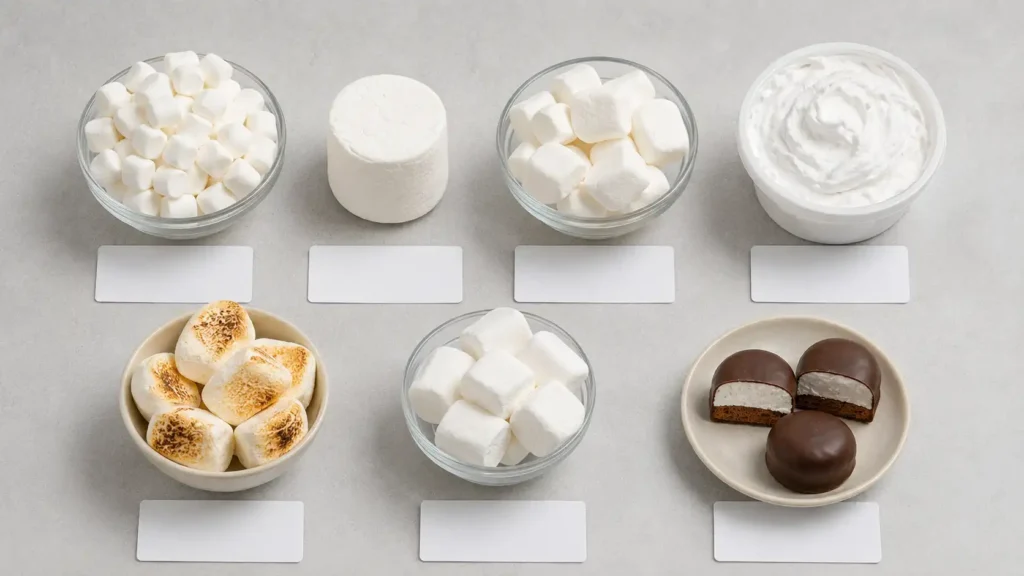
Changing the size, color, preparation method, or recipe does not automatically make a marshmallow safe. Every variation should be assessed according to its ingredients, quantity, and physical form.
Can dogs eat mini marshmallows?
Mini marshmallows contain the same general types of ingredients as larger versions. Their smaller size may reduce—but does not eliminate—the choking risk.
They can also be eaten quickly in large numbers. Ten miniature pieces should not be treated as though the dog consumed only one simply because each piece is small.
Check the label for xylitol and other harmful ingredients.
Can dogs eat jumbo marshmallows?
Jumbo marshmallows are unsuitable for dogs. Their size and sticky texture can create a meaningful choking hazard, particularly for puppies, small breeds, and dogs that gulp food.
They also contain more sugar and calories per piece than miniature varieties. If a dog is gagging or struggling to breathe after swallowing one, treat the problem as an airway emergency.
Can dogs eat sugar-free marshmallows?
Sugar-free marshmallows should not be given to dogs. Some may contain xylitol, while others use different sweeteners.
Read the exact ingredient list. If xylitol appears—or the sweetener cannot be confirmed—contact a veterinarian immediately. Do not wait to see whether symptoms develop.
Can dogs eat marshmallows without xylitol?
Removing xylitol reduces the principal acute poisoning concern, but it does not turn marshmallows into suitable dog treats.
Xylitol-free products may still contain:
- Excessive sugar
- Corn syrup
- Artificial flavors
- Chocolate or other additions
- Ingredients that cause digestive upset
They also remain possible choking hazards. A small accidental exposure is different from deliberately including marshmallows in a dog’s diet.
Can dogs eat marshmallow fluff?
Marshmallow fluff is a concentrated, sugary spread that dogs can consume rapidly if they reach an open jar. The amount eaten may therefore be more difficult to estimate.
Check the label for xylitol and other sweeteners. The spread’s sticky consistency can also create a mess around the mouth, although the main concerns are ingredients and quantity.
Contact a veterinarian if the product contains a dangerous ingredient, a substantial amount is missing, the dog has an underlying condition, or symptoms develop.
Can dogs eat toasted or burnt marshmallows?
Toasting does not remove the sugar or make a marshmallow nutritionally appropriate for dogs. A burnt surface provides no health advantage, while the center may become even softer and stickier.
Campfire settings introduce additional hazards. The dog may steal an entire s’more, eat chocolate, swallow foil or skewers, or consume food contaminated with ash.
Assess everything eaten rather than focusing only on the toasted marshmallow.
Can dogs eat marshmallows vegan?
“Vegan” does not mean dog-safe. Vegan marshmallows replace animal-derived gelatin with plant-based gelling agents, but they may still contain sugar, syrups, artificial flavors, or sugar substitutes.
The absence of gelatin does not address the main safety issues. Check the complete ingredients just as you would with any other variety.
Can dogs eat homemade marshmallows?
Homemade marshmallows are only as safe as their recipe. They commonly contain sugar or syrup and may include:
- Xylitol or another sugar substitute
- Chocolate
- Coffee flavoring
- Alcohol-containing extracts
- Nut ingredients
- Decorative coatings
“Homemade” and “natural” are not guarantees of canine safety. If a dog eats them, provide the complete recipe to the veterinarian.
Can dogs eat flavored, filled or colored marshmallows?
Flavored and filled products require extra caution because their ingredients may be less obvious. Chocolate, cocoa, coffee, raisins, nuts, and sugar substitutes can change the risk substantially.
Artificial coloring itself is not usually the main concern, but a brightly colored product may also contain multiple flavorings or fillings. Review the complete label rather than making a decision based on appearance or product name alone.
Can Dogs Eat Desserts Containing Marshmallows?
Marshmallows rarely appear alone in desserts. They are often combined with chocolate, nuts, sweeteners, dairy products, or other ingredients that can make the overall dish more dangerous.
When assessing an accidental exposure, consider every component—not just the marshmallows.
S’mores
Dogs should not eat s’mores. The marshmallow adds sugar, but the chocolate is usually the more urgent concern because it contains theobromine and caffeine.
The risk depends on:
- The type of chocolate
- The amount consumed
- The dog’s body weight
- The number of s’mores eaten
- Whether foil, plastic, or skewers were swallowed
Dark chocolate and baking chocolate generally contain more theobromine than milk chocolate, but no chocolate variety should be deliberately given to a dog.
For example, a large dog stealing one bite of a milk-chocolate s’more presents a different exposure from a small dog eating several s’mores made with dark chocolate. A veterinarian should evaluate the actual product and quantity rather than relying on a general rule.
Chocolate-covered marshmallows
Chocolate-covered marshmallows combine two unsuitable foods. The marshmallow contributes sugar, while the coating may introduce chocolate toxicity.
Keep the package and identify:
- Milk, dark, white, or baking chocolate
- Cocoa percentage, if shown
- Product weight
- Number of pieces missing
- Additional fillings
- Time of ingestion
White chocolate contains relatively little theobromine compared with darker varieties, but its high fat and sugar content can still cause problems. Contact a veterinarian for product-specific advice rather than assuming the coating is harmless.
Sweet potato casserole
Plain, cooked sweet potato can be suitable for many dogs in modest portions. Sweet potato casserole is a different food.
Depending on the recipe, it may contain:
- Marshmallows
- Brown sugar
- Butter
- Cream
- Pecans or other nuts
- Salt
- Spices
- Sugar substitutes
A small lick may cause no obvious reaction in a healthy dog, but a large portion can trigger digestive upset. Recipes containing xylitol, raisins, macadamia nuts, or another dangerous ingredient need urgent professional assessment.
If the casserole was homemade, write down the full recipe before calling the veterinarian.
Cereal with marshmallow pieces
Marshmallow cereals are highly processed and usually contain considerable sugar, artificial colors, refined grains, and sodium. They offer no nutritional advantage to dogs.
A few pieces accidentally dropped on the floor are unlikely to poison most healthy dogs if no toxic ingredient is present. Eating a bowl or an entire box creates a different situation, particularly if the cereal contains:
- Chocolate
- Raisins
- Nuts
- Xylitol or another sweetener
- A swallowed inner bag
Milk may also cause diarrhea or gas in dogs that do not tolerate lactose well.
Hot chocolate with marshmallows
Hot chocolate is unsafe for dogs because cocoa contains theobromine and caffeine. The beverage may also contain sugar, dairy ingredients, or potentially dangerous sweeteners.
The liquid presents an additional concern when it is hot enough to burn the mouth or throat.
If a dog drinks hot chocolate:
- Remove the remaining drink.
- Keep the mix packet or recipe.
- Identify the type and quantity of cocoa or chocolate.
- Check for xylitol.
- Contact a veterinarian for advice.
Do not assume that a diluted drink is safe. Concentrations differ considerably between recipes and commercial mixes.
Which Dogs Face Greater Risks?
Any dog may experience problems after eating an unsuitable product, but body size, age, health, and eating behavior can influence the level of risk.
Puppies and small dogs
Puppies and small breeds have smaller airways and lower body weights. A jumbo marshmallow may pose a greater choking hazard, while a given amount of a toxic ingredient represents a larger exposure per unit of body weight.
Puppies are also more likely to chew or swallow packaging while exploring food. Check for missing plastic, foil, twist ties, and skewers whenever a product has been stolen.
Do not assume a puppy will be fine because an adult dog once ate the same amount without symptoms.
Senior dogs
Older dogs may have underlying liver, kidney, pancreatic, dental, or metabolic conditions. They may also take medications that affect how a veterinarian approaches an accidental ingestion.
A seemingly minor dietary mistake can be more disruptive for a senior dog with chronic disease than for a healthy young adult. When calling the veterinarian, mention all diagnosed conditions and current medications.
Diabetic and overweight dogs
Dogs with diabetes should not be given marshmallows, even when the product contains no xylitol. The added sugar may interfere with dietary management, while owners should never independently change insulin doses in response.
Overweight dogs also benefit from tightly controlled treat calories. Frequent “small bites” of human food can quietly undermine a weight-management plan.
If a diabetic dog eats marshmallows, contact the treating veterinarian for individualized guidance.
Dogs with pancreatitis or sensitive stomachs
Plain marshmallows are not typically high-fat foods, but desserts containing them may include butter, cream, chocolate, nut butter, or other rich ingredients. These combinations may be problematic for dogs with a history of pancreatitis.
Dogs with sensitive digestive systems can also develop vomiting or diarrhea after relatively small dietary changes. Provide the complete recipe or packaging when asking for veterinary advice.
Dogs with dental disease
Sticky, sugary foods are particularly unsuitable for dogs with periodontal disease, missing teeth, or painful gums. A dog with poor chewing ability may also attempt to swallow a marshmallow whole.
Choose soft, veterinarian-approved treats appropriate for the dog’s dental condition instead of using human confectionery.
How Many Marshmallows Can a Dog Eat?
There is no veterinarian-approved universal number of marshmallows that every dog can safely eat. The appropriate response depends on the exact product and the individual dog.
A better question is: What ingredients were involved, how much was consumed, and what factors make this dog more vulnerable?
Why there is no universal safe number
Risk assessment depends on:
- Whether xylitol is present
- The concentration of any toxic ingredient
- Marshmallow size
- Number consumed
- Dog’s body weight
- Age and health
- Additional coatings or fillings
- Packaging ingestion
- Current symptoms
One miniature plain marshmallow and one jumbo sugar-free marshmallow are not equivalent exposures. Even two products of the same size may use different recipes.
For that reason, avoid online claims such as “three marshmallows are safe” or “one is always harmless.”
One marshmallow versus an entire bag
A healthy adult dog that accidentally eats one plain, xylitol-free marshmallow may not develop any symptoms. The owner should still check the ingredients and watch for choking or digestive upset.
An entire bag raises several additional concerns:
- Much higher sugar and calorie intake
- Vomiting or diarrhea
- Unknown total exposure
- Potential toxic flavorings
- Swallowed plastic packaging
- Greater risk for small or medically vulnerable dogs
For example, if a medium-sized dog eats a bag of plain marshmallows but leaves the packaging intact, the likely concerns differ from those involving a dog that consumes a sugar-free product and most of the bag. Both warrant careful assessment, but the second situation may be considerably more urgent.
Why online dose calculators are not enough
Toxicity calculators may be useful to trained professionals when accurate product data are available. Owners often lack the exact concentration of xylitol or chocolate in a commercial product.
Calculations can become unreliable when:
- The amount consumed is unknown.
- The product has multiple ingredients.
- The package lists ingredients but not concentrations.
- Several pets may have shared the food.
- Packaging was also swallowed.
- The dog’s current weight is uncertain.
Do not delay a veterinary call while trying to produce a perfect calculation. Bring the package and let the professional evaluate the available information.
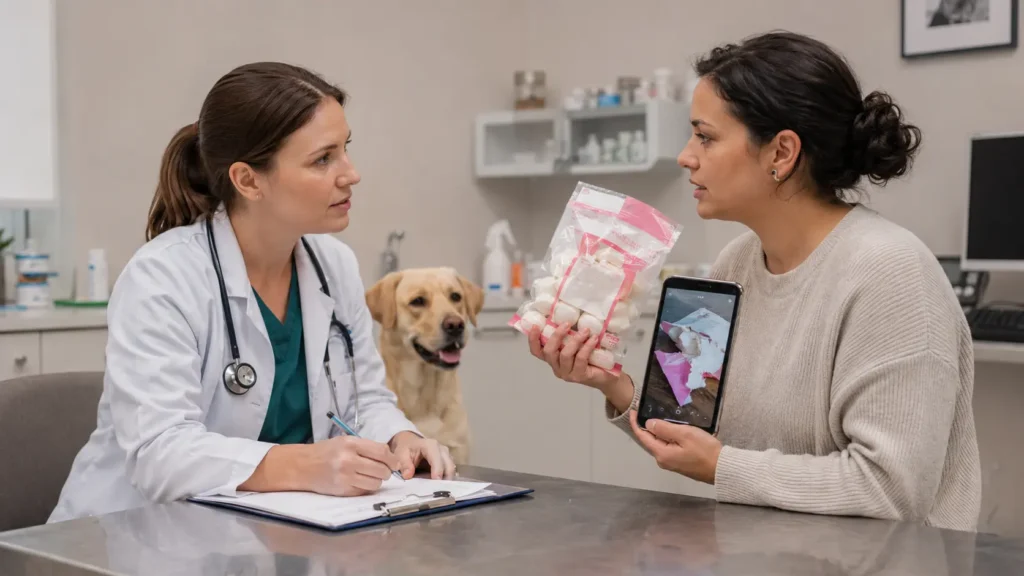
Case Studies: Common Marshmallow Ingestion Scenarios
The following examples are illustrative composites rather than reports of individual patients. They show how product ingredients and circumstances can change the recommended response.
Case 1: A large dog eats one plain marshmallow
A healthy adult Labrador catches one standard marshmallow dropped on the kitchen floor. The owner checks the package and confirms that it contains sugar, corn syrup, gelatin, and cornstarch, with no xylitol or chocolate.
The dog is breathing normally and has no symptoms. In a situation like this, serious poisoning is less likely. The owner can contact the regular veterinarian if concerned and monitor for digestive upset.
Practical lesson: Check the exact label before assuming that any marshmallow is harmless or toxic.
Case 2: A small dog eats an unknown sugar-free marshmallow
A small terrier eats a marshmallow from an unmarked container. A family member remembers that it may have been a sugar-free product, but the original packaging is unavailable.
The dog appears normal. Because xylitol cannot be ruled out, the owner contacts an emergency veterinarian immediately instead of waiting for symptoms.
Practical lesson: An absence of symptoms does not justify delaying professional advice after possible xylitol exposure.
Case 3: A puppy chokes on a jumbo marshmallow
A puppy grabs a jumbo marshmallow during a family gathering and begins gagging. Within moments, the puppy struggles to breathe normally.
In this scenario, the immediate problem is airway obstruction rather than sugar. Emergency assistance is required.
Practical lesson: The physical size and texture of food can be as important as its chemical ingredients.
Case 4: A dog eats chocolate-covered marshmallows
A medium-sized dog consumes several chocolate-covered marshmallows. The owner initially focuses on whether ordinary marshmallows are toxic but then checks the package and identifies a dark-chocolate coating.
The veterinarian needs the dog’s weight, number of pieces consumed, package weight, chocolate information, and approximate time of ingestion.
Practical lesson: Evaluate the complete product. The coating or filling may create a greater risk than the marshmallow itself.
Case 5: A dog swallows marshmallows and part of the bag
A large dog steals a bag of plain marshmallows from a counter. The ingredient list contains no xylitol or chocolate, but several pieces of plastic packaging are missing.
The dog seems normal at first. The owner contacts a veterinarian because intestinal-obstruction symptoms can develop later.
Practical lesson: “Non-toxic ingredients” do not rule out a foreign-body emergency.
Case 6: A diabetic dog eats several regular marshmallows
A diabetic dog eats several plain marshmallows. No xylitol is present, but the owner is concerned about the sugar.
Instead of adjusting the dog’s insulin or skipping a meal, the owner calls the treating veterinarian and follows individualized instructions.
Practical lesson: An existing medical condition can change the response even when the product is not considered acutely poisonous.
Expert Tips for Keeping Dogs Safe Around Sweets
Veterinary guidance consistently emphasizes prevention, accurate product identification, and early communication when a potentially toxic ingredient is involved.
Veterinary toxicology insight: act on the exposure, not the symptoms
A common mistake is waiting for a dog to appear ill before seeking help. This is particularly dangerous when xylitol may be involved.
The most useful approach is to:
- Identify the product.
- Check the ingredient list.
- Estimate how much is missing.
- Record the ingestion time.
- Contact a professional promptly.
Treatment decisions can be more straightforward before severe symptoms develop. Never use a normal appearance as the sole reason to delay a call.
Veterinary nutrition insight: treats still count as calories
Treats are part of a dog’s total diet, even when they are given casually. Human sweets can add substantial calories without providing balanced nutrition.
For training, use small rewards that can be consumed quickly. A full-sized treat is rarely necessary for every successful behavior; suitable dog treats can often be broken into smaller portions.
Dogs with weight, gastrointestinal, pancreatic, or metabolic conditions may need a veterinarian-designed treat plan.
Emergency veterinary insight: prepare before calling
Have these details ready:
- Dog’s current or approximate weight
- Product name and flavor
- Clear photo of the ingredient list
- Approximate amount consumed
- Time of ingestion
- Current symptoms
- Existing medical conditions
- Medications
- Information about missing packaging
If some information is unavailable, call anyway. State clearly which facts are estimates.
Veterinary dental insight: avoid sticky human sweets
Marshmallows are not an appropriate substitute for soft dog treats. Their sticky sugar offers no dental benefit and can remain around the teeth and gums.
Use products designed for dogs, brush with canine toothpaste, and follow the veterinarian’s dental-care recommendations. Human toothpaste should not be used because some formulations contain ingredients unsuitable for dogs.
Practical storage and prevention tips
Many accidental exposures occur during holidays, baking, camping, or children’s parties. Reduce the risk by:
- Storing sweets in closed upper cabinets
- Using pet-resistant garbage bins
- Keeping handbags and backpacks off the floor
- Cleaning baking spills promptly
- Keeping campfire food and skewers out of reach
- Asking children not to share sweets with pets
- Separating dogs from food-preparation areas
- Retaining packaging until entertaining is over
- Checking under tables after parties
- Rechecking labels when a product’s packaging changes
A sealed bag on a countertop is not necessarily secure. Motivated dogs can tear through plastic or knock food onto the floor.
Healthy Alternatives to Marshmallows for Dogs
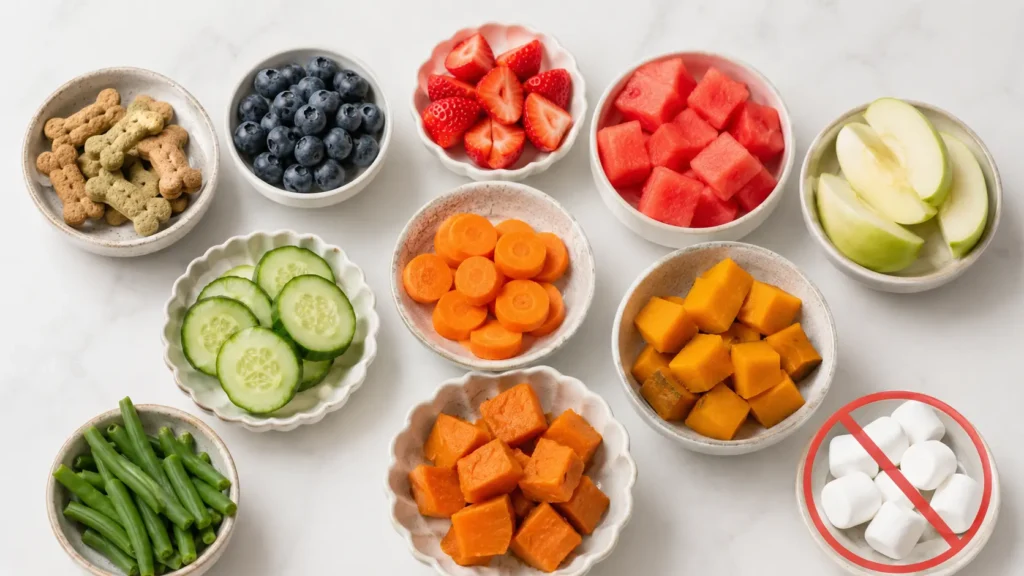
A suitable reward should be safe, appropriately sized, and compatible with the dog’s health and daily calorie needs.
Introduce unfamiliar foods gradually. Even generally dog-safe foods can cause digestive upset when offered in large quantities.
Dog-formulated treats
Commercial treats made specifically for dogs are usually a more appropriate option than marshmallows. Look for products that:
- List ingredients clearly
- Match the dog’s size and chewing style
- Fit its dietary restrictions
- Are easy to divide into small portions
- Do not exceed the veterinarian-recommended calorie allowance
Dogs with food allergies, diabetes, kidney disease, pancreatitis, or prescription diets may need treats approved by their veterinarian.
Dog-safe fruits
Depending on the individual dog, small portions of these fruits may be suitable:
- Blueberries
- Strawberries
- Banana
- Watermelon without seeds or rind
- Apple pieces without seeds, stem, or core
Wash fruit and cut it into pieces appropriate for the dog’s size. Fruit contains natural sugar, so portion control still matters.
Grapes and raisins must not be used as alternatives because they can cause serious toxicity in dogs.
Dog-safe vegetables
Possible low-calorie options include:
- Carrot pieces
- Plain green beans
- Cucumber
- Plain pumpkin
- Plain cooked sweet potato
Serve them without butter, sugar, salt, sauces, or seasoning. Hard pieces should be cut to reduce choking risk, especially for small dogs and puppies.
Foods and preparation methods to avoid
A dog-safe base ingredient can become unsuitable after preparation. Avoid adding:
- Xylitol
- Chocolate or cocoa
- Raisins
- Macadamia nuts
- Added sugar
- Heavy salt
- Butter or rich sauces
- Potentially unsafe seasonings
For example, plain cooked sweet potato may be acceptable in a modest portion, while sweet potato casserole topped with marshmallows, butter, and sugar is not an appropriate dog treat.
Marshmallow Candy vs. Marshmallow Root
Marshmallow candy and marshmallow root are not interchangeable. Similar names can create confusion for owners researching pet foods and supplements.
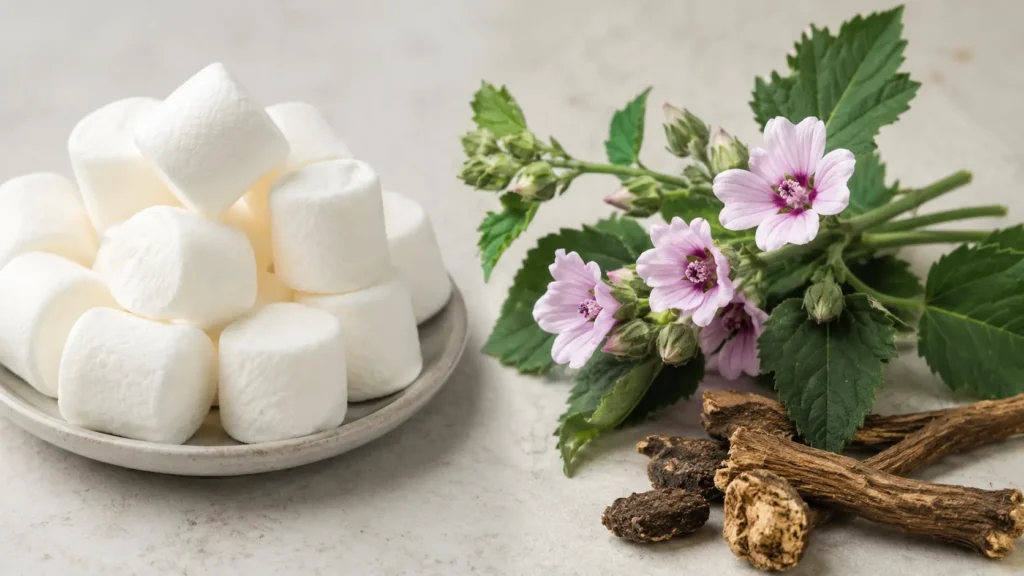
What is marshmallow root?
Marshmallow root comes from the plant Althaea officinalis. It has a history of use in traditional herbal preparations and is sometimes included in pet supplements marketed for digestive or respiratory support.
Modern marshmallow candy generally does not contain meaningful marshmallow root. It is usually made from sugar, corn syrup, gelatin or another gelling agent, water, and flavorings.
A reference to the herb’s possible uses therefore does not make marshmallow candy healthy for dogs.
Is marshmallow root safe for dogs?
Do not give a dog marshmallow-root supplements without veterinary guidance. “Natural” does not automatically mean appropriate or risk-free.
A veterinarian may need to consider:
- Product purity
- Supplement concentration
- Dog’s weight
- Existing diseases
- Current medications
- Potential effects on medication absorption
- Quality of supporting evidence
Avoid using human herbal products for dogs unless a veterinary professional has reviewed the exact formulation.
Frequently Asked Questions
Can dogs eat one plain marshmallow?
One plain marshmallow without xylitol or another toxic ingredient is unlikely to cause serious poisoning in many healthy adult dogs. It is still not a healthy treat and may cause choking or digestive upset. Check the label and consider the dog’s size and medical history.
Are regular marshmallows toxic to dogs?
Standard marshmallows are not usually inherently toxic, but their sugar content, sticky texture, and lack of nutrition make them unsuitable. The answer changes if they contain xylitol, chocolate, or another harmful ingredient.
What happens if my dog eats marshmallows?
Possible effects range from no visible reaction to vomiting, diarrhea, choking, or more serious poisoning. The outcome depends on the ingredients, quantity, dog’s weight, health, and whether packaging was swallowed.
Do all marshmallows contain xylitol?
No. Many regular marshmallows use sugar and corn syrup, while sugar-free recipes vary. Always check the exact ingredient list because product formulations can change.
What should I do if the ingredient list is unavailable?
Keep any remaining product, estimate how much was eaten, and contact a veterinarian or animal poison-control service. This is particularly important if the marshmallows may have been sugar-free.
How quickly can xylitol affect a dog?
Effects can begin rapidly, but timing varies according to the product and exposure. Other complications may be delayed. Do not wait for symptoms after known or suspected xylitol ingestion.
Can dogs eat marshmallows without xylitol?
Xylitol-free marshmallows are less likely to cause acute sweetener poisoning, but they remain unhealthy and may cause digestive upset or choking. They should not be deliberately fed to dogs.
Can puppies eat marshmallows?
No. Puppies may face greater choking risk, and an ingredient exposure can be more significant because of their smaller body weight.
Can marshmallows cause diarrhea in dogs?
Yes. Excessive sugar, flavorings, sweeteners, or simply eating an unfamiliar food may cause diarrhea or other gastrointestinal symptoms.
Can a dog choke on a marshmallow?
Yes. Jumbo marshmallows are especially concerning, but any sticky piece can cause difficulty in a dog that swallows food rapidly. Breathing difficulty requires immediate emergency assistance.
Should I make my dog vomit?
Not unless a veterinarian or poison-control professional specifically instructs you to do so. Inducing vomiting can be inappropriate or dangerous in some circumstances.
How long should I monitor my dog?
The appropriate period depends on the product, ingredients, quantity, and dog. Do not rely on home monitoring when xylitol, chocolate, serious symptoms, an unknown product, or swallowed packaging is involved.
Can dogs eat vegan marshmallows?
Vegan marshmallows are not automatically safe. They may still contain high levels of sugar, syrups, flavorings, or potentially problematic sweeteners.
Can dogs eat marshmallow fluff?
Marshmallow fluff is not recommended. It is high in sugar, easy to consume in large quantities, and may contain sweeteners or additives that require closer assessment.
Are homemade marshmallows safe for dogs?
Not necessarily. Safety depends on the complete recipe. Homemade products may still contain sugar, xylitol, chocolate, coffee, nuts, or other unsuitable ingredients.
What treats are safer than marshmallows?
Suitable dog-formulated treats are generally the best choice. Small pieces of carrots, green beans, blueberries, or properly prepared apples may also be appropriate for many dogs, subject to individual dietary needs.
Conclusion: Should Dogs Have Marshmallows?
Dogs should not eat marshmallows as treats. Plain, xylitol-free marshmallows are not usually acutely poisonous in small amounts, but they provide no nutritional benefit and may cause digestive upset, unhealthy calorie intake, dental problems, or choking.
Sugar-free marshmallows require particular caution. If xylitol is listed—or cannot be ruled out—contact a veterinarian immediately and do not wait for symptoms. Chocolate-covered products, s’mores, unknown fillings, serious symptoms, and swallowed packaging also require prompt attention.
When an accidental ingestion occurs, check the complete product, keep the packaging, estimate the amount consumed, and consider the dog’s weight and health. Do not induce vomiting or use home remedies without professional direction.
For everyday rewards, choose appropriately portioned dog treats or a veterinarian-approved fruit or vegetable. Your dog will enjoy the attention just as much—and receive a much safer snack.
Further Reading and Source Scope
PetMD: marshmallow ingredients and risks. Consult this source for the relevant food or ingredient precautions. This reference is provided by our editorial team and does not mean a veterinarian has reviewed this article. Ask your own veterinarian for advice that accounts for your dog’s health and diet.