Can Dogs Eat Jello?
Can dogs eat jello? Plain, unflavored gelatin is generally not dangerous for dogs in small amounts. Most store-bought Jell-O...
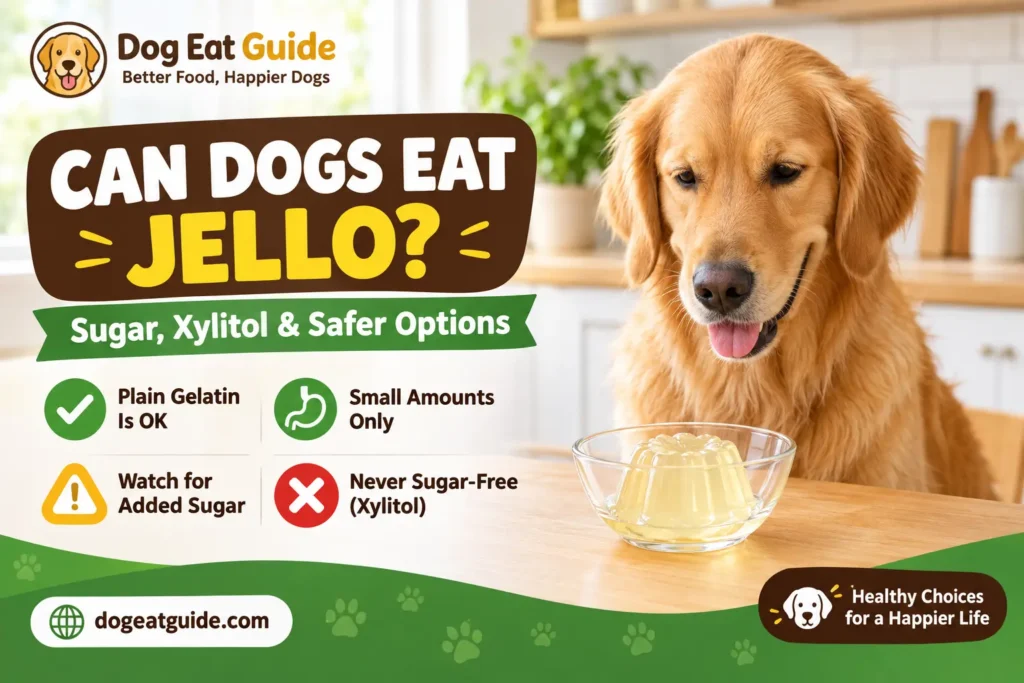
Can dogs eat jello? Plain, unflavored gelatin is generally not dangerous for dogs in small amounts. Most store-bought Jell-O and jelly products are a different matter, though. Many versions are high in sugar. Sugar-free products use different sweeteners; some may contain xylitol, which is highly toxic to dogs. Sugar-free does not automatically mean xylitol-containing. Before sharing any jello with your dog, it’s worth checking exactly what’s in it.
Is Jello Safe for Dogs?
Gelatin itself, the protein that gives jello its jiggly texture, isn’t toxic to dogs and is even used in some homemade dog treats. The concern with store bought jello is almost never the gelatin it’s the sugar, artificial sweeteners, dyes, and flavorings mixed in with it.
A small bite of plain, sugar-based jello is unlikely to cause serious harm to a healthy adult dog. It still isn’t a good regular treat, since it offers no nutritional value and adds unnecessary sugar and additives to a dog’s diet.
Why Sugar Free Jello Is Dangerous for Dogs
This is the most important thing to know about dogs and jello. Some sugar-free products may contain xylitol; others use different sweeteners. Read the actual ingredients rather than relying on the sugar-free label. Xylitol is highly toxic to dogs even a small amount can trigger a rapid, dangerous drop in blood sugar, and larger amounts can cause liver damage. Signs of xylitol poisoning can include vomiting, weakness, loss of coordination, and seizures, and they can appear quickly.
Always check the ingredient label of any sugar-free or “diet” jello, pudding, or gelatin product before offering it to a dog. Never assume a “light” or sugar-free version is the safer choice with jello, it’s usually the opposite. If your dog eats any product containing xylitol, contact your veterinarian or an animal poison control center immediately rather than waiting for symptoms to appear.
Regular (Sugar-Based) Jello
Standard, sugar-sweetened jello isn’t toxic, but it’s essentially sugar, water, and gelatin with artificial coloring and flavoring. Eating a large amount can cause an upset stomach, and regular sugar intake contributes unnecessary calories, which matters more for dogs who are overweight or managing a condition like diabetes. Your veterinarian can help determine whether an occasional sweet treat is appropriate for your dog.
Can Dogs Eat Jelly or Fruit Preserves?
Fruit jelly and preserves follow the same logic as jello: they’re often high in sugar, and sugar-free versions may contain xylitol. Some jellies, like grape jelly, also carry an added risk, since grapes and grape products are toxic to dogs and linked to kidney injury. Treat any fruit jelly or preserve with the same label-checking caution as jello.
Artificial Dyes and Flavors
Commercial jello often contains artificial food dyes and flavoring. These aren’t a classic poison, but some dogs can have mild digestive upset or a sensitivity reaction to them, showing up as loose stools, itching, or a mild rash. This is uncommon but worth watching for, especially the first time your dog tries a flavored product.
Can I Make Homemade Jello for My Dog?
Yes, a simple homemade version is a safer alternative. Plain, unflavored gelatin mixed with a dog-safe liquid, such as low-sodium broth with no onion or garlic, and set in the fridge, avoids the sugar, xylitol, and dyes found in store-bought jello. This is a better option if you want to offer a jiggly treat.
How Much Jello Can a Dog Eat?
There’s no universal amount that’s safe for every dog. A general guideline is that treats and extras should stay within about 10% of a dog’s daily calorie intake, with the rest coming from a complete and balanced dog food. In practice, that means an occasional small spoonful of plain, xylitol free jello at most, not a regular treat. The right amount depends on your dog’s size, age, activity level, body condition, and health status.
Can Puppies Eat Jello?
There’s little reason to give jello to a puppy. Puppies have small stomachs and specific nutritional needs, and sugar or additives offer no benefit at their stage of growth. If you want to offer a treat, choose one made specifically for puppies instead.
What Happens If a Dog Eats Too Much Jello?
A dog that eats a large amount of sugar-based jello may develop an upset stomach, gas, or loose stools. These usually settle on their own. Watch for:
- Repeated vomiting or diarrhea
- Lethargy or reduced appetite
- Signs consistent with xylitol exposure (sudden weakness, vomiting, loss of coordination, collapse) if the product was sugar-free
Contact your veterinarian if symptoms are severe, persistent, or you know your dog ate a sugar-free product containing xylitol. Early veterinary care matters most with xylitol exposure, so don’t wait to see whether symptoms appear.
Safer Alternatives to Jello
If your dog enjoys a cool, jiggly treat, consider:
- Homemade plain gelatin treats made with low-sodium, onion- and garlic-free broth
- A small spoonful of plain, unsweetened yogurt (in dogs that tolerate dairy)
- Frozen small pieces of dog-safe fruit, such as banana or blueberries
- Commercial dog treats formulated without xylitol or excess sugar
QUICK ANSWER
Plain, unflavored gelatin is generally safe for dogs in small amounts, but most store-bought jello isn’t a good choice. Regular jello is high in sugar, and some sugar-free products may contain xylitol, which is highly toxic to dogs. Always check the label, and if your dog eats sugar-free jello, contact your veterinarian right away.
FAQS
Is jello toxic to dogs?
Plain gelatin isn’t toxic. The danger comes from added ingredients: regular jello is high in sugar, and some sugar-free gelatin desserts may contain xylitol, which is toxic to dogs.
Can dogs eat sugar-free jello?
This is the riskiest type. Some sugar-free gelatin desserts may contain xylitol, which can cause a dangerous drop in blood sugar in dogs. Check the label before offering any sugar-free product.
What happens if my dog eats Jell-O?
A small amount of regular, sugar-based jello is unlikely to cause serious harm, though it may cause mild stomach upset. If the jello was sugar-free, contact your veterinarian immediately due to the xylitol risk.
Can dogs eat plain gelatin?
Yes, plain, unflavored gelatin in small amounts is generally safe and is sometimes used in homemade dog treats.
Is grape jelly dangerous for dogs?
Yes. In addition to the general sugar and sweetener concerns, grapes and grape products are toxic to dogs and linked to kidney injury, so grape jelly carries an added risk.
How much jello can I give my dog?
There’s no universal safe amount, but an occasional small spoonful of plain, xylitol-free jello fits within general treat guidelines. It shouldn’t be a regular part of your dog’s diet.
Can puppies eat jello?
There’s little reason to. A puppy’s diet should focus on food made for their growth stage; jello offers no nutritional benefit.
Source
The FDA explains xylitol poisoning in dogs. If xylitol exposure is known or suspected, contact a veterinarian immediately; do not wait for symptoms.