
Can Dogs Eat Lychee? Ripe Flesh, Skin and Pit Risks
A small amount of ripe, peeled, pitted lychee flesh is described as low risk in veterinary guidance, but lychee...
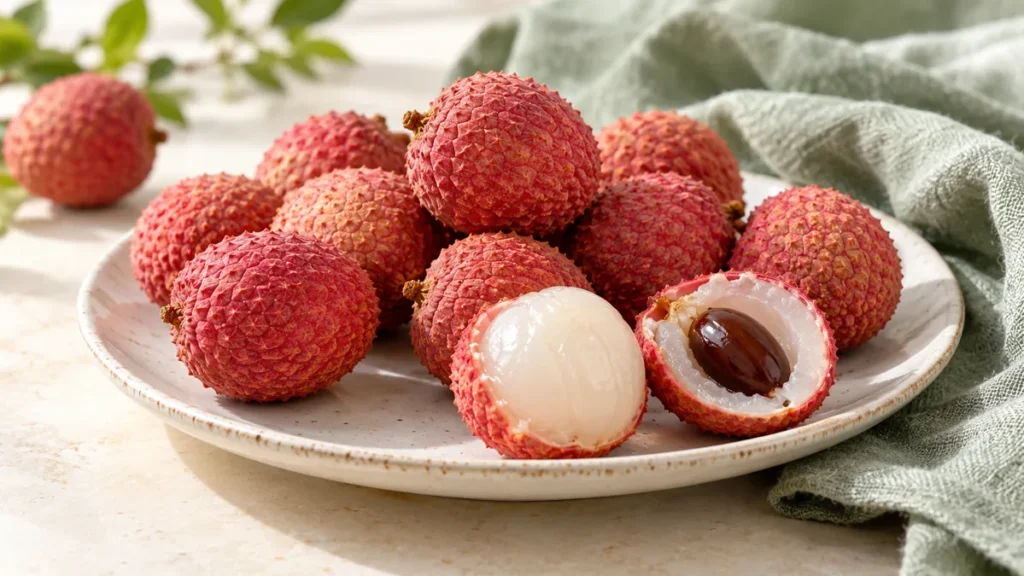
A small amount of ripe, peeled, pitted lychee flesh is described as low risk in veterinary guidance, but lychee is not a necessary dog treat. Never offer the whole fruit, the hard pit or unripe fruit. Choosing a more familiar suitable fruit is reasonable, especially when ripeness is uncertain.
What Does the Evidence Say About Lychee?
Veterinarian Dr. Beth Turner’s fruit guide distinguishes ripe flesh from skin, pits and unripe fruit. Royal Veterinary Center’s lychee guidance similarly describes a little ripe flesh as low risk and recommends advice after pit or unripe-fruit ingestion.
These are practical veterinary recommendations, not controlled feeding trials establishing a safe dose for every dog. This guide therefore does not provide a weight-based lychee allowance or promise a health benefit. Evidence about human lychee illness should not be converted into a numerical canine poisoning threshold.
The Pit Is a Physical Hazard
A lychee contains a hard, smooth pit that a dog can swallow quickly. It can create a choking or intestinal blockage concern. Removing the rough skin alone is not enough; the pit must also be removed completely.
Do not hand a dog an intact fruit to chew around the seed. Keep the fruit bowl and discarded pits inaccessible. If a pit may have been swallowed, contact veterinary help rather than waiting for symptoms or trying to feed it through.
Lychee Forms Compared
| Form or situation | Decision |
|---|---|
| Ripe, peeled, pitted flesh | Only a very small optional taste for an appropriate dog; a simpler fruit is also a reasonable choice. |
| Whole lychee | Do not offer because skin and pit remain. |
| Hard pit or skin | Keep out of reach; report pit ingestion promptly. |
| Unripe or uncertain fruit | Do not feed; seek advice after ingestion. |
| Canned lychee in syrup | Skip the sugary prepared product. |
| Lychee dessert, drink or candy | Check every ingredient rather than applying advice for fresh flesh. |
If You Choose to Offer a Taste
Ask whether it fits the dog’s diet first, particularly for a puppy, a prescribed diet, diabetes or another medical condition. Use known ripe food-grade fruit, peel it yourself, remove the entire pit and cut a very small piece of flesh. Supervise the dog and do not offer several new foods at once.
Stop if digestive upset occurs. There is no need to hide lychee in a meal or persuade a reluctant dog to try it. A dog’s complete food should remain the basis of nutrition, rather than a rotation of exotic fruit supplements.
What If My Dog Ate Lychee?
Check whether the fruit was ripe, whether the pit is missing and how much was eaten. Save the product or photograph and note the time and your dog’s weight. Call promptly for a swallowed pit, unripe fruit, an uncertain substantial amount or a concerning prepared-food ingredient.
Breathing difficulty, collapse, severe weakness, tremors or seizures needs emergency care. Repeated vomiting, abdominal pain, difficulty swallowing, straining or refusal to eat also needs assessment. Do not induce vomiting, give oil or attempt a home antidote.
If you are unsure whether swallowing occurred, say so. A professional can assess that uncertainty; you do not need to prove ingestion before asking. Do not spend time trying to identify a missing pit while the dog is visibly ill.
Frequently Asked Questions
Can dogs eat lychee skin?
Do not offer the skin. Advice allowing a small taste of flesh assumes the fruit has been peeled and fully pitted.
Can dogs eat canned lychee?
Skip syrup-packed fruit and inspect other prepared products individually. The fresh-flesh guidance does not apply automatically.
Is lychee as dangerous as grapes?
Do not group unrelated fruits together. A ripe lychee-flesh taste and grape ingestion are different exposures; grapes require prompt veterinary advice.
Does lychee improve a dog’s immunity?
There is no basis here for promising a clinical benefit from a tiny treat. Use a complete appropriate diet and veterinary care for health concerns.
Related feeding guides
Compare suitable fruits and preparation. Grapes and raisins need different urgent advice.
Sources
