Can Dogs Eat Potato Skins?
Potato skins are not an ideal treat for dogs. Raw, green or sprouted potato peels can contain elevated glycoalkaloids, and tough or fried skins create additional risks.
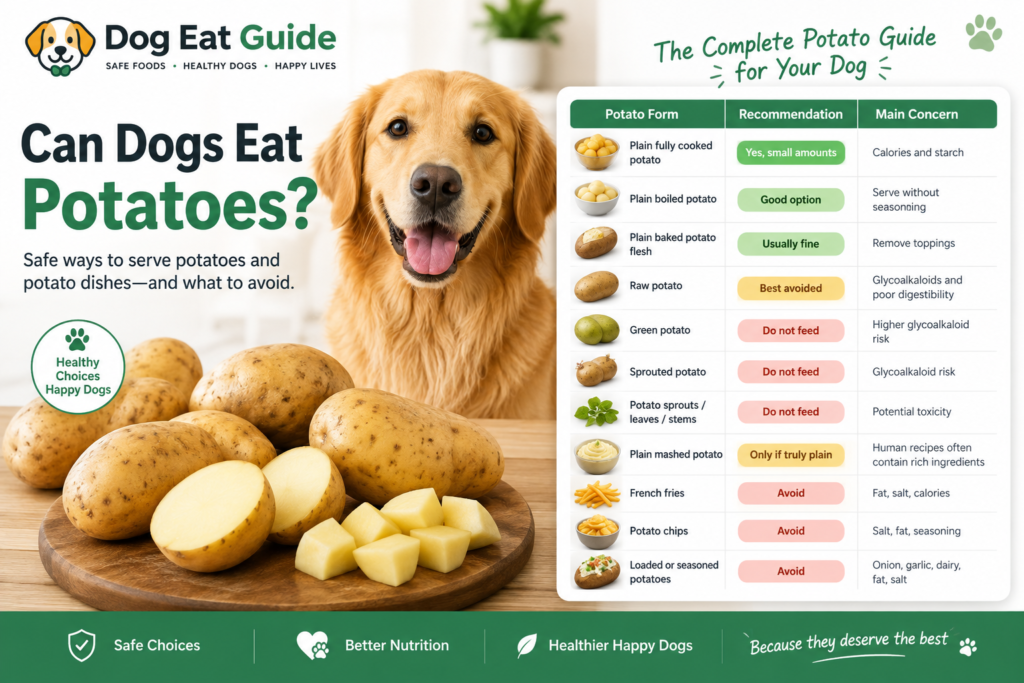
Can dogs eat potato skins? Potato skins are not an ideal treat for dogs. Raw, green or sprouted potato peels can contain elevated glycoalkaloids, and tough or fried skins create additional risks. Proper preparation and choosing the correct part of the food are more important than trying to meet any target serving size.
Can Dogs Eat Potato Skins?
Potato skins are not an ideal treat for dogs. Raw, green or sprouted potato peels can contain elevated glycoalkaloids, and tough or fried skins create additional risks.
Important Risks
Green potato skins and sprouts can contain glycoalkaloids such as solanine and chaconine. Fried potato skins often contain oil, salt, cheese, garlic or onion.
Symptoms after eating an unsafe plant part may include vomiting, diarrhea, weakness or other unusual signs. Contact a veterinarian if an unsafe amount or concerning plant portion was eaten.
How to Prepare It
The simplest alternative is to peel and thoroughly cook a potato, then offer a small amount of plain flesh without butter or seasoning.
- Choose fresh produce that is suitable for humans to eat.
- Wash it, discard unsuitable parts and prepare it plainly.
- Cut into small pieces and offer a small taste only.
- Watch for digestive discomfort or unusual behavior.
How Much Can Dogs Eat?
For suitable foods, extras should generally stay within roughly 10% of daily calories, with the main diet complete and balanced. This does not make toxic plant parts safe. Ask a veterinarian about special health conditions or dietary restrictions.
Can Puppies Eat It?
Small puppies have particular nutritional needs. Avoid unsafe or raw plant parts and ask your veterinarian before introducing new human foods.
What if My Dog Ate an Unsafe Part?
Keep any packaging or plant sample, estimate the amount eaten, and contact your veterinarian promptly for guidance. Seek urgent veterinary help for repeated vomiting, severe weakness or abdominal pain. Do not induce vomiting without veterinary instruction.
Related Guides
Read our guides to potatoes and sweet potatoes for additional feeding precautions.
Can dogs eat it every day?
It is not nutritionally necessary. Only offer suitable forms occasionally, in small amounts.
How should I serve it?
By the Dog Eat Guide Editorial Team. This is educational information, not individualized veterinary advice.
Can Dogs Eat Baked Potato Skins?
A baked skin is cooked, but that does not make a plate of loaded potato skins a suitable dog snack. Check for salt, butter, cheese, bacon, onion and garlic. A simpler choice is a small amount of plain, fully cooked potato flesh with the peel removed.
PetMD’s potato guide distinguishes plain cooked potato from raw potato and excessive skin. Do not try to salvage green or sprouted peels as treats. If a dog ate concerning potato material, save a description or photo and obtain advice about the actual exposure.
References