How Many Treats Can a Dog Have? Count Calories
How many treats a dog can have depends on the calories in the treats and the dog’s individual daily...
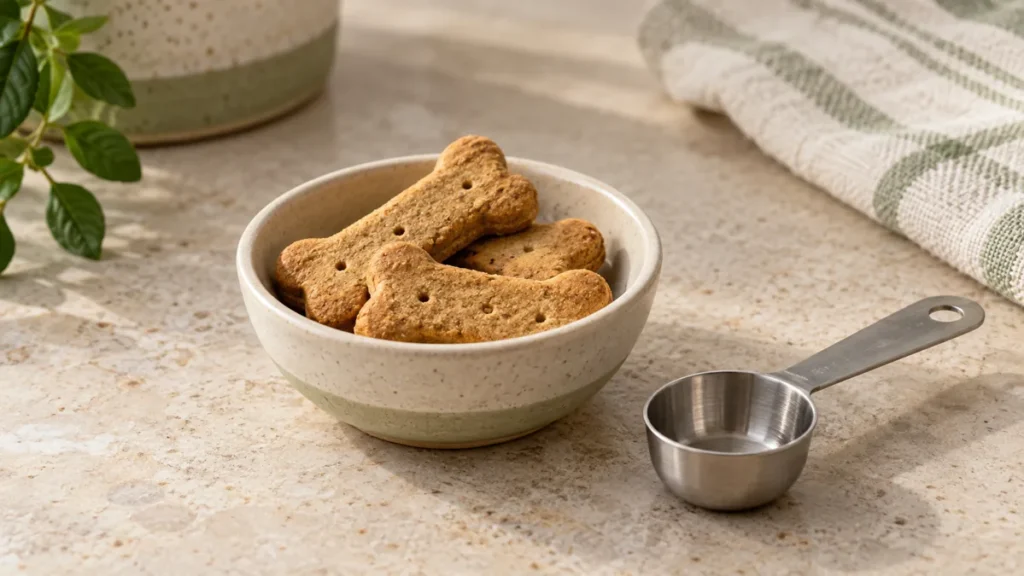
How many treats a dog can have depends on the calories in the treats and the dog’s individual daily allowance. The number of biscuits alone is not enough: two products can contain very different calories per piece. Count table food and other extras in the same allowance.
AAHA’s weight-management guidance recommends that treats make up no more than 10% of total daily calories. This is a general upper limit, not a target every dog needs to reach or permission to feed an otherwise unsuitable ingredient.
Start With the Dog’s Feeding Plan
Ask your veterinary team for the appropriate total daily calories and permitted extras. Life stage, body condition, activity, health and the main diet affect the plan. Do not choose an internet calorie estimate and treat it as a prescription for your individual dog.
For a dog with a restricted diet or a weight-management plan, the permitted treats or allowance may be more specific. Check before adding something new. The WSAVA nutrition guidelines support an individually tailored nutrition assessment.
Calculate the Shared Treat Allowance
Once a professional has established an appropriate daily total, multiply it by 0.10 to find the general maximum represented by 10%. The following figures are arithmetic examples, not recommendations for a dog of any particular size.
| Example daily total | 10% for all extras combined |
|---|---|
| 300 calories | 30 calories |
| 600 calories | 60 calories |
| 900 calories | 90 calories |
If a hypothetical dog has a 60-calorie allowance and a chosen treat contains 6 calories, ten of those treats would use the whole allowance. Five would use 30 calories. Adding another snack after that means working with the remaining allowance, not starting again.
This calculation does not decide which foods are appropriate. It only helps account for calories once the food and the feeding plan are suitable.
Read the Unit on the Label
Look for whether calories are given per piece, per serving, per gram or per kilogram. A serving might contain several treats. The AAHA nutrition guidelines recommend reviewing calories from all food items and using label or manufacturer information.
For example, a fictional label showing 24 calories per four-piece serving means 6 calories per piece. If another fictional product lists 3 calories per gram, a measured 5-gram portion contains 15 calories. Keep the units with the number when writing it down.
If the information is unclear, ask the manufacturer or veterinary team rather than estimating from a similar-looking product. Keep the package so you can identify the exact product and flavor.
Include the Extras That Are Easy to Forget
- Training rewards given on walks or during classes.
- Food used inside enrichment toys.
- Table scraps and meal toppers.
- Edible chews and dental treats.
- Food used when giving medication, when the prescribing team permits it.
- Snacks given by another household member.
A shared container or a simple daily note can help. Set aside the planned extras before the day begins, and tell caregivers when the allowance has been used. Do not repeatedly refill a toy without accounting for what goes into it.
Make Training Rewards Fit the Plan
Discuss reward size and suitable choices with your trainer and veterinary team. More repetitions do not have to mean larger pieces. Play, praise and activities your dog enjoys can also be part of a reward routine.
If you use part of the dog’s regular food for training, measure it from the planned daily ration rather than adding an unrecorded extra portion. Keep that decision consistent across caregivers.
Frequently Asked Questions
Does every dog need 10% of calories as treats?
No. The general allowance is a ceiling, not a requirement. Follow the individual plan if it is more restrictive.
Are vegetables unlimited?
No food should become an untracked extra simply because it is called healthy. Our broccoli guide addresses preparation, while our cracker guide illustrates product-specific ingredient checks.
Should I reduce meals myself to make room?
Ask your veterinary team how to keep the whole diet balanced. A calorie calculation alone does not establish a nutritionally complete replacement plan.
Sources