Can Dogs Eat Collard Greens? Plain Leaves and Seasoning
Some healthy dogs can eat a small amount of plain collard greens, prepared tender and chopped. Remove tough stems...
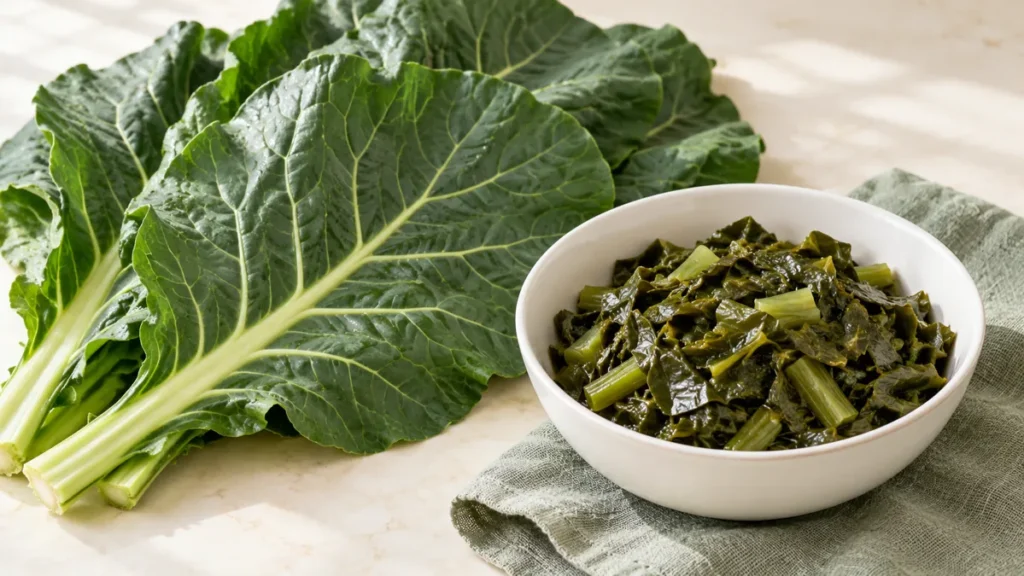
Some healthy dogs can eat a small amount of plain collard greens, prepared tender and chopped. Remove tough stems and avoid traditional dishes cooked with ham, bacon, onion or heavy seasoning. Collards are an optional vegetable extra, not a treatment or a replacement for complete food.
Are Collard Greens Suitable for Dogs?
PetMD’s discussion with veterinary nutrition experts includes collard greens among leafy vegetables considered in canine feeding. This does not establish that a serving prevents cancer or treats another disease in your dog.
Evidence about a dietary pattern or a particular study population should not become a promise about a spoonful of greens. For a practical snack decision, focus on identification, preparation, amount and the dog’s existing diet.
How to Prepare Collard Greens
Use fresh edible grocery collards, wash them and remove the dense stem and tough ribs. Cook a small portion in plain water until tender, let it cool and chop it finely. This is a preparation choice to make the fibrous leaves easier to manage, not a special medicinal recipe.
Set aside the dog’s portion before cooking the human dish. Do not use broth without checking the ingredients. If the dog dislikes greens or tends to gulp them, choose a more manageable approved reward.
Collard Preparations Compared
| Form or situation | Decision |
|---|---|
| Plain tender cooked leaves | A small chopped taste may suit an appropriate healthy dog. |
| Large raw leaf or thick stalk | Avoid tough oversized pieces as a planned snack. |
| Greens cooked with ham hock or bacon | Salt, fat and possible bones make a different dish. |
| Onion or garlic-seasoned greens | Do not share; allium ingredients require exposure assessment. |
| Canned or frozen prepared greens | Read the ingredients; not all products are plain. |
| Green powder or concentrated supplement | Do not infer safety or dosing from food-leaf advice. |
Raw Collards Versus Cooked Leaves
A tiny accidental bite of a leaf is not automatically a poisoning event. The amount and whether the dog swallowed a tough stalk matter. Cooking can soften the texture, but it does not make a large portion unlimited or remove added toxic ingredients.
Do not use a blender to turn a large quantity into an everyday supplement. Changing texture does not establish that the dose fits the dog’s needs. A small optional garnish and a recurring bowl-sized addition are different feeding patterns.
Portions and Medical Diets
Introduce only a small taste and stop if it causes gas or digestive upset. Count vegetables with other extras. Dogs eating a complete appropriate food do not need a large leaf portion added to obtain their basic vitamins.
Ask before feeding collards to a dog with urinary stones, kidney disease, a prescribed diet or another medical condition. Do not make a blanket claim that all leafy greens are either forbidden or curative. The treating veterinary team can assess the exact food and overall diet.
What If My Dog Ate Seasoned Collards?
Save the recipe or package and estimate how much was eaten. Check for onion, garlic, fatty meat, bones and other ingredients. VCA’s allium toxicity guide explains why onion and garlic exposures need assessment, including when signs are delayed.
Report the dog’s weight, time and symptoms to the veterinarian. Call promptly for concerning ingredients, swallowed bones, a substantial uncertain amount or illness. Repeated vomiting, abdominal pain or marked weakness needs assessment; breathing difficulty or collapse requires emergency care. Do not induce vomiting or give a home antidote without instructions.
Frequently Asked Questions
Can dogs eat Southern-style collard greens?
Do not share by default. Ham, bacon, onion, garlic, salt and the rest of the recipe matter more than the leaf alone.
Can dogs eat collard stems?
Remove tough stems and ribs from a planned portion rather than expecting a dog to chew them thoroughly.
Can puppies eat collards?
Ask about suitable puppy rewards and keep the complete growth diet central. A large vegetable portion is not appropriate supplementation.
Do collards prevent canine cancer?
No such promise is justified for an individual dog or snack portion. Discuss nutrition and disease concerns with a veterinary professional.
Related feeding guides
Cabbage preparation offers a related comparison. Also read our lettuce guide.
Sources