Can Dogs Eat Onions and Garlic? Cooked or Raw
No. Dogs should not be deliberately fed onions or garlic, including cooked ingredients and concentrated powders. If your dog...
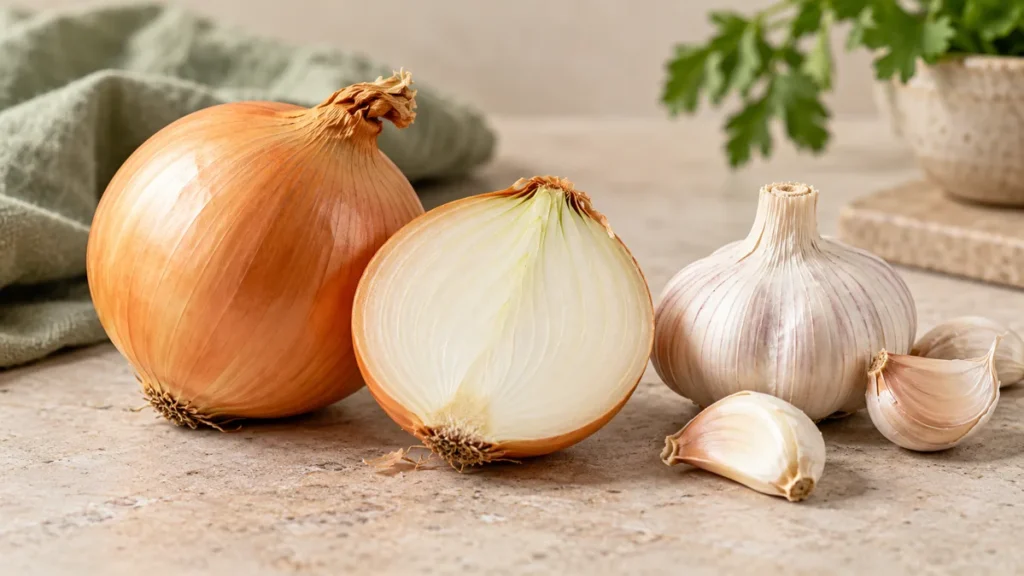
No. Dogs should not be deliberately fed onions or garlic, including cooked ingredients and concentrated powders. If your dog may have eaten them, contact your veterinarian or animal poison control for advice about the specific exposure. Do not assume removing visible pieces makes a finished dish suitable.
The Merck Veterinary Manual’s allium guidance describes damage to red blood cells from raw, cooked or concentrated onion and garlic products. The allium family also includes foods such as chives and leeks.
Can Dogs Eat Onions and Garlic After Cooking?
Cooking is not a reliable way to make these ingredients suitable for a dog. Powders and concentrated forms also matter. A recipe that uses an ingredient for seasoning can still belong in the exposure discussion even if there are no visible onion or garlic pieces.
Read the entire recipe: a sauce may be added separately from the meat or vegetables, and a seasoning blend may have its own ingredient list. Ask the person who prepared the dish rather than judging only by its appearance.
Where Alliums Turn Up in Everyday Meals
| Food or cooking ingredient | Useful question |
|---|---|
| Soup, broth or gravy | What ingredients or stock products were used? |
| Seasoned meat | Was a rub, marinade, sauce or powder added? |
| Leftover vegetables | Were onions, garlic or a seasoning mixture cooked with them? |
| Restaurant food | Can the actual recipe be confirmed? |
| Homemade baby food or purée | Is it genuinely plain, and are all ingredients known? |
For planned sharing, set aside a plain portion before preparing the human dish. If you do not know the ingredients, choose a known food instead. This is simpler than trying to remove a seasoning after cooking.
What to Do If Your Dog Ate an Allium
The AKC’s onion guidance notes that symptoms may be delayed. A dog appearing normal shortly after access is not proof that the exposure is harmless.
- Prevent any more access to the food.
- Contact your veterinarian, emergency clinic or animal poison control.
- Keep the recipe, label or seasoning container.
- Estimate how much of the dish the dog ate and when.
- Mention repeated access, not just the most recent mouthful.
- Report your dog’s approximate weight, medical history and any signs you have noticed.
Say whether the quantity you report is the amount of onion in the whole recipe or the amount of finished food eaten. Those are different measurements. If the ingredient quantity is unknown, say so.
Do Not Rely on a Universal Safe Dose
An online weight chart cannot account for every recipe, product concentration or dog. Do not use a single bite count to dismiss a concern. Let the veterinary team decide what the exposure history means.
Do not induce vomiting or give a home antidote without professional instructions. The ASPCA explains why exposure care and decontamination decisions belong with veterinary professionals.
Choose a Plain Alternative for Future Snacks
Once any exposure has been addressed, make food-sharing rules clear to everyone at home. Keep seasoned leftovers and food-preparation waste in secure storage. Ask guests to check before offering the dog anything from their plate.
For vegetables already on the site, our broccoli guide and sweet potato guide explain their own preparation decisions. The important point is to evaluate the whole serving, including what it was cooked with.
Frequently Asked Questions
Is garlic a safer alternative to onion?
No. Both belong in the allium hazard discussion. Do not deliberately use garlic as a dog-food topping based on an internet health claim.
Does picking out onion pieces solve the problem?
Do not assume it does. Tell the veterinary professional how the dish was prepared and what the dog actually ate.
Should I report repeated small exposures?
Yes. Give the fullest history you can, including access on earlier days. Let the professional assess its significance.
Can Dogs Eat Green Onions or Spring Onions?
No. Green onions and spring onions are not a dog-safe exception to the allium warning. The AKC onion guide explains that onion products are toxic to dogs. Do not feed either the bulb or green tops, and check garnishes as well as ingredients cooked into a dish.
If a dog eats scallion pancakes, soup, stir-fry or a green-onion snack, retain the recipe or label. Report the amount and timing to the veterinary team rather than assuming that a garnish cannot matter.
Sources