Can Dogs Eat Pecans?
Can Dogs Eat Pecans? No, pecans aren’t a nut to feed your dog, even occasionally. The main reason isn’t...
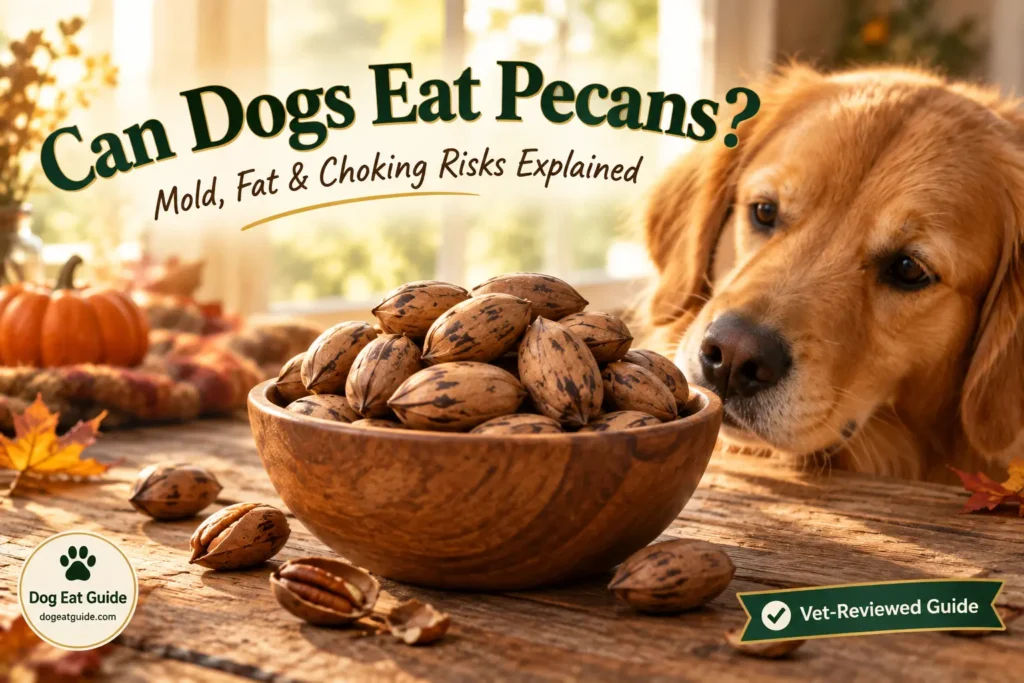
Can Dogs Eat Pecans? No, pecans aren’t a nut to feed your dog, even occasionally. The main reason isn’t a sudden, dramatic poison like you’d see with chocolate or xylitol — it’s that pecans are prone to mold that produces tremorgenic mycotoxins, compounds that can cause tremors and seizures in dogs. Add in a heavy fat load and a hard, jagged shell, and pecans end up being a poor choice on several fronts, even though a single pecan isn’t an automatic emergency.
Are Pecans Safe for Dogs?
Pecans aren’t classified as a directly toxic food in the same category as macadamia nuts, which cause illness even in small amounts. The concern with pecans is different: they’re one of the nuts most prone to developing mold, and certain molds produce tremorgenic mycotoxins, toxins that affect the nervous system. The ASPCA Animal Poison Control Center has documented tremorgenic mycotoxin cases in dogs linked to moldy food, including nuts, with signs ranging from mild muscle tremors to seizures. Because this mold isn’t always visible to the eye, there’s no reliable way to tell a safe pecan from a contaminated one just by looking at it.
On top of the mold risk, pecans are high in fat, and some sources note they may contain a compound called juglone, also found in walnuts. The juglone claim is less firmly established for pecans specifically than the mold risk is, but it adds another reason pecans aren’t worth the gamble.
Why Moldy Pecans Are the Bigger Concern
Pecans that have fallen from a tree, been stored for a long time, or kept in damp conditions are especially likely to carry mold. Tremorgenic mycotoxins produced by this mold can cause:
- Muscle tremors or twitching
- Seizures
- Difficulty walking or incoordination
- Elevated body temperature
These signs can appear within a few hours of ingestion and, in documented cases, have lasted anywhere from several hours to a few days. If your dog shows tremors, seizures, or sudden incoordination after getting into pecans or any moldy food, contact your veterinarian or an emergency clinic immediately.
Fat Content and Pancreatitis Risk
Pecans are calorie-dense and high in fat. Rich, fatty foods are a recognized trigger for digestive upset in dogs and, in some dogs, for pancreatitis, a painful and potentially serious inflammation of the pancreas. Dogs that are overweight, have a history of pancreatitis, or have other health conditions are at higher risk from fatty foods like pecans. Your veterinarian can help determine whether any nut or fatty treat is appropriate for your dog.
Choking and Obstruction Risk
Whole pecans and pecan shell fragments are hard and can pose a choking hazard, particularly for small dogs. Shell pieces can also cause injury if swallowed, or in some cases contribute to a gastrointestinal obstruction. Keep pecans and their shells out of reach, including fallen pecans in the yard if you have a pecan tree.
Can Dogs Eat Pecan Pie or Pecan-Containing Foods?
No. Pecan pie and similar desserts combine the fat concerns of pecans with added sugar, butter, and sometimes chocolate, which makes them a worse choice, not a safer one. Trail mixes are a particular hazard, since they often combine pecans with raisins, chocolate chips, or macadamia nuts, each of which carries its own serious risk for dogs. Check any trail mix or baked good carefully before assuming it’s safe to share.
How Pecans Compare to Other Nuts
| Nut | Safe for dogs? | Why |
|---|---|---|
| Macadamia nuts | No | Toxic even in small amounts; causes weakness, vomiting, tremors |
| Black walnuts | No | Prone to mold and associated with juglone exposure |
| Pecans | No | Prone to mold-related mycotoxins, high fat, choking/shell risk |
| English walnuts | Best avoided | Lower documented risk than black walnuts, but still prone to mold and high in fat |
| Plain peanuts (unsalted, no shell) | Generally okay in small amounts | Lower fat than tree nuts; watch for xylitol in flavored nut butters |
| Almonds | Not recommended | Not classically toxic, but hard to digest and a choking risk |
What If My Dog Ate a Pecan?
A single pecan, especially from a trusted, dry, unspoiled source, is unlikely to cause the most serious mold-related effects, but there’s no way to confirm that from the outside. Watch your dog closely for several hours after any pecan ingestion for:
- Vomiting or diarrhea
- Tremors, twitching, or seizures
- Weakness, wobbliness, or difficulty walking
- Signs of abdominal pain
Contact your veterinarian if you notice any of these signs, if your dog ate more than a piece or two, if the pecans were found on the ground or looked old, or if you’re simply unsure. Neurological signs like tremors or seizures should always be treated as an emergency.
Can Puppies Eat Pecans?
No. Puppies are smaller and more sensitive to fat, choking hazards, and any potential toxin exposure than adult dogs. There’s no reason to introduce pecans to a puppy’s diet.
Safer Alternatives to Pecans
If your dog enjoys a crunchy snack, consider:
- Small pieces of plain, unsalted cooked sweet potato or carrot
- Commercial dog treats formulated without nuts or added fat
- Plain, unsalted peanuts in small amounts, checked carefully for shell fragments
QUICK ANSWER
No, dogs shouldn’t eat pecans. Pecans are prone to mold that produces tremorgenic mycotoxins, toxins that can cause tremors and seizures in dogs, and they’re also high in fat and a choking hazard. Keep pecans, pecan pie, and any pecan-containing trail mix or baked goods out of reach.
FAQS
Are pecans toxic to dogs?
Pecans aren’t classified as directly toxic the way macadamia nuts are, but they’re prone to mold that produces tremorgenic mycotoxins, which can cause tremors and seizures. This mold risk, combined with high fat content and choking hazards, is why pecans should be avoided.
What happens if a dog eats a pecan?
A single pecan from a fresh, dry source is unlikely to cause the most serious effects, but watch your dog for several hours for vomiting, tremors, or unsteadiness, and contact your veterinarian if any of these occur.
Can dogs eat pecan pie?
No. Pecan pie combines the fat concerns of pecans with added sugar and butter, making it a worse choice than plain pecans.
Are pecans more dangerous than walnuts for dogs?
Both carry similar mold-related risks. Black walnuts are specifically associated with juglone exposure and mold, while pecans share the mold and high-fat concerns without the same level of documented juglone risk.
Can dogs eat moldy pecans?
No. Moldy pecans carry the highest risk, since they’re the most likely source of tremorgenic mycotoxins. Contact your veterinarian immediately if your dog eats a pecan that looks or smells moldy.
How much pecan is dangerous for a dog?
There’s no established safe amount, since mold isn’t always visible and toxin levels can vary unpredictably. It’s best to avoid feeding pecans to dogs entirely rather than trying to determine a “safe” quantity.
Can puppies eat pecans?
No. Puppies are more sensitive to fat, choking hazards, and potential toxin exposure than adult dogs.