Can Dogs Eat Pork Bones?
Can dogs eat pork bones? No. Veterinary and pet-health authorities consistently advise against giving dogs pork bones, whether raw...
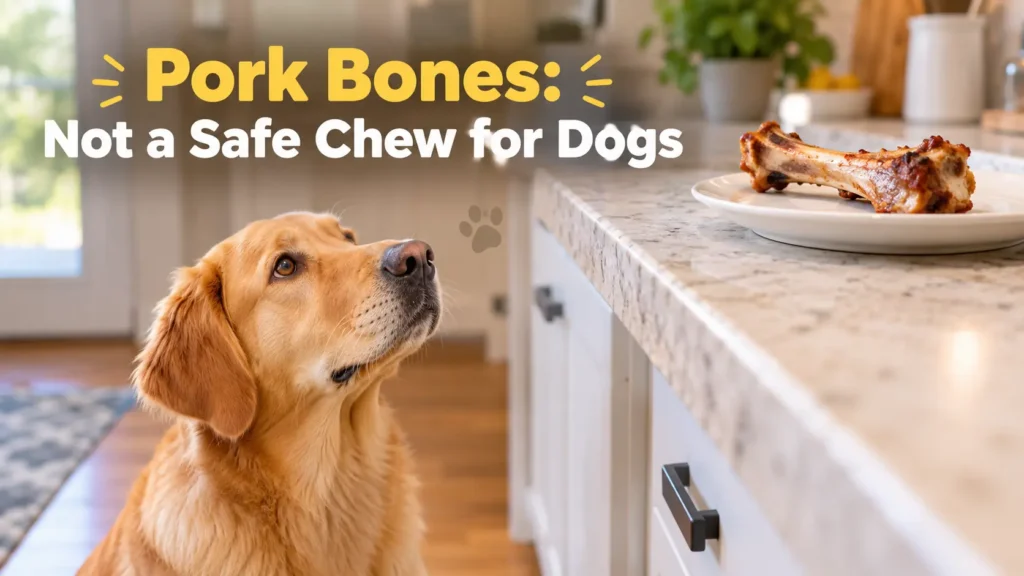
Can dogs eat pork bones? No. Veterinary and pet-health authorities consistently advise against giving dogs pork bones, whether raw or cooked. Pork bones are prone to cracking and splintering when chewed, and the fragments can cause choking, cuts inside the mouth, or a blockage or puncture further down the digestive tract. The bone itself doesn’t need to be cooked to be dangerous raw pork bones can splinter too.
If your dog already snatched a pork bone off a plate or out of the trash, don’t panic, but do read the symptoms section below and know when it’s time to call a vet.
Why Aren’t Pork Bones Safe for Dogs?
Pork bones tend to be smaller and more brittle than bones from large livestock like cattle or bison. When a dog gnaws on one, it’s likely to crack into sharp-edged pieces rather than wear down smoothly. Those pieces create a few overlapping hazards:
- Choking: A dog can inhale or lodge a bone fragment in the throat, especially larger dogs that try to swallow smaller pork bones whole.
- Mouth and tooth injury: Sharp edges can cut the gums, tongue, or cheek, or crack a tooth.
- Gastrointestinal obstruction: Fragments can get stuck in the esophagus, stomach, or intestines, sometimes requiring surgery to remove.
- Perforation: Sharp splinters can puncture the lining of the digestive tract, which can lead to internal bleeding or a serious abdominal infection (peritonitis).
This is true of both cooked and raw pork bones. Cooking does make bones more brittle, which is part of why cooked bones from any meat are widely discouraged but “raw” does not mean “safe” for a pork bone specifically, because pork bones are already a size and density that splinters easily compared with larger raw bones like beef femurs.
Is Cooked Pork Bone Ever Okay?
No. Cooked bones lose moisture during cooking, which makes them harder and more likely to shatter into shard-like pieces. This applies to pork rib bones, chop bones, ham bones, and pork knuckle or femur bones alike. The U.S. Food and Drug Administration has warned pet owners for years about the risks of giving dogs cooked bones or commercially sold “bone treats,” including gastrointestinal blockage, choking, and cuts in the mouth or on the tonsils and pork bone treats have specifically been named in past FDA consumer safety reports.
What About Raw Pork Bones?
Raw pork bones carry the same physical splintering and choking risks as cooked ones, just to a somewhat lesser degree, because raw bone is generally more pliable than cooked bone. That’s why some raw-feeding guides treat certain large raw bones (like raw beef marrow bones) differently from pork bones. Pork bones are usually too small and brittle even raw to be considered a safer chew, and large dogs in particular can crack or swallow them whole.
There’s also a second, separate concern with raw pork specifically (not just the bone): raw or undercooked pork can carry Trichinella larvae, the parasite responsible for trichinosis. Commercial pork in the U.S. carries a low risk of this today thanks to modern feed and farming regulations, but it isn’t zero, and home-raised or wild pork carries more risk. Cooking pork thoroughly to a safe internal temperature kills the parasite. This is a reason to avoid raw pork (meat or bone) generally, separate from the bone-splintering issue.
Does the Fat on Pork Bones Matter?
Yes. Pork bones, especially chop bones, rib bones, and ham bones, often come with a layer of fat and skin still attached. A large amount of fatty pork can trigger digestive upset in dogs, and in some dogs, a sudden high-fat meal is associated with pancreatitis, a painful and potentially serious inflammation of the pancreas. This is a separate risk from the bone itself, but it’s common for dogs to be exposed to both at once for example, when they steal a ham bone with the fatty rind still on it.
What Happens If a Dog Eats a Pork Bone?
Outcomes vary a lot depending on the dog’s size, how much bone was eaten, and whether it was swallowed in large pieces or chewed into shards. Some dogs pass small bone fragments without any problem. Others develop choking, an obstruction, or a perforation that needs emergency treatment. Because you can’t tell from the outside whether a fragment is safely passing or causing internal damage, it’s worth monitoring closely and contacting your vet, even if your dog seems fine at first.
Symptoms to Watch For
Call your veterinarian promptly if your dog shows any of the following after eating a pork bone:
- Gagging, retching, pawing at the mouth, or difficulty breathing (treat as an emergency)
- Repeated vomiting, especially with blood
- Drooling more than usual, or reluctance to swallow
- Loss of appetite or lethargy
- Straining to defecate, or being unable to pass stool
- Diarrhea, dark/tarry stool, or visible blood in the stool
- Abdominal pain, a hunched or “praying” posture, or a bloated/tender belly
What to Do
If your dog is actively choking, gagging, or struggling to breathe, this is an emergency go to a veterinarian or emergency animal hospital immediately. If your dog seems fine but you know they ate a pork bone, it’s still reasonable to call your vet for guidance; depending on your dog’s size and how much bone was consumed, they may recommend monitoring at home for the next 24–72 hours, or coming in for an exam or X-ray. Don’t attempt to induce vomiting or give any home remedy (oils, laxatives) without your vet’s direction, since these can sometimes make a bone fragment situation worse.
Can Puppies Eat Pork Bones?
No the same risks apply to puppies, and their smaller size and developing digestive tracts make choking and obstruction even more of a concern relative to body size. Puppies are also more likely to gulp food quickly without chewing it properly.
Are Any Bones Safe for Dogs?
Some raw feeding and veterinary sources consider certain large, raw bones from large animals (such as raw beef knucklebones) a lower-risk option for supervised chewing, because their size makes them harder to swallow and their density makes them less prone to splintering than smaller bones like pork or poultry bones. Even then, any bone carries some risk of tooth fracture, digestive upset, or bacterial contamination, and should only be offered under direct supervision, taken away if it starts to crack, and matched to your dog’s size. If you’re unsure what’s appropriate for your individual dog, your veterinarian can advise based on their size, chewing style, and health history.
Safer Alternatives to Pork Bones
If you want to give your dog something to chew on, consider:
- Purpose-made dental chews formulated for dogs
- Durable rubber chew toys designed to hold up to aggressive chewers
- Vet-approved dental treats sized for your dog’s breed and jaw strength
These options satisfy a dog’s urge to chew without the splintering risk that comes with cooked or raw pork bones.
Bottom Line
Pork bones raw or cooked are not considered a safe chew or treat for dogs because they’re prone to splintering and can cause choking, mouth injuries, or a gastrointestinal obstruction or perforation. Raw pork also carries a small risk of trichinosis, and fatty pork bones can contribute to digestive upset or pancreatitis. If your dog eats one, watch closely for warning signs and call your veterinarian, especially if you notice vomiting, blood, straining, pain, or lethargy.
Quick Answer
No, dogs should not eat pork bones, whether raw or cooked. Pork bones are small and brittle enough to splinter when chewed, which can cause choking, mouth injuries, or a blockage or puncture in the digestive tract. If your dog eats one, watch for vomiting, straining, blood in the stool, or lethargy, and contact your veterinarian.
FAQs
Is a pork bone toxic to dogs?
No, a pork bone isn’t toxic in the way that chocolate or xylitol are toxic. The danger is physical splintering, choking, and obstruction or perforation risk — not poisoning.
Can dogs eat cooked pork bones?
No. Cooking makes bones more brittle and more likely to splinter into sharp pieces, so cooked pork bones (chops, ribs, ham) are considered unsafe.
Can dogs eat raw pork bones?
Raw pork bones are somewhat less brittle than cooked ones, but they’re still small enough to splinter or be swallowed whole, so they’re generally not recommended either.
What should I do if my dog swallowed a pork bone whole?
Contact your veterinarian right away and describe your dog’s size and the size of the bone. They may recommend monitoring at home or an in-person exam or X-ray depending on the risk of obstruction
Can puppies have pork bones?
No. Puppies face the same splintering and choking risks as adult dogs, and their smaller size increases the danger.
Are ham bones different from other pork bones?
Ham bones carry the same splintering risk as other pork bones, plus they’re often fattier, which adds a risk of digestive upset or pancreatitis on top of the physical bone risk.
What bones are safer for dogs to chew?
Some large raw bones from large animals are considered lower-risk for supervised chewing because of their size and density, but no bone is completely risk-free. Purpose-made dental chews avoid the splintering issue entirely.
Further Reading and Source Scope
American Kennel Club: bone risks. Consult this source for the relevant food or ingredient precautions. This reference is provided by our editorial team and does not mean a veterinarian has reviewed this article. Ask your own veterinarian for advice that accounts for your dog’s health and diet.