Can Dogs Eat Turkey?
Yes, dogs can eat turkey. Plain, fully cooked, boneless, and skinless turkey meat is a safe protein for most...
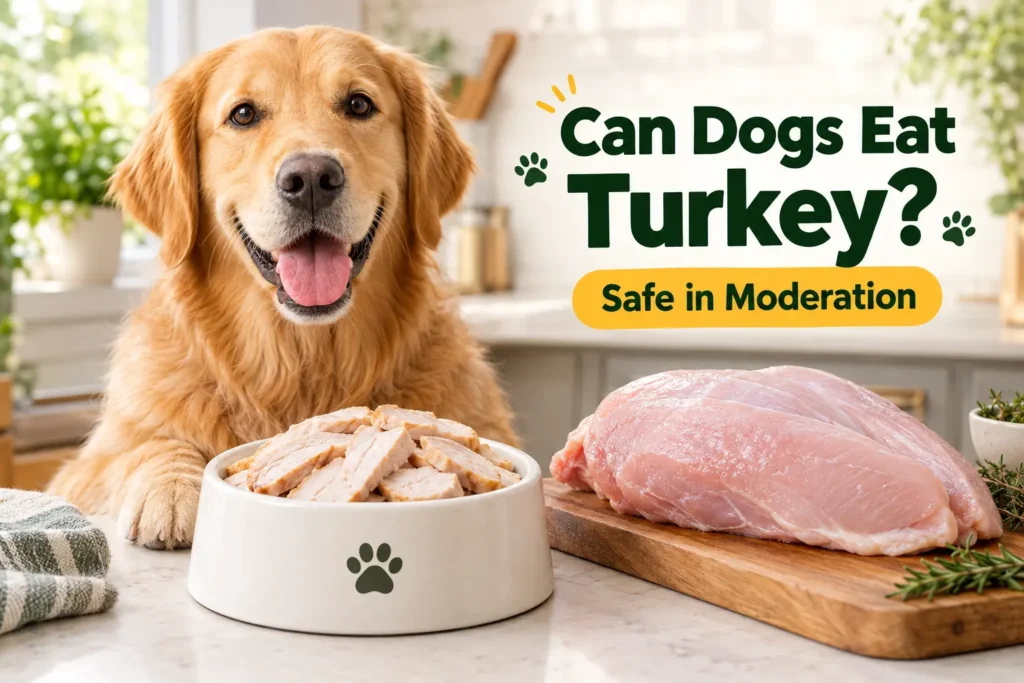
Yes, dogs can eat turkey. Plain, fully cooked, boneless, and skinless turkey meat is a safe protein for most healthy dogs in small amounts. The risk with turkey almost never comes from the meat itself — it comes from the bones, skin, fat, seasoning, and other extras that usually come along with it, especially around holiday meals.
Below is a complete breakdown of what parts of turkey are safe, which parts to avoid, and how to feed it without putting your dog at risk.
Is Turkey Safe for Dogs?
Turkey is a lean, easily digestible protein, and it’s actually a common ingredient in many commercial dog foods and treats. Plain white or dark turkey meat, cooked with no added salt, butter, oil, or seasoning, is generally safe to offer as an occasional treat or food topper.
The concern with turkey isn’t nutritional — it’s what tends to surround it. Holiday turkey dinners typically come with seasoning, gravy, stuffing, and skin, and any of these can turn an otherwise safe food into a problem.
What Parts of Turkey Are Safe for Dogs?
- Plain cooked white or dark turkey meat — safe in small amounts, with no bones, skin, or seasoning
- Plain, fully cooked ground turkey — safe as long as it has no added onion, garlic, salt, or seasoning packets
What Parts of Turkey Should Dogs Avoid?
| Part | Feed? | Why |
|---|---|---|
| Plain cooked meat | Yes, small amounts | Lean protein, low risk |
| Turkey skin | No | High fat content can trigger pancreatitis |
| Turkey bones (cooked) | No | Brittle, can splinter and cause choking or internal injury |
| Seasoned or buttered turkey | No | Added fat, salt, and spices can upset digestion |
| Turkey with garlic/onion/gravy | No | Garlic and onions are toxic to dogs |
| Deli or processed turkey | Avoid regularly | High sodium and preservatives |
| Raw turkey | Not recommended | Risk of Salmonella and other bacteria |
Can Dogs Eat Turkey Skin?
No, turkey skin isn’t recommended for dogs. It carries a large amount of fat, and rich, fatty foods are a known trigger for pancreatitis in dogs — a painful inflammation of the pancreas that can range from mild digestive upset to a serious medical emergency. Skin that’s been roasted with butter, oil, or drippings adds even more fat on top of what’s naturally there.
Can Dogs Eat Turkey Bones?
No. Cooked turkey bones, like other cooked poultry bones, become brittle and can splinter into sharp fragments. If a dog chews or swallows them, this can lead to mouth and tongue injuries, obstruction of the throat or intestinal tract, choking, and piercing of the stomach or intestinal lining, along with constipation or rectal bleeding from sharp fragments passing through the digestive tract. Some of these injuries require emergency surgery to resolve.
Raw bones are somewhat more flexible than cooked ones, but they still carry choking and contamination risks and are not something to offer as a casual treat without guidance from your veterinarian.
If your dog swallows a turkey bone: stay calm, don’t try to pull it back out of your dog’s mouth if there’s any risk of a bite, and call your veterinarian right away for advice on next steps.
Can Dogs Eat Turkey with Seasoning or Gravy?
No. Seasoned turkey, gravy, and stuffing are common causes of digestive upset in dogs because of their fat, salt, butter, and spice content. Many seasoning blends and gravies also include garlic and onion (in fresh, powdered, or dehydrated form), both of which are toxic to dogs and can damage red blood cells if eaten in sufficient quantity. Always check what a dish was seasoned or cooked with before offering any to your dog.
Can Dogs Eat Deli Turkey or Turkey Hot Dogs?
Processed turkey products like deli meat, turkey hot dogs, and turkey sausage are high in sodium and often contain preservatives and additives that aren’t good for regular feeding. An occasional small piece — for example, using a sliver of turkey hot dog to help a dog take a pill — is unlikely to cause harm, but these products shouldn’t be a regular part of a dog’s diet.
Can Dogs Eat Raw Turkey?
Raw turkey is not recommended for most dogs. Raw poultry, including raw turkey, carries a higher risk of bacterial contamination such as Salmonella than fully cooked meat. Public health agencies have documented Salmonella outbreaks tied to raw turkey pet food, in some cases making both pets and the people handling the food ill. If you choose to feed a raw diet, do so only under veterinary guidance and with careful food-safety handling.
Can Puppies Eat Turkey?
Puppies can eat small amounts of plain, cooked, boneless turkey meat, but their digestive systems are more sensitive than an adult dog’s. Introduce it gradually and in smaller portions, and watch for any signs of an upset stomach. As with adult dogs, bones, skin, and seasoning should always be avoided.
How Much Turkey Can a Dog Eat?
Turkey should be treated as an occasional extra, not a meal replacement. A common guideline used by veterinary nutritionists is that treats and extra foods should make up no more than about 10% of a dog’s daily calories, with the rest coming from a complete and balanced dog food. The right amount for your individual dog depends on their size, age, activity level, body condition, and any existing health conditions, so it’s worth checking with your veterinarian if you’re unsure — especially for small dogs, senior dogs, or dogs managing a medical condition.
What Happens If a Dog Eats Too Much Turkey?
Eating a large amount of turkey, especially fatty skin or seasoned meat, can lead to vomiting, diarrhea, or stomach upset, and in some dogs may contribute to pancreatitis. Watch for symptoms such as repeated vomiting, lethargy, abdominal pain, loss of appetite, or diarrhea, and contact your veterinarian if these occur or worsen.
When Should You Call a Veterinarian?
Contact your veterinarian if your dog:
- Swallowed a turkey bone or bone fragment
- Shows signs of choking or difficulty breathing after eating turkey
- Has repeated vomiting, diarrhea, or refuses food
- Shows signs of abdominal pain, bloating, or lethargy
- Ate turkey seasoned with garlic, onion, or heavy spices
- Strains, shows pain, or has bleeding while trying to defecate in the days after eating a bone
Safer Alternatives to Holiday Turkey Scraps
If you want to include your dog in a holiday meal without the risks of bones, skin, or seasoning, consider:
- A small portion of plain, unseasoned turkey breast set aside before any seasoning is added
- Turkey-flavored dog treats made specifically for dogs
- A dog-safe “Thanksgiving dinner” style canned food or treat
QUICK ANSWER
Yes, dogs can eat turkey. Plain, fully cooked, boneless, and skinless turkey meat is a safe protein for most healthy dogs in small amounts. The real risk almost never comes from the meat itself — it comes from bones, skin, fat, and seasoning like gravy or stuffing, especially around holiday meals.
FAQS
Is turkey good for dogs?
Plain cooked turkey meat is a lean, digestible protein and can be a healthy occasional treat when served without skin, bones, or seasoning.
Can dogs eat turkey skin?
No, turkey skin is high in fat and can contribute to pancreatitis, so it’s best avoided.
Can dogs eat cooked turkey bones?
No. Cooked turkey bones are brittle and can splinter, creating a choking hazard and a risk of internal injury.
Can dogs eat turkey with gravy or stuffing?
No, gravy and stuffing typically contain butter, fat, salt, and seasonings such as garlic or onion that can harm dogs.
Is raw turkey safe for dogs?
Raw turkey carries a higher risk of Salmonella contamination and isn’t recommended without veterinary guidance.
Can puppies eat turkey?
Yes, in small, plain, boneless, skinless portions, introduced gradually.
What should I do if my dog eats a turkey bone?
Stay calm and contact your veterinarian right away for guidance, even if your dog seems fine at first.