Can Dogs Eat Cilantro? Leaves, Stems and Mixed Dishes
Dogs can eat a small amount of plain culinary cilantro leaves if they tolerate the herb. Wash and finely...
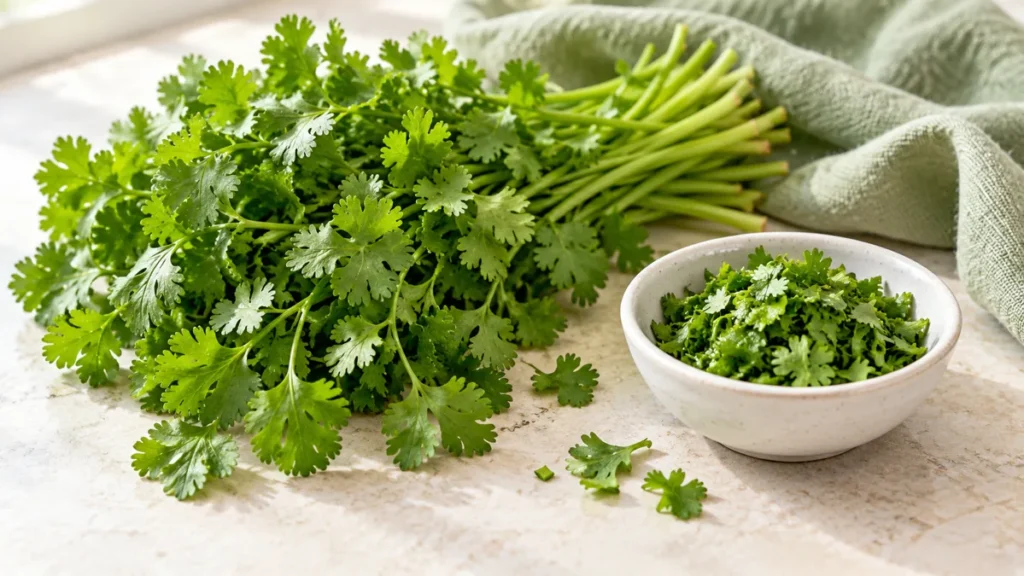
Dogs can eat a small amount of plain culinary cilantro leaves if they tolerate the herb. Wash and finely chop the leaves, and omit the tough stems. Salsa, guacamole and cilantro-lime rice need their own ingredient checks.
Is Cilantro Safe for Dogs?
AKC’s cilantro guide describes the leaves as nontoxic in moderation. It recommends small amounts because too much can cause digestive upset. A light garnish is different from feeding a large bunch.
Cilantro is optional. A dog that dislikes its flavor does not need it hidden in a meal. Do not use the herb to “detox” a dog or claim that a few leaves correct a vitamin deficiency.
How to Prepare Cilantro Leaves
Use a positively identified edible herb, discard spoiled material and wash it. Remove the stems, chop a small amount of leaf and offer it with a familiar suitable food. Introduce one new item at a time so that any reaction is easier to assess.
AKC advises avoiding stems because they can be difficult to digest. This is not a reason to panic over every accidental tiny stem, but it is a simple preparation choice when planning a snack. Do not encourage a dog to graze from an unidentified garden bed.
Cilantro Is Not the Same as a Prepared Dish
| Form or situation | Decision |
|---|---|
| Plain chopped leaves | A small garnish may suit a healthy dog. |
| Large bunch or tough stems | Avoid planned feeding; more is not better. |
| Cilantro-lime rice | Check citrus, salt, oil, broth and other seasoning. |
| Salsa or guacamole | Onion, garlic and the complete recipe matter. |
| Coriander seeds or spice blend | A different preparation; inspect the actual product. |
| Cilantro oil, extract or supplement | Do not infer safety or dosing from advice about a few leaves. |
Cilantro Versus Coriander
In the United States, cilantro usually means the fresh leaves, while coriander often refers to the seeds or spice. Names vary between countries and recipes. Confirm what the person or label means before applying food advice.
A coriander-containing seasoning blend may also contain salt, onion or garlic. A natural herb product may be concentrated or include other botanicals. Bring the exact label to the veterinary team instead of treating every form as the same exposure.
No Substitute for Dental or Medical Care
An herb scent does not address the cause of persistent bad breath. Do not replace tooth brushing, dental examination or treatment with cilantro. Likewise, ongoing vomiting, diarrhea or appetite loss should not be managed by adding a garnish.
For a dog on an elimination or prescribed diet, ask before adding even small extras. The restriction may exist to control ingredients, not merely calories. A harmless ingredient for a healthy dog can still interfere with that plan.
If Your Dog Ate a Cilantro Dish
Identify the whole recipe, approximate amount and time. A few plain leaves are different from a bowl of salsa. Check especially for onion and garlic, and save the package or restaurant ingredient information if available.
Contact veterinary help for a concerning ingredient, a substantial uncertain amount or symptoms. Repeated vomiting, pain, marked weakness or swelling needs assessment; breathing difficulty or collapse needs emergency care. Do not induce vomiting or give a home antidote without instructions.
Frequently Asked Questions
Can dogs eat fresh cilantro?
Yes, a small amount of washed, chopped leaf can suit many healthy dogs. It is not necessary to add it regularly.
Can dogs eat cooked cilantro?
Cooking the leaves does not cancel out the rest of a recipe. Assess all ingredients in the cooked dish.
Can puppies eat cilantro?
Keep the complete growth diet central and ask about suitable small extras. Do not use a large herb portion as a supplement.
Is cilantro-lime chicken safe if I remove the leaves?
The marinade and seasonings matter more than removing cilantro. Do not assume the meat is plain after it has been marinated.
Related feeding guides
Onion and garlic require separate exposure advice. For a plain grain, read our brown rice guide.
Sources