Can Dogs Eat Cooked Chicken? Plain and Boneless
Dogs can eat small amounts of plain, fully cooked, boneless chicken if it suits their individual diet. Keep the...
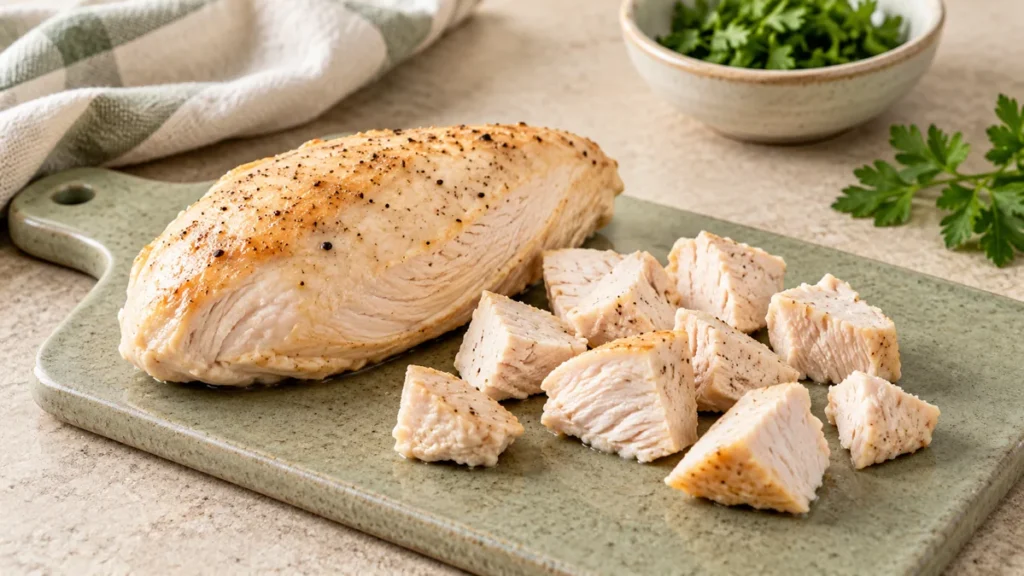
Dogs can eat small amounts of plain, fully cooked, boneless chicken if it suits their individual diet. Keep the portion free of seasoning and sauce, remove bones, and let it cool before serving. Chicken from a finished human meal may contain ingredients that change the answer.
The AKC chicken guide discusses cooked chicken as a possible food for dogs. This guide focuses on planned plain preparation, not raw meat or an independently formulated homemade diet.
How to Prepare Cooked Chicken for a Dog
- Choose plain chicken and keep raw preparation separate from ready-to-eat foods.
- Cook it thoroughly, using a food thermometer.
- Remove bones and check the selected meat carefully.
- Leave off seasoning, sauce and other additions.
- Cool and cut or shred a small portion for the dog.
- Store the remainder appropriately rather than leaving it accessible.
FoodSafety.gov lists 165°F (74°C) for poultry. Use temperature rather than color alone to decide whether it is cooked. This is food-handling guidance, not a statement that every cooked chicken recipe is suitable for a dog.
Why Boneless Matters
A piece of meat and a piece with a bone are different exposures. The FDA discusses bones as potential obstruction hazards. Do not deliberately offer a cooked bone with the meat.
If a dog gets discarded bones, record what is missing and when it happened, then contact your veterinarian. Do not assume the absence of immediate signs means the material will pass without a problem.
Rotisserie, Fried and Sauced Chicken
| Preparation | What to check |
|---|---|
| Plain cooked boneless meat | Cooking, cooling, cut size and amount. |
| Rotisserie or deli chicken | Seasoning, brine, skin, sauce and the exact product. |
| Fried chicken | Bones, coating and the whole recipe. |
| Chicken in a casserole | Every ingredient, including stock and vegetables. |
For planned feeding, set aside plain meat before assembling the human dish. If the ingredients are unknown, choose a familiar appropriate treat instead. Do not rely on removing visible pieces of seasoning afterward.
Chicken and Rice Is Not a Universal Treatment
Do not assume every sick dog needs chicken and rice. Vomiting, appetite loss or diarrhea can have different causes, and the right feeding advice depends on the individual problem.
Ask your veterinarian whether a temporary diet is appropriate, what amounts to use and when the dog should return to its regular food. A short-term instruction for an illness should not quietly become an unbalanced long-term meal plan.
Keep the Extra Separate From the Main Diet
Measure the portion before adding it to the bowl or a training container. Record other snacks so the household can coordinate. Ask the veterinary team how chicken fits the plan if your dog has allergies, dietary restrictions or a prescribed food.
A dog already receiving a complete diet does not need a chicken topping simply because it is available. If you choose to offer it, keep the decision consistent rather than adding an increasing amount whenever the dog hesitates over dinner.
Frequently Asked Questions
Is cooked chicken the same question as raw chicken?
No. Our raw chicken guide addresses a different preparation and food-safety context.
What if chicken is a suspected allergy trigger?
Follow your veterinary team’s diet instructions. Do not add it during a prescribed diet trial without asking.
Can I compare other poultry?
See our turkey guide. Identify the exact food and preparation rather than assuming all leftovers are equivalent.
Can Dogs Eat Boiled or Baked Chicken?
Either method can produce the plain cooked chicken discussed here. What matters is that the meat is fully cooked, boneless and free from unsuitable additions. Use a food thermometer: FoodSafety.gov lists 165°F for poultry. Let the selected portion cool before cutting it into manageable pieces.
Chicken boiled in onion-containing broth or baked with a spice rub is not plain chicken. Set aside the dog’s portion before seasoning, keep bones and cooking waste away, and avoid treating a chicken-and-rice combination as a complete long-term diet.
Sources