Can Dogs Eat Hazelnuts? Shells, Whole Nuts and Spreads
Hazelnuts are best avoided as a planned dog treat. Plain hazelnuts are not inherently poisonous, but hard shells, whole...
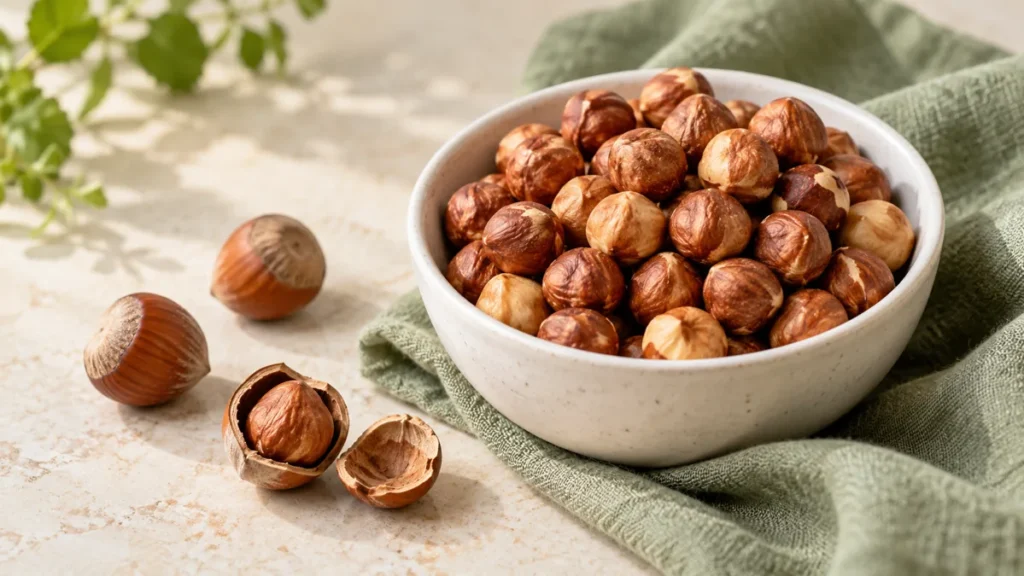
Hazelnuts are best avoided as a planned dog treat. Plain hazelnuts are not inherently poisonous, but hard shells, whole nuts, rich fat and coatings can cause problems. Chocolate hazelnut spread is a different product and needs a full ingredient assessment.
Are Hazelnuts Toxic to Dogs?
AKC’s tree-nut guide describes hazelnuts as nontoxic while warning that their hard shells can cause choking or blockage. That distinction matters: a food does not have to be poisonous to be a poor choice.
A small accidental plain kernel is not the same situation as a handful of in-shell nuts or an unidentified fallen nut. Check the amount and preparation before assuming either that nothing matters or that every taste is an emergency.
Whole Nuts and Shells
A dog that gulps snacks may swallow a whole hazelnut without chewing. Shells are hard foreign material, not suitable chews. Do not hand over an in-shell nut as enrichment or assume the dog will crack it neatly and spit out the shell.
After a possible shell ingestion, contact the veterinary team and describe the size and amount. Do not wait to find it in the stool before asking, and do not attempt to push it through with bread or another food.
Hazelnut Products Compared
| Form or situation | Decision |
|---|---|
| Plain shelled kernel | Avoid planned feeding; assess an accidental taste in context. |
| In-shell hazelnut | Shells create a separate physical hazard. |
| Salted or seasoned nuts | Added ingredients change the assessment. |
| Chocolate hazelnut spread | Check chocolate, sweeteners and the amount eaten. |
| Hazelnut cake or candy | Assess the complete recipe, not just the nut. |
| Damp, old or fallen nuts | Mold and uncertain identification are additional concerns. |
Fat and Mold Are Separate Concerns
Nuts are rich in fat and calories, which can cause digestive upset and may be unsuitable for dogs with pancreatitis risk or a prescribed low-fat diet. Do not use them as a routine source of “healthy fats” for a dog already eating complete food.
Old or damp nuts can also become moldy. The Merck Veterinary Manual discussion of moldy-food toxins explains that contaminated food can cause serious neurological illness in dogs. Keep garden waste, compost and spoiled snack products inaccessible.
Can Dogs Eat Chocolate Hazelnut Spread?
Do not offer it. The chocolate, fat, sugar and any other ingredients make the spread different from a plain nut. A sugar-free product also needs a check for xylitol; FDA warns that xylitol is dangerous to dogs.
If the dog already ate a spread, save the label and estimate the amount. Do not assume that all brands have the same formulation or that a lick and a nearly empty jar need identical handling. Contact veterinary help for product-specific assessment, especially if xylitol, substantial chocolate or symptoms are involved.
What to Do After Hazelnut Ingestion
Remove access and record the type, approximate amount, time and your dog’s weight. Report shells, possible mold, other nuts, coatings and packaging. Call promptly for a concerning ingredient, swallowed shell, substantial uncertain amount or symptoms.
Breathing difficulty, collapse, tremors or seizures needs emergency care. Repeated vomiting, abdominal pain, difficulty swallowing or marked weakness also warrants assessment. Do not induce vomiting, give oil or use a home antidote without instructions.
Frequently Asked Questions
Can puppies eat hazelnuts?
Do not use hard whole nuts as puppy treats. Choose a suitable reward for the puppy’s size and growth diet.
Can dogs eat roasted hazelnuts?
Roasting does not remove the rich fat or make whole nuts an ideal treat. Salt, coatings and other additions still matter.
Is a single plain hazelnut always poisoning?
No. Plain kernels are not inherently toxic, but check the dog’s size, whether it was swallowed whole, and any symptoms or uncertainty.
Can I give hazelnut milk?
A drink is a separate product with its own additives. Dogs need fresh water and an appropriate complete diet, not nut milk.
Related feeding guides
Almonds and walnuts have their own preparation and exposure concerns.
Sources