Foods Toxic to Dogs: Hazards and What to Do
Foods toxic to dogs include grapes and raisins, xylitol-containing products, onions and garlic, chocolate, and alcohol. If your dog...
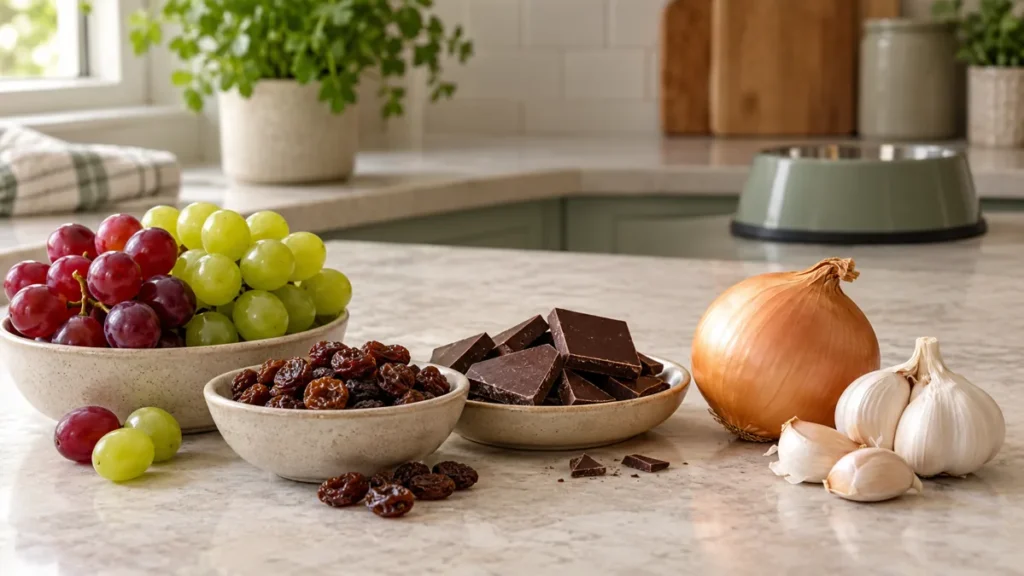
Foods toxic to dogs include grapes and raisins, xylitol-containing products, onions and garlic, chocolate, and alcohol. If your dog may have eaten a poisonous food, call your veterinarian, an emergency veterinary clinic or animal poison control promptly. Do not wait for symptoms or try a home remedy while searching for a safe amount.
This guide helps you identify the type of concern and organize the details a professional needs. It is not a toxicity calculator or a treatment plan. The ASPCA’s food-hazard guidance recommends noting the amount eaten and contacting veterinary help after a suspected exposure.
Common Foods Toxic to Dogs
| Food or ingredient | Important distinction |
|---|---|
| Grapes and raisins | Fresh and dried grapes can cause kidney injury; do not assume a small amount is harmless. |
| Xylitol | Check gum, sweets, baked goods, nut butters and non-food products. |
| Onions and garlic | Cooked food and concentrated powders still need attention. |
| Chocolate and caffeine | The specific product and amount matter for an exposure assessment. |
| Alcohol and raw yeast dough | Keep drinks, uncooked dough and preparation waste inaccessible. |
| Macadamia nuts | A mixed snack may contain several hazards, not just one nut. |
The list is a starting point rather than an exhaustive inventory of everything a dog could encounter. Check the entire recipe or package. A cookie, trail mix or leftover casserole may have more than one ingredient that changes the assessment.
Poisoning Is Different From a Physical Blockage
A food can be dangerous without acting as a poison. The FDA describes obstruction risks from bones, corn cobs and fruit pits. Swallowed wrapping, skewers or other non-food material also belongs in the exposure history.
When you call, describe both what the food contained and anything swallowed with it. For example, a piece of chicken and a piece of chicken on a skewer are different situations. Do not describe a swallowed pit only as fruit.
What to Do After a Suspected Exposure
- Prevent further access and move other pets away from the food.
- Contact your veterinarian, an emergency clinic or animal poison control.
- Keep the package or photograph the ingredient list.
- Estimate how much is missing and when the exposure happened.
- Report your dog’s approximate weight and any current signs.
- Follow the professional’s instructions about transport and next steps.
Be clear about uncertainty. Saying that a bag might have been half full is more useful than presenting a guess as an exact measurement. Mention any other animals that could have shared the food.
The ASPCA advises against inducing vomiting at home without veterinary consultation. Do not give salt, oil, medicine or another food as a presumed antidote.
Build Prevention Around How Your Household Eats
Look at the places where food is left unattended: backpacks, coffee tables, preparation counters and open trash bins. Store snack bags and baking ingredients where a dog cannot reach them. Clear plates before leaving the room.
Give guests a simple rule: ask before sharing any food with the dog. During parties or cooking, assign one person to the dog’s feeding routine so several people do not each provide extras without knowing what others have given.
Save your veterinary practice and nearest emergency clinic’s details before an incident. Keep food packaging until leftovers are put away. These small steps make a later conversation much more specific.
Frequently Asked Questions
Can I wait if my dog looks normal?
Contact a professional after a suspected toxic exposure even if your dog seems well. A normal appearance is not an exposure assessment.
Does cooking make a toxic ingredient safe?
Do not assume that it does. Tell the professional the ingredient and preparation rather than relying on whether the dish was cooked.
Where can I check everyday snack options?
Use our fruit guide for preparation-specific information and our guide to when online advice should become a veterinary conversation. A snack guide should never delay a call about an exposure.
Sources