Can Dogs Eat Ham? Cured Meat, Glazes and Bones
Ham is best left off your dog’s treat menu. Cured ham is often salty and fatty, and glazes or...
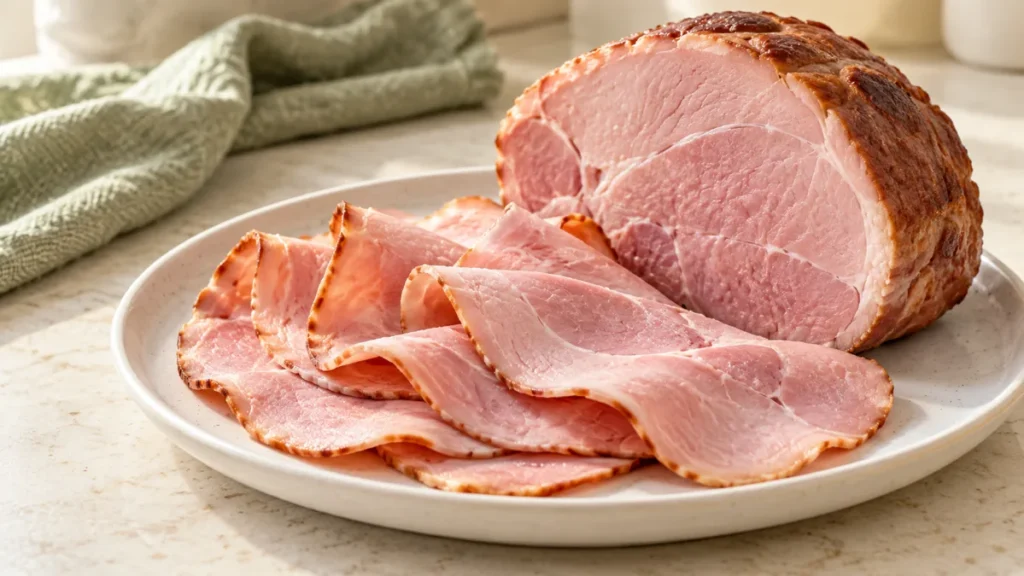
Ham is best left off your dog’s treat menu. Cured ham is often salty and fatty, and glazes or seasonings can add other hazards. A small accidental plain bite is different from a large serving or a swallowed ham bone.
Why Ham Is Different From Plain Pork
The name covers several foods: deli slices, cured holiday ham and an uncured fresh pork cut. AKC’s pork guidance distinguishes plain cooked pork from processed products such as ham and bacon. Curing, brining and added flavorings change the food you are considering.
Do not assume that trimming the outside fat removes the salt throughout a cured slice. Likewise, washing a glazed piece does not reliably remove ingredients absorbed during preparation. For planned feeding, choose a simpler appropriate food.
Ham Products and Their Main Concerns
| Form or situation | Decision |
|---|---|
| Deli or sandwich ham | Usually a salty processed product; not a routine dog treat. |
| Honey-baked or glazed ham | Sugar and other glaze ingredients add to the assessment. |
| Country or smoked ham | Check curing, salt, fat and preparation; “smoked” is not a safety guarantee. |
| Fresh uncured ham | An unprocessed pork cut needs a separate plain, fully cooked, boneless assessment. |
| Ham bone or hock | Do not offer bones, including cooked leftovers. |
| Ham in soup, beans or casserole | Onion, garlic, fat and the complete recipe matter. |
Can a Small Piece of Ham Hurt a Dog?
A plain bite does not mean every dog will become ill. However, the amount relative to body size, existing health conditions and the specific product matter. A dog on a low-fat or sodium-restricted diet may need stricter limits than a healthy dog.
Fatty foods can cause digestive upset and may trigger pancreatitis in susceptible dogs. A large stolen serving deserves a call for individualized advice. Do not use a universal online “safe slice” count to decide the exposure is harmless.
Never Share the Ham Bone
Bones can injure teeth, lodge in the throat or cause gastrointestinal injury or obstruction. A bone does not become a suitable chew because the meat is cooked or because the dog previously chewed one without a problem.
Keep the carving tray and trash out of reach. If a bone may have been swallowed, contact the veterinary team rather than feeding bread or waiting for it to pass. Report the size and whether the dog broke it into pieces.
What If My Dog Ate Ham?
Remove access and keep the label or recipe. Record when it happened, how much may be missing, the dog’s weight and whether a bone, packaging or glaze was involved. Contact your veterinarian for a large or uncertain serving, harmful ingredients or symptoms.
Repeated vomiting, abdominal pain, marked lethargy or refusal to eat warrants prompt assessment. Trouble breathing, collapse or repeated unproductive retching needs emergency attention. Do not give a home remedy or induce vomiting unless a professional directs you.
If the recipe included onion or garlic, do not wait for the dog to appear ill. Pet Poison Helpline’s onion guidance explains that toxic exposures can damage red blood cells. The actual ingredient amount and the dog’s size guide the professional assessment.
Frequently Asked Questions
Can dogs eat low-sodium ham?
“Low sodium” is a comparison with another product, not a statement that the food fits your dog’s diet. Fat and added ingredients still matter. Choose an approved alternative.
Can puppies eat ham?
Use an appropriate puppy reward instead of salty processed meat. Growing dogs need their complete growth diet to remain the foundation of feeding.
Is turkey ham safer?
The animal source does not settle the question. A processed turkey product may still contain substantial salt, fat and seasonings.
Can I use ham every day to hide medicine?
Ask the prescribing veterinary team for a suitable pill-hiding food. A routine medicine reward should fit the dog’s medical and calorie needs.
Related feeding guides
Plain cooked chicken is a different preparation. For seasonings, read our onion and garlic guide.
Sources