Why Dogs Eat Things They Should Not: Next Steps
Dogs may mouth, chew or swallow unsuitable things for different reasons, and one behavior does not establish a diagnosis....
Dogs may mouth, chew or swallow unsuitable things for different reasons, and one behavior does not establish a diagnosis. Repeated non-food ingestion needs veterinary assessment. If your dog may have swallowed a toxic, sharp or obstructive item, seek advice about that exposure first.
VCA’s pica guidance describes persistent ingestion of non-food material and recognizes both medical and behavioral possibilities. Do not assume the answer is boredom, hunger or a nutrient deficiency without an assessment.
First Distinguish Chewing From Swallowing
Write down what you actually saw. A dog carrying an object, shredding it and swallowing missing pieces are different observations. If you did not see the event, report the evidence and uncertainty rather than deciding the object must have passed already.
| Observation | Useful detail |
|---|---|
| Mouthing or carrying | What the object was and whether any part is missing. |
| Chewing or shredding | Material, damaged pieces and possible swallowed amount. |
| Known swallowing | Object size, material and approximate time. |
| Repeated searching for items | Where, when and under what circumstances it happens. |
Deal With a Possible Exposure Before Investigating the Pattern
The AKC intestinal-blockage guide discusses the concern with swallowed foreign material. Contact your veterinarian after a suspected hazardous ingestion rather than waiting for a behavior appointment.
Keep the package, remaining pieces or a photograph. Note the amount and time, your dog’s approximate weight and any signs. Severe breathing difficulty, collapse or other major changes require urgent care.
The ASPCA warns about home attempts to induce vomiting. Do not give a household remedy or try to force a swallowed item back up without professional instructions.
Build a Record That Helps the Veterinary Team
- The objects or materials involved.
- When the pattern began and how frequently it happens.
- Where the dog gains access.
- Whether it occurs during walks, alone time, meals or another routine.
- The current main diet, treats and recent changes.
- Appetite, stool, activity or other health changes.
- Medicines and supplements the dog receives.
Use concrete observations: a sock was missing after laundry was left on the floor is more useful than saying the dog eats everything. A short video of the behavior, recorded without encouraging it or allowing access to a hazard, may help your professional team understand the pattern.
Reduce Access While the Cause Is Assessed
VCA recommends environmental management, appropriate enrichment and reward-based training, and cautions against punishment. Medical assessment and behavior support may both be needed.
Start with the places where access happens. Secure laundry, close bins, inspect a walking area and use appropriate barriers. Coordinate across caregivers so the same object is not repeatedly left available.
Ask a qualified professional how to teach useful cues such as leave it and drop it. Do not turn every incident into a chase or a contest over the object. If guarding or handling safety is a concern, get individual help rather than attempting to take items forcibly.
Do Not Diagnose a Deficiency From the Item
Eating dirt, grass or an object does not on its own identify what the dog needs. Avoid independently adding supplements, changing medicines or replacing the main diet based on the material being eaten.
Bring the feeding and behavior record to your veterinarian. Ask what assessment is needed and whether referral to a veterinary behaviorist is appropriate after medical concerns have been considered.
Use the Guide That Matches the Observation
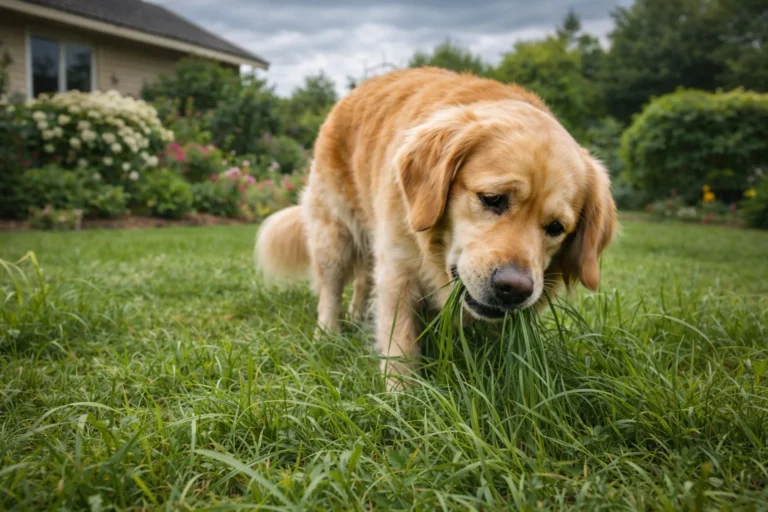
Our grass-eating article addresses one common behavior. Our veterinary-help guide explains when general reading should become an individualized conversation.
Keep a non-urgent behavior question separate from an active ingestion concern. The immediate priority after swallowing a hazardous item is exposure-specific advice, not deciding which behavior label fits.
Do Puppies Outgrow Pica?
Exploring with the mouth can occur during puppyhood, but do not wait for repeated swallowing of objects to resolve on its own. Record whether the puppy merely chews or actually ingests material and prevent access while you seek advice. VCA’s pica guidance discusses supervision, suitable enrichment and reward-based training.
A stone, fabric fragment or plastic item remains a possible foreign body even when exploration began as normal behavior. Report an actual ingestion separately from the longer-term behavior question, and avoid punishment that turns retrieving an object into a chase.
Sources
Guides to specific scavenging behaviors
Record what your dog ate and how often it happens. Use the relevant guide to prepare a discussion with your veterinarian.